THE ADVENTURE COLLECTIVE® · Independent discovery and booking for outdoor travel

Board a lagoon cruise, watch crocodiles being fed, and walk mangrove-lined boardwalks on this six-hour wildlife day trip from Palm Cove. Hartley’s pairs up-close animal encounters with educational presentations—ideal for families and travelers who want safe, accessible wildlife viewing.
Board a lagoon cruise, watch crocodiles being fed, and walk mangrove-lined boardwalks on this six-hour wildlife day trip from Palm Cove. Hartley’s pairs up-close animal encounters with educational presentations—ideal for families and travelers who want safe, accessible wildlife viewing.
A humid breeze lifts off the lagoon before you reach Hartley’s gates, carrying the metallic tang of salt and the green, sticky scent of mangrove mud. Within minutes of stepping from the shuttle, the park asserts itself: a low rumble of croc-demanding calls, the high whirr of insects in the understory, and staff voices guiding visitors toward the boat cruise. The first boat ride cuts a clean line through still water, revealing sun-bleached jaws and ridged backs that appear to float like islands.
Verified experiences and guided adventures in the surrounding area.
Operated by Beaches Meet & Greet · Wangetti, Queensland
A humid breeze lifts off the lagoon before you reach Hartley’s gates, carrying the metallic tang of salt and the green, sticky scent of mangrove mud. Within minutes of stepping from the shuttle, the park asserts itself: a low rumble of croc-demanding calls, the high whirr of insects in the understory, and staff voices guiding visitors toward the boat cruise. The first boat ride cuts a clean line through still water, revealing sun-bleached jaws and ridged backs that appear to float like islands.
Hartley’s began as a practical response to anyone who found a nuisance croc on a riverbank — a place to house, study, and display the animals — and grew into a curated wildlife sanctuary that interprets Far North Queensland’s coastal wetlands. Geologically this stretch of the coast is young: sand spits, mangrove-rooted estuaries, and fringing coral offshore shaped by sea-level changes over millennia. Culturally, the area sits on the lands of the Yirrganydji and Djabugay peoples; artworks and interpretive signs in the park nod to that living history while the guides explain traditional connections to these waterways.
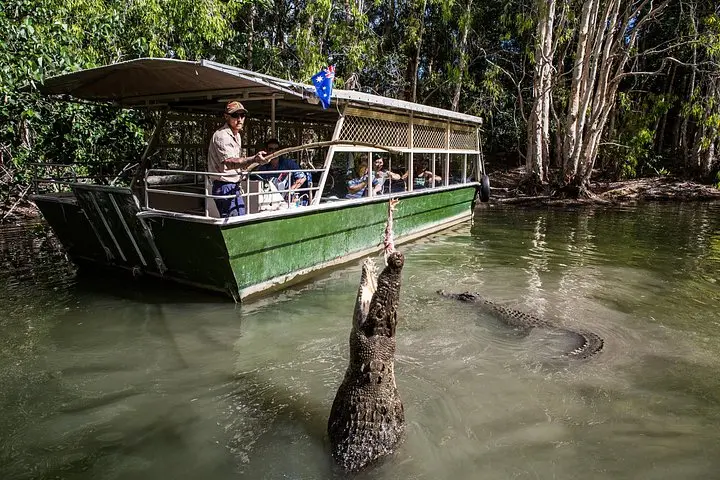
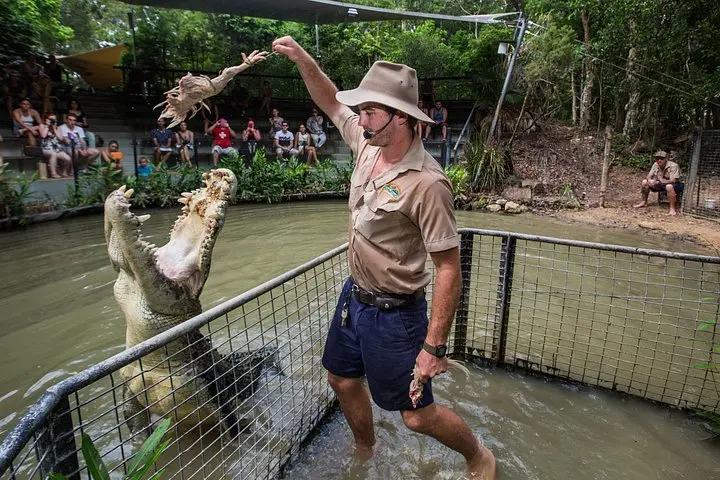
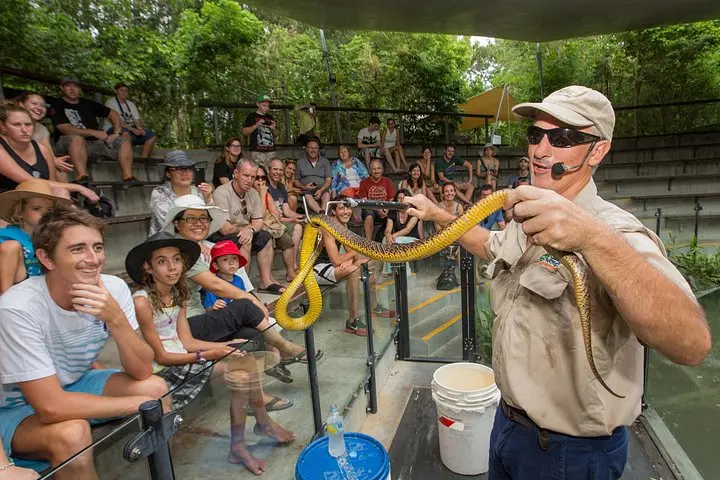
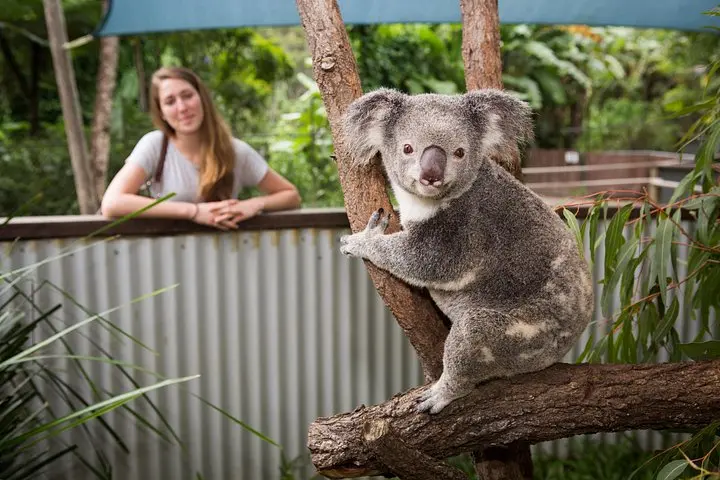
The experience is deliberately tactile. The lagoon cruise is the best staged encounter: trained staff spot and feed adult saltwater crocodiles while describing their role as apex predators and the risks they pose when humans and crocs overlap. Along boardwalks, short rainforest trails thread under a canopy where cassowaries move like dark thoughts and wallabies watch the path. Enclosures allow koala and quoll viewing, and reptile houses bring snakes and lizards into manageable proximity for photographers.
Practical note: this is an easy, visitor-focused day designed for families and travelers who want close wildlife viewing without backcountry difficulty. The full program runs about six hours, including hotel pickup from Palm Cove and round-trip transport. Wear sturdy, closed shoes for wet boardwalks, bring insect repellent and sun protection, and expect heat and humidity—hydration is not optional. Plan morning or late-afternoon arrival for the best wildlife activity; midafternoon can be quieter as reptiles retreat from the sun.
Avoid the temptation to touch or feed animals outside supervised times. Use a zoom lens for respectful close-ups, and follow staff directions on where to stand during feedings and boat cruises. For travelers based in Palm Cove, the ride north is short and scenic, and the day trip returns with time to cool off on the beach. If you want a sharper wildlife focus, ask staff about keeper talks and quieter corners of the park—the best encounters often happen off the beaten path.
Yes—this day trip includes park entrance and round-trip hotel pickup from Palm Cove as stated in the itinerary.
No—only trained staff handle crocodile feedings; visitors watch from designated safe areas or on the boat cruise.
Many main paths and viewing platforms are accessible, but some boardwalks and enclosures have steps—contact the operator for specifics.
Food options are usually available on site, but bringing snacks and water is recommended, especially for young children.
Crocodiles, kangaroos, wallabies, and a variety of birds are commonly seen; sightings of cassowaries and quolls are possible but less predictable.
Yes—infants are required to sit on an adult’s lap during transport according to the tour notes.
Beaches Meet & Greet operates guided outdoor trips and adventures with an emphasis on safety, stewardship, and memorable experiences.
A humid breeze lifts off the lagoon before you reach Hartley’s gates, carrying the metallic tang of salt and the green, sticky scent of mangrove mud. Within minutes of stepping from the shuttle, the park asserts itself: a low rumble of croc-demanding calls, the high whirr of insects in the understory, and staff voices guiding visitors toward the boat cruise. The first boat ride cuts a clean line through still water, revealing sun-bleached jaws and ridged backs that appear to float like islands.
A humid breeze lifts off the lagoon before you reach Hartley’s gates, carrying the metallic tang of salt and the green, sticky scent of mangrove mud. Within minutes of stepping from the shuttle, the park asserts itself: a low rumble of croc-demanding calls, the high whirr of insects in the understory, and staff voices guiding visitors toward the boat cruise. The first boat ride cuts a clean line through still water, revealing sun-bleached jaws and ridged backs that appear to float like islands.
Hartley’s began as a practical response to anyone who found a nuisance croc on a riverbank — a place to house, study, and display the animals — and grew into a curated wildlife sanctuary that interprets Far North Queensland’s coastal wetlands. Geologically this stretch of the coast is young: sand spits, mangrove-rooted estuaries, and fringing coral offshore shaped by sea-level changes over millennia. Culturally, the area sits on the lands of the Yirrganydji and Djabugay peoples; artworks and interpretive signs in the park nod to that living history while the guides explain traditional connections to these waterways.
The experience is deliberately tactile. The lagoon cruise is the best staged encounter: trained staff spot and feed adult saltwater crocodiles while describing their role as apex predators and the risks they pose when humans and crocs overlap. Along boardwalks, short rainforest trails thread under a canopy where cassowaries move like dark thoughts and wallabies watch the path. Enclosures allow koala and quoll viewing, and reptile houses bring snakes and lizards into manageable proximity for photographers.
Practical note: this is an easy, visitor-focused day designed for families and travelers who want close wildlife viewing without backcountry difficulty. The full program runs about six hours, including hotel pickup from Palm Cove and round-trip transport. Wear sturdy, closed shoes for wet boardwalks, bring insect repellent and sun protection, and expect heat and humidity—hydration is not optional. Plan morning or late-afternoon arrival for the best wildlife activity; midafternoon can be quieter as reptiles retreat from the sun.
Avoid the temptation to touch or feed animals outside supervised times. Use a zoom lens for respectful close-ups, and follow staff directions on where to stand during feedings and boat cruises. For travelers based in Palm Cove, the ride north is short and scenic, and the day trip returns with time to cool off on the beach. If you want a sharper wildlife focus, ask staff about keeper talks and quieter corners of the park—the best encounters often happen off the beaten path.