THE ADVENTURE COLLECTIVE® · Independent discovery and booking for outdoor travel

Towering pinnacles and wind‑sculpted boulders await at Hatunmachay, a high‑Andean ‘rock forest’ ideal for a full‑day of climbing or exploration. Learn about the geology, local culture and how to prepare for high‑altitude adventure.
Towering pinnacles and wind‑sculpted boulders await at Hatunmachay, a high‑Andean ‘rock forest’ ideal for a full‑day of climbing or exploration. Learn about the geology, local culture and how to prepare for high‑altitude adventure.
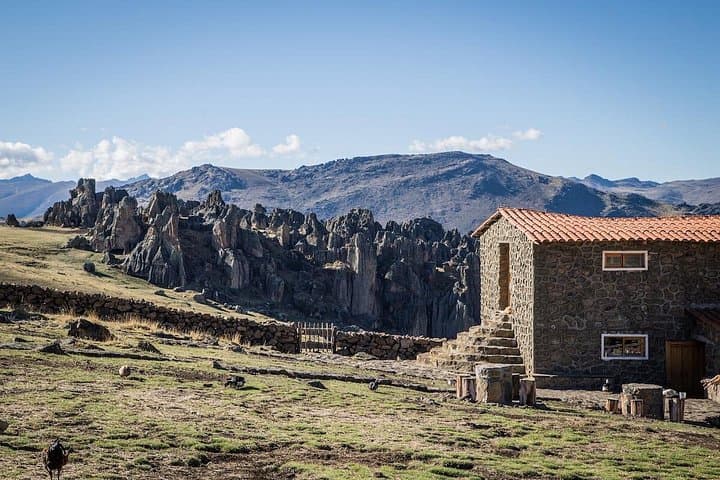
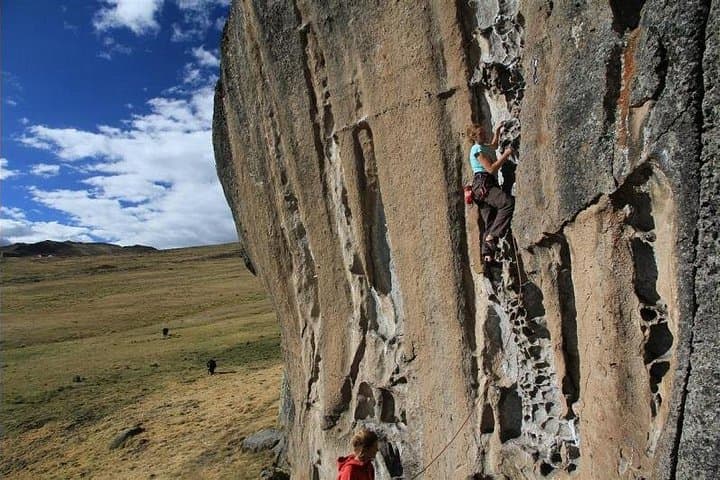
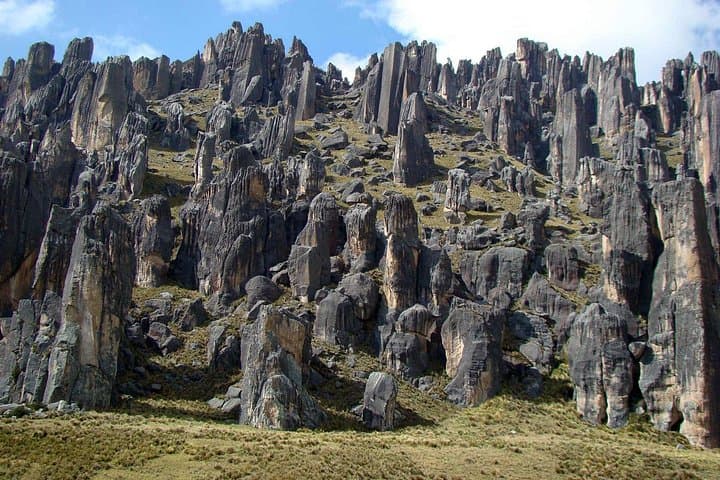
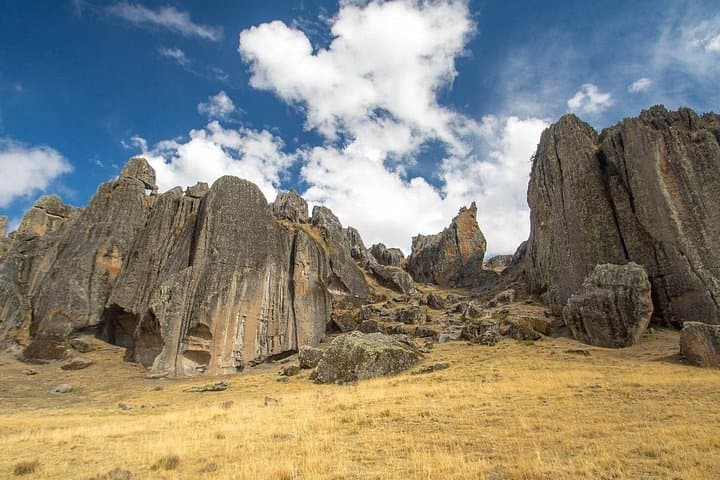
The morning air at 4,200 m bites cleanly; limestone towers and mushroom‑shaped pinnacles rise from grassland like an abandoned city of stone. Walk in and you feel the scale—routes and scrambling lines etched into boulders, the Cordillera Blanca folding eastward and the Huayhuash peaks cutting the skyline.
Verified experiences and guided adventures in the surrounding area.
Operated by Peru Bergsport · Recuay, Ancash
The morning air at 4,200 m bites cleanly; limestone towers and mushroom‑shaped pinnacles rise from grassland like an abandoned city of stone. Walk in and you feel the scale—routes and scrambling lines etched into boulders, the Cordillera Blanca folding eastward and the Huayhuash peaks cutting the skyline.
Hatunmachay sits on the eastern flank of Ancash’s high plateau, a concentrated “rock forest” formed by uplift, erosion and freeze‑thaw at high altitude. Local Quechua communities have used surrounding puna for grazing for centuries, and the site is as much pastoral commons as climbing playground. Geologically, the area is tense: fractured volcanic and sedimentary layers provide pockets and cracks sought by climbers; visually, the spires create intimate routes that contrast with the wide glacial valleys beyond.
Expect a mix of short technical climbs, long boulder problems and easy walking between features. The light changes quickly here—midday sun highlights grain in the rock while afternoon shadow brings cool relief. Wildlife is sparse but present; condors or hawks sometimes wheel over the ridgeline, and herds of sheep scatter across terraces.
Practically: acclimatize in Huaraz (3,000–3,100 m) for at least 24–48 hours before pushing to 4,200 m. Wear stiff‑soled boots or climbing shoes depending on your plan, pack layered insulation for wind and sun protection, and carry 2–3 liters of water. The road from Huaraz is unpaved in sections; private transport or a sturdy taxi is standard. Combine this visit with nearby viewpoints of the Cordillera Blanca or a stop in Recuay to learn about local highland life.
Most visitors use private taxi or shared transport along the Huaraz–Lima highway with a turnoff toward Recuay; the last kilometers may be unpaved and slow.
No for visiting and easy scrambles; basic climbing experience and proper gear are necessary for steeper routes and bouldering.
There’s typically no formal permit for casual visits, but local guides or community fees may apply—ask your transport provider or guide in Huaraz.
Symptoms can appear above 3,000 m—acclimatize, hydrate, move slowly and descend if you experience severe symptoms.
Peru Bergsport operates guided outdoor trips and adventures with an emphasis on safety, stewardship, and memorable experiences.
The morning air at 4,200 m bites cleanly; limestone towers and mushroom‑shaped pinnacles rise from grassland like an abandoned city of stone. Walk in and you feel the scale—routes and scrambling lines etched into boulders, the Cordillera Blanca folding eastward and the Huayhuash peaks cutting the skyline.
The morning air at 4,200 m bites cleanly; limestone towers and mushroom‑shaped pinnacles rise from grassland like an abandoned city of stone. Walk in and you feel the scale—routes and scrambling lines etched into boulders, the Cordillera Blanca folding eastward and the Huayhuash peaks cutting the skyline.
Hatunmachay sits on the eastern flank of Ancash’s high plateau, a concentrated “rock forest” formed by uplift, erosion and freeze‑thaw at high altitude. Local Quechua communities have used surrounding puna for grazing for centuries, and the site is as much pastoral commons as climbing playground. Geologically, the area is tense: fractured volcanic and sedimentary layers provide pockets and cracks sought by climbers; visually, the spires create intimate routes that contrast with the wide glacial valleys beyond.
Expect a mix of short technical climbs, long boulder problems and easy walking between features. The light changes quickly here—midday sun highlights grain in the rock while afternoon shadow brings cool relief. Wildlife is sparse but present; condors or hawks sometimes wheel over the ridgeline, and herds of sheep scatter across terraces.
Practically: acclimatize in Huaraz (3,000–3,100 m) for at least 24–48 hours before pushing to 4,200 m. Wear stiff‑soled boots or climbing shoes depending on your plan, pack layered insulation for wind and sun protection, and carry 2–3 liters of water. The road from Huaraz is unpaved in sections; private transport or a sturdy taxi is standard. Combine this visit with nearby viewpoints of the Cordillera Blanca or a stop in Recuay to learn about local highland life.