THE ADVENTURE COLLECTIVE® · Independent discovery and booking for outdoor travel

Paddle the Haulover Canal for close encounters with manatees, dolphins and mangrove shorebirds on a 90-minute guided tour from Cocoa Beach. Morning departures give the best wildlife viewing and guides provide dry bags, life jackets and photos after your paddle.
Paddle the Haulover Canal for close encounters with manatees, dolphins and mangrove shorebirds on a 90-minute guided tour from Cocoa Beach. Morning departures give the best wildlife viewing and guides provide dry bags, life jackets and photos after your paddle.
Morning light slices across the Mosquito Lagoon as paddles dip and the mangrove roots begin to reveal themselves.
You push off from a quiet ramp and the canal narrows—water moving with a patient current, mangrove prop roots gripping the mud like hands. Guides keep the group tight, voices low; manatees surface with gentle snorts, dolphins arc beyond the shallows, and wading birds quarter the skies.
Verified experiences and guided adventures in the surrounding area.
Morning light slices across the Mosquito Lagoon as paddles dip and the mangrove roots begin to reveal themselves.
You push off from a quiet ramp and the canal narrows—water moving with a patient current, mangrove prop roots gripping the mud like hands. Guides keep the group tight, voices low; manatees surface with gentle snorts, dolphins arc beyond the shallows, and wading birds quarter the skies.
This stretch of water connects the Indian River to Mosquito Lagoon and sits on the edge of the Merritt Island National Wildlife Refuge. Geologically, the lagoon is a shallow estuary shaped by sea-level changes and barrier-island dynamics, which create wide mudflats and dense mangrove corridors that shelter juvenile fish and the iconic Florida manatee.
Culturally, these waterways supported Indigenous communities and later small-scale fishing settlements; today they’re managed for wildlife and recreation, with speed zones and protected seasons to limit disturbance.
Practical guidance: tours run about 90 minutes and are best around 9:00 a.m. for wildlife activity; bring plenty of water, reef-safe sunscreen, and a hat. Wear shoes that can get wet—sandals or neoprene booties—and secure gear in provided dry bags. Expect close wildlife viewing but follow your guide’s distance rules; never pursue or touch marine animals.
This is an accessible, wildlife-focused paddle that rewards patience and quiet. For photographers, guides will often email photos after the tour; for everyone else, the lasting impression is the river pushing you forward under palms and mangrove canopies.
Sightings aren’t guaranteed, but morning tours (around 9:00 a.m.) and March–August (manatee mating season) offer higher probability; dolphins are commonly seen in the lagoon.
No formal experience required—guided tours accommodate beginners, though basic paddling and balance help you enjoy the trip more.
Yes, life jackets are provided for participants 30 lbs and up; contact the operator about sizes for children or specific needs.
Bathrooms are available before and after the tour at the launch site; guides typically email or text photos within 48 hours after the tour.
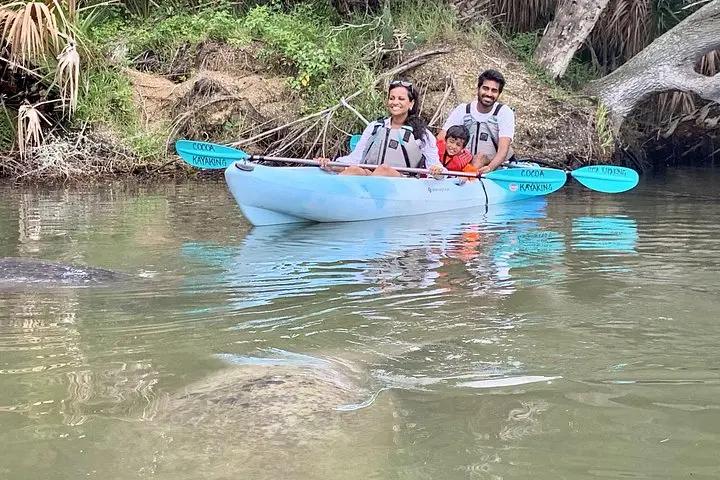
Morning light slices across the Mosquito Lagoon as paddles dip and the mangrove roots begin to reveal themselves.
You push off from a quiet ramp and the canal narrows—water moving with a patient current, mangrove prop roots gripping the mud like hands. Guides keep the group tight, voices low; manatees surface with gentle snorts, dolphins arc beyond the shallows, and wading birds quarter the skies.
This stretch of water connects the Indian River to Mosquito Lagoon and sits on the edge of the Merritt Island National Wildlife Refuge. Geologically, the lagoon is a shallow estuary shaped by sea-level changes and barrier-island dynamics, which create wide mudflats and dense mangrove corridors that shelter juvenile fish and the iconic Florida manatee.
Culturally, these waterways supported Indigenous communities and later small-scale fishing settlements; today they’re managed for wildlife and recreation, with speed zones and protected seasons to limit disturbance.
Practical guidance: tours run about 90 minutes and are best around 9:00 a.m. for wildlife activity; bring plenty of water, reef-safe sunscreen, and a hat. Wear shoes that can get wet—sandals or neoprene booties—and secure gear in provided dry bags. Expect close wildlife viewing but follow your guide’s distance rules; never pursue or touch marine animals.
This is an accessible, wildlife-focused paddle that rewards patience and quiet. For photographers, guides will often email photos after the tour; for everyone else, the lasting impression is the river pushing you forward under palms and mangrove canopies.