THE ADVENTURE COLLECTIVE® · Independent discovery and booking for outdoor travel

Walk two hours through Denver’s Capitol Hill and Millionaire’s Row with a costumed guide who pairs solid local history with tales of haunted mansions. Learn about Molly Brown, the Silver Crash, and the city’s most notorious homes while following a compact, stroller-friendly route.
Walk two hours through Denver’s Capitol Hill and Millionaire’s Row with a costumed guide who pairs solid local history with tales of haunted mansions. Learn about Molly Brown, the Silver Crash, and the city’s most notorious homes while following a compact, stroller-friendly route.
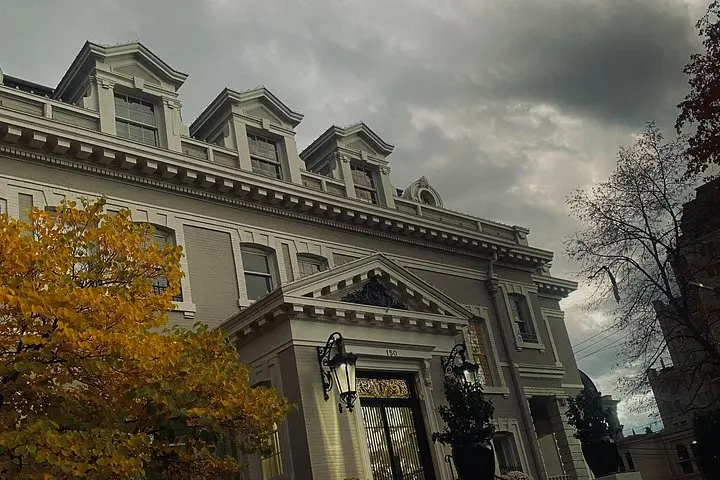
You step off a city sidewalk into an alley of gaslight-era facades—brick, turret, carved stone—while your guide, in period costume, sketches the outline of a late-1800s Denver where fortunes rose as fast as the smoke from silver-mine smelters.
Verified experiences and guided adventures in the surrounding area.
Operated by Madame DuBois · Denver, Colorado
You step off a city sidewalk into an alley of gaslight-era facades—brick, turret, carved stone—while your guide, in period costume, sketches the outline of a late-1800s Denver where fortunes rose as fast as the smoke from silver-mine smelters.
The tour threads from the Colorado State Capitol across Capitol Hill and Millionaire's Row to the houses of Molly Brown, the Peabody-Whitehead and Croke-Patterson mansions. History here is tactile: the Silver Crash of 1893 left architectural bruises and stories of wealth, scandal, and resilience. The ground underfoot is the high plains’ edge—wind pushes along Sherman Street, and city trees lean like listeners at a parlor reading.
Cultural notes come easy: the neighborhood shifted from elite showplace to artists’ haunt to a contested modern district. Stops include Poets’ Row and the former train-station building now tied to Fairmount Cemetery lore. Guides draw on decades of local research and family tales, bringing names and dates into human scale and pointing out oddities—the false mansard here, a bricked-over door there—that hint at Denver’s improvisational style.
Practical guidance: the route is paved and largely flat but covers about 1.5–2 miles over two hours; bring comfortable shoes, sun protection, and a refillable bottle. The walk is stroller-accessible and uses public-transit-friendly starting points; the finale often lands at an old bar where you can linger. Expect stories that mix solid history with lore—perfect for anyone who wants texture and context on a short, walkable urban adventure.
The tour is approximately 2 hours and covers about 1.5–2 miles of mostly paved city streets and sidewalks.
Yes—infants and small children can use strollers; the route is generally stroller-accessible though some corners may be tight.
All stops are exterior; the guide tells histories and stories from outside the properties and at public corners.
For a full refund cancel at least 24 hours before departure; the activity may be canceled for severe weather.
Madame DuBois operates guided outdoor trips and adventures with an emphasis on safety, stewardship, and memorable experiences.

You step off a city sidewalk into an alley of gaslight-era facades—brick, turret, carved stone—while your guide, in period costume, sketches the outline of a late-1800s Denver where fortunes rose as fast as the smoke from silver-mine smelters.
You step off a city sidewalk into an alley of gaslight-era facades—brick, turret, carved stone—while your guide, in period costume, sketches the outline of a late-1800s Denver where fortunes rose as fast as the smoke from silver-mine smelters.
The tour threads from the Colorado State Capitol across Capitol Hill and Millionaire's Row to the houses of Molly Brown, the Peabody-Whitehead and Croke-Patterson mansions. History here is tactile: the Silver Crash of 1893 left architectural bruises and stories of wealth, scandal, and resilience. The ground underfoot is the high plains’ edge—wind pushes along Sherman Street, and city trees lean like listeners at a parlor reading.
Cultural notes come easy: the neighborhood shifted from elite showplace to artists’ haunt to a contested modern district. Stops include Poets’ Row and the former train-station building now tied to Fairmount Cemetery lore. Guides draw on decades of local research and family tales, bringing names and dates into human scale and pointing out oddities—the false mansard here, a bricked-over door there—that hint at Denver’s improvisational style.
Practical guidance: the route is paved and largely flat but covers about 1.5–2 miles over two hours; bring comfortable shoes, sun protection, and a refillable bottle. The walk is stroller-accessible and uses public-transit-friendly starting points; the finale often lands at an old bar where you can linger. Expect stories that mix solid history with lore—perfect for anyone who wants texture and context on a short, walkable urban adventure.