THE ADVENTURE COLLECTIVE® · Independent discovery and booking for outdoor travel

Set sail from Waiheke for a full‑day eco trip through the Hauraki Gulf—snorkel over kelp gardens, stand‑up paddleboard in protected coves and walk a pest‑free island with an expert guide. Expect wind‑shaped routes, wildlife encounters and practical conservation insights.
Set sail from Waiheke for a full‑day eco trip through the Hauraki Gulf—snorkel over kelp gardens, stand‑up paddleboard in protected coves and walk a pest‑free island with an expert guide. Expect wind‑shaped routes, wildlife encounters and practical conservation insights.
The catamaran eases off the Matiatia Wharf and the city’s edge slides away—just blue, wind and islands. On a clear morning the Hauraki Gulf stretches like an open map: rocky islets, scrubby ridgelines and the occasional plume of seabirds arcing ahead. You feel the sail take a breath; the Pacific Star answers, hulls humming as she threads toward the outer gulf.
Verified experiences and guided adventures in the surrounding area.
Operated by Terra & Tide · Waiheke, Auckland
The catamaran eases off the Matiatia Wharf and the city’s edge slides away—just blue, wind and islands. On a clear morning the Hauraki Gulf stretches like an open map: rocky islets, scrubby ridgelines and the occasional plume of seabirds arcing ahead. You feel the sail take a breath; the Pacific Star answers, hulls humming as she threads toward the outer gulf.
This is a daytrip that trades skyscrapers for seabird calls. The Hauraki Gulf Marine Park, established in 2000, protects a mosaic of volcanic remnants and coastal ecosystems born from million‑year lava flows and tectonic lift. Māori history here runs deep—islands were seasonal pa and resource sites, and many place names still describe how people read the sea and land. Today the islands’ pest‑free sanctuaries show what native birdlife looked like before introduced predators changed the balance.
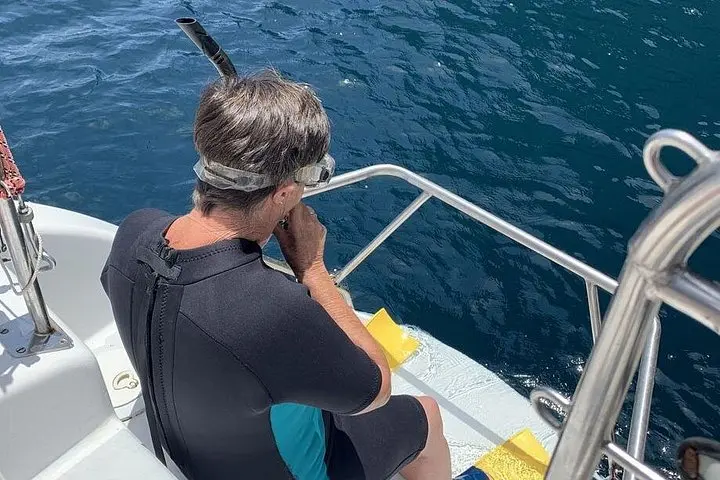
Your guide keeps the narrative practical: current, wind and migration patterns shape the plan each day. Stops typically include a guided walk on a predator‑free island where kārearea (New Zealand falcon) and rare shorebirds are quieter visitors, and long enough anchorage for snorkeling and stand‑up paddleboarding in clear, kelp‑fringed water. Dolphins often ride the bow wave; whales visit in season, their exhalations punctuating the horizon.
Geology fans will notice welded tuff cliffs and scoured platforms—evidence of volcanic fires and marine erosion. Cultural context is visible too: pa terraces and midden sites are reminders that these islands were managed landscapes. Guides weave this into conservation conversations, showing how pest eradication and marine protection are restoring food webs and reef health.
Practical edge: the itinerary is wind‑dependent and comfortably paced—expect roughly seven hours aboard with several shore and water stops. Bring a sense of adventure and basic swimming competence; the crew will brief you on safety and tender transfers. The trip is family-friendly but requires care getting on and off tenders and in the water.
For photographers, wide lenses capture the boat, islands and seabird clusters; a telephoto pays dividends for dolphins and distant whales. Time your trip for shoulder seasons if you want fewer tourists and crisp light, or summer for warmer water and longer swim windows. Hydrate, layer for wind and sun, and choose reef‑safe sunscreen—the gulf’s recovery depends on small choices by visitors.
This is not just a cruise. It’s an invitation to learn a small, vulnerable marine landscape: to feel the wind, paddle over kelp, and walk places where native birds are quietly returning. The practical payoff is simple—a full, active day on the water that connects geology, culture and conservation in motion.
The trip departs from Matiatia Wharf on Waiheke Island; guides typically meet passengers coming on the 9am ferry from Auckland.
Yes—snorkelling equipment is included in the tour price and available for all skill levels.
Yes—stand‑up paddleboards are provided and guides offer basic instruction and supervision in calm anchorages.
The 41‑foot catamaran has onboard facilities; shore stops may have limited amenities depending on the island.
The tour is family‑friendly but infants must sit on laps and non‑swimmers should wear life jackets during water activities; crew will advise on safety.
The operator may cancel or re‑route for comfort and safety; full refund is available if canceled at least 24 hours prior according to the policy.
Terra & Tide operates guided outdoor trips and adventures with an emphasis on safety, stewardship, and memorable experiences.
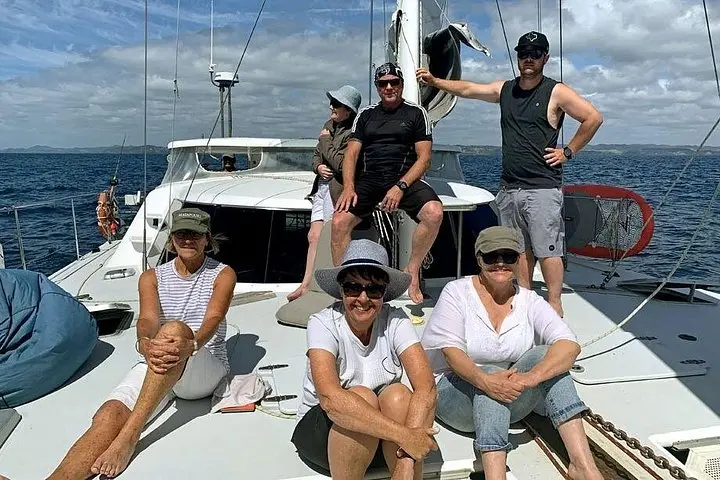
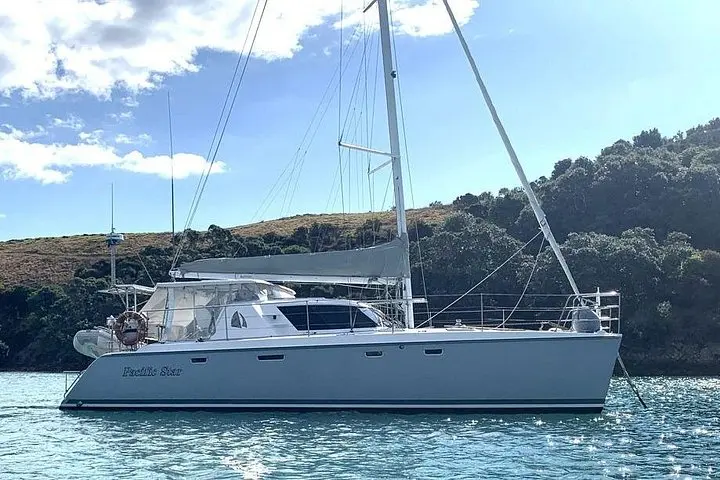
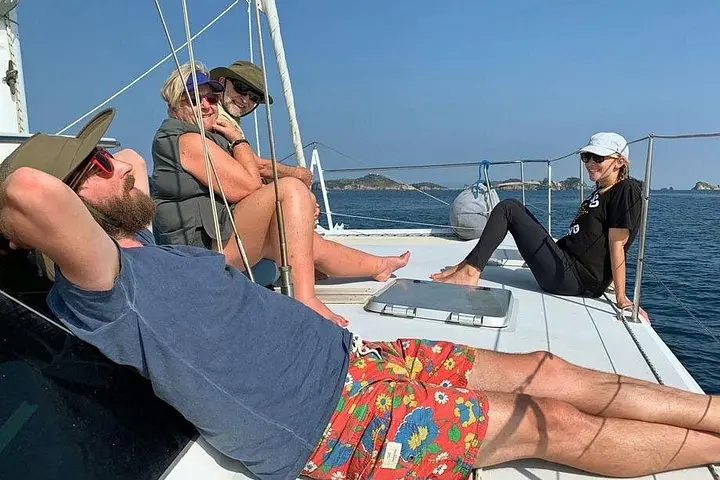
The catamaran eases off the Matiatia Wharf and the city’s edge slides away—just blue, wind and islands. On a clear morning the Hauraki Gulf stretches like an open map: rocky islets, scrubby ridgelines and the occasional plume of seabirds arcing ahead. You feel the sail take a breath; the Pacific Star answers, hulls humming as she threads toward the outer gulf.
The catamaran eases off the Matiatia Wharf and the city’s edge slides away—just blue, wind and islands. On a clear morning the Hauraki Gulf stretches like an open map: rocky islets, scrubby ridgelines and the occasional plume of seabirds arcing ahead. You feel the sail take a breath; the Pacific Star answers, hulls humming as she threads toward the outer gulf.
This is a daytrip that trades skyscrapers for seabird calls. The Hauraki Gulf Marine Park, established in 2000, protects a mosaic of volcanic remnants and coastal ecosystems born from million‑year lava flows and tectonic lift. Māori history here runs deep—islands were seasonal pa and resource sites, and many place names still describe how people read the sea and land. Today the islands’ pest‑free sanctuaries show what native birdlife looked like before introduced predators changed the balance.
Your guide keeps the narrative practical: current, wind and migration patterns shape the plan each day. Stops typically include a guided walk on a predator‑free island where kārearea (New Zealand falcon) and rare shorebirds are quieter visitors, and long enough anchorage for snorkeling and stand‑up paddleboarding in clear, kelp‑fringed water. Dolphins often ride the bow wave; whales visit in season, their exhalations punctuating the horizon.
Geology fans will notice welded tuff cliffs and scoured platforms—evidence of volcanic fires and marine erosion. Cultural context is visible too: pa terraces and midden sites are reminders that these islands were managed landscapes. Guides weave this into conservation conversations, showing how pest eradication and marine protection are restoring food webs and reef health.
Practical edge: the itinerary is wind‑dependent and comfortably paced—expect roughly seven hours aboard with several shore and water stops. Bring a sense of adventure and basic swimming competence; the crew will brief you on safety and tender transfers. The trip is family-friendly but requires care getting on and off tenders and in the water.
For photographers, wide lenses capture the boat, islands and seabird clusters; a telephoto pays dividends for dolphins and distant whales. Time your trip for shoulder seasons if you want fewer tourists and crisp light, or summer for warmer water and longer swim windows. Hydrate, layer for wind and sun, and choose reef‑safe sunscreen—the gulf’s recovery depends on small choices by visitors.
This is not just a cruise. It’s an invitation to learn a small, vulnerable marine landscape: to feel the wind, paddle over kelp, and walk places where native birds are quietly returning. The practical payoff is simple—a full, active day on the water that connects geology, culture and conservation in motion.