THE ADVENTURE COLLECTIVE® · Independent discovery and booking for outdoor travel

Walk the exposed reef at low tide with a naturalist on Havelock Island—an easy, educational shore-based exploration of mangroves, seagrass beds and corals. Night options reveal biofluorescence and rare nocturnal species.
Walk the exposed reef at low tide with a naturalist on Havelock Island—an easy, educational shore-based exploration of mangroves, seagrass beds and corals. Night options reveal biofluorescence and rare nocturnal species.
When the tide slides back on Havelock's shore, the island exposes a different coastline — a stitched landscape of mangrove roots, seagrass flats and living coral shelves. You step out ankle-deep and the reef reads like an open book: brittle stars tucked under rock, pipefish slinking through seagrass, and schools of tiny reef fish darting between coral fingers.
Verified experiences and guided adventures in the surrounding area.
Operated by Seashell Habitat Institute Activity Centre · Havelock Island, Andaman and Nicobar Islands
When the tide slides back on Havelock's shore, the island exposes a different coastline — a stitched landscape of mangrove roots, seagrass flats and living coral shelves. You step out ankle-deep and the reef reads like an open book: brittle stars tucked under rock, pipefish slinking through seagrass, and schools of tiny reef fish darting between coral fingers.
Geology here is recent and active: fringing coral reefs build atop volcanic-formed substrate, while mangroves colonize sheltered lagoons carved by tidal flows. The Andaman Islands have long been a crossroads — from maritime traders to British-era Port Blair administration — and local conservation efforts now balance tourism with fragile reef recovery.
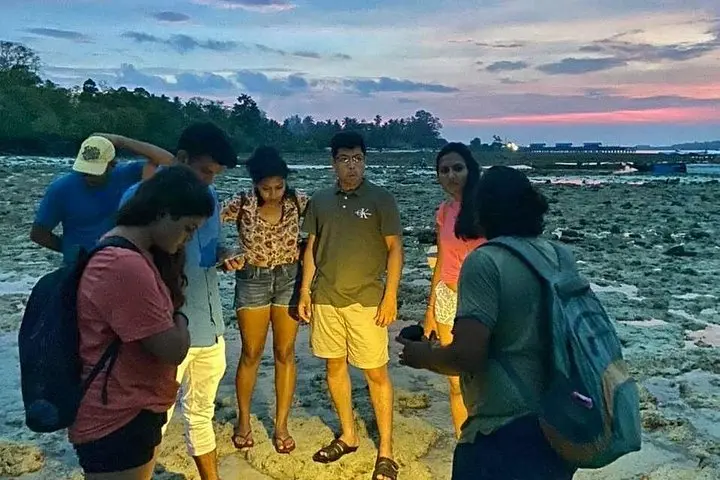
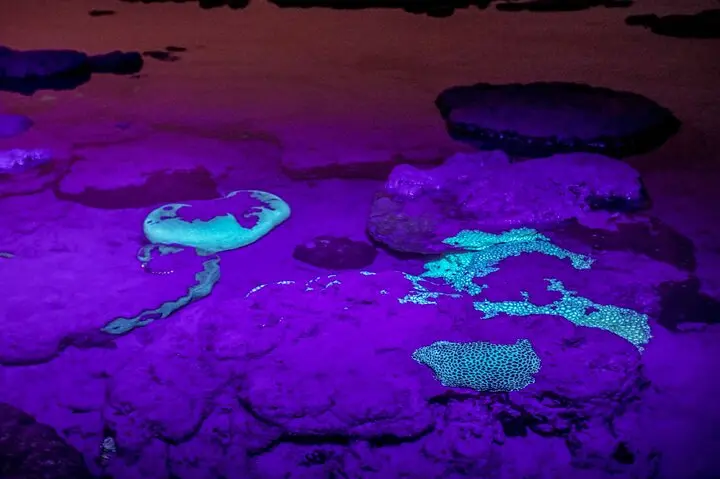
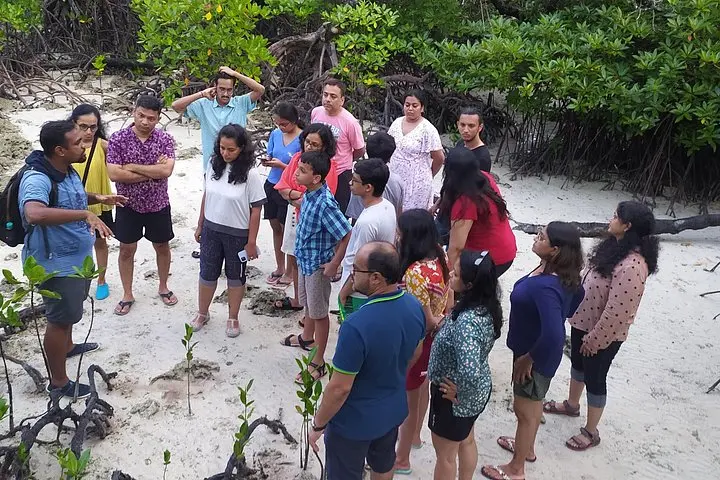
Guided by a naturalist, the trail is an observational walk rather than a snorkel: expect close-up biology lessons on corals, sea cucumbers, sea urchins and sponges. Night versions, offered around new and full moons, reveal biofluorescent glow and nocturnal hunters like mantis shrimp and cone snails; the reef takes on an almost alien personality under UV light.
Practicalities: the experience runs about two hours at low tide and is suitable for most fitness levels as walking is shallow and slow. Check tide charts — the route depends entirely on low-tide windows — and book with a guide who enforces no-touch rules to protect coral and critters. Wear closed water shoes, reef-safe sunscreen, and bring a small dry bag for phones. Stay aware of slippery algae and avoid stepping on coral. The Marine Trail is an educational, accessible way to read the intertidal world while supporting community-led marine tourism.
Yes — the trail is shallow and paced slowly; operators commonly note it’s suitable for a wide age range, though supervision for young children is recommended.
No — touching corals or wildlife can harm both you and the organisms; guides enforce a strict no-touch and no-collect policy to protect the habitat.
Night trails are usually offered around new and full moons when certain nocturnal animals are active and biofluorescence is visible; expect cool temperatures and limited visibility without UV light.
This activity is light but not recommended for people with serious back problems, pregnancy, or major cardiovascular issues due to uneven terrain and tidal dependence.
Seashell Habitat Institute Activity Centre operates guided outdoor trips and adventures with an emphasis on safety, stewardship, and memorable experiences.
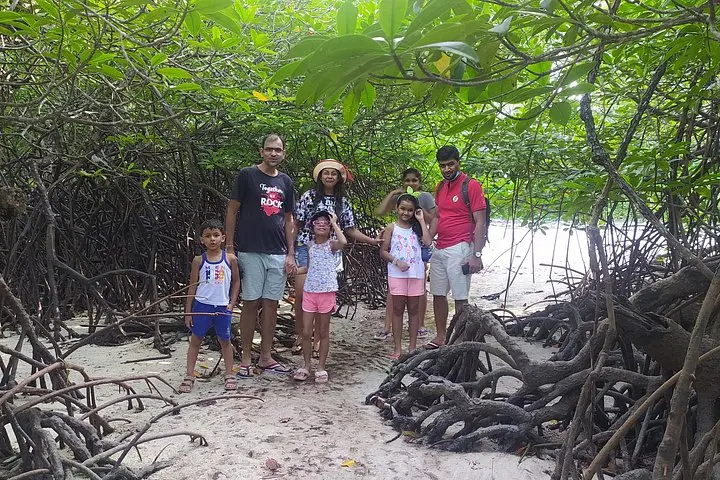
When the tide slides back on Havelock's shore, the island exposes a different coastline — a stitched landscape of mangrove roots, seagrass flats and living coral shelves. You step out ankle-deep and the reef reads like an open book: brittle stars tucked under rock, pipefish slinking through seagrass, and schools of tiny reef fish darting between coral fingers.
When the tide slides back on Havelock's shore, the island exposes a different coastline — a stitched landscape of mangrove roots, seagrass flats and living coral shelves. You step out ankle-deep and the reef reads like an open book: brittle stars tucked under rock, pipefish slinking through seagrass, and schools of tiny reef fish darting between coral fingers.
Geology here is recent and active: fringing coral reefs build atop volcanic-formed substrate, while mangroves colonize sheltered lagoons carved by tidal flows. The Andaman Islands have long been a crossroads — from maritime traders to British-era Port Blair administration — and local conservation efforts now balance tourism with fragile reef recovery.
Guided by a naturalist, the trail is an observational walk rather than a snorkel: expect close-up biology lessons on corals, sea cucumbers, sea urchins and sponges. Night versions, offered around new and full moons, reveal biofluorescent glow and nocturnal hunters like mantis shrimp and cone snails; the reef takes on an almost alien personality under UV light.
Practicalities: the experience runs about two hours at low tide and is suitable for most fitness levels as walking is shallow and slow. Check tide charts — the route depends entirely on low-tide windows — and book with a guide who enforces no-touch rules to protect coral and critters. Wear closed water shoes, reef-safe sunscreen, and bring a small dry bag for phones. Stay aware of slippery algae and avoid stepping on coral. The Marine Trail is an educational, accessible way to read the intertidal world while supporting community-led marine tourism.