THE ADVENTURE COLLECTIVE® · Independent discovery and booking for outdoor travel

Ride with an Iditarod champion’s team across real summer snow, then hover over Bear Glacier Lagoon in a helicopter for iceberg and glacier panoramas. This compact Seward excursion delivers high-altitude thrills and close-up canine moments in about two hours.
Ride with an Iditarod champion’s team across real summer snow, then hover over Bear Glacier Lagoon in a helicopter for iceberg and glacier panoramas. This compact Seward excursion delivers high-altitude thrills and close-up canine moments in about two hours.
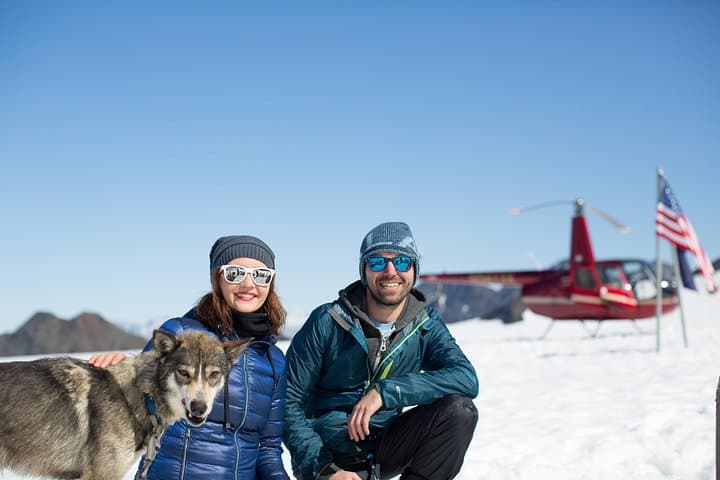
You step into a wind that still remembers winter. The helicopter thumps to life and Resurrection Bay shrinks beneath you—blue water ringed by knife-edge ridges and the first hints of glacial ice. Within minutes you’re crossing a broken spine of frozen landscape and setting down on a snowfield where champion sled dogs strain at bright harnesses, eager as any athlete before a race.
Verified experiences and guided adventures in the surrounding area.
Operated by Alaska Helicopter Tours · Seward, Alaska
You step into a wind that still remembers winter. The helicopter thumps to life and Resurrection Bay shrinks beneath you—blue water ringed by knife-edge ridges and the first hints of glacial ice. Within minutes you’re crossing a broken spine of frozen landscape and setting down on a snowfield where champion sled dogs strain at bright harnesses, eager as any athlete before a race.
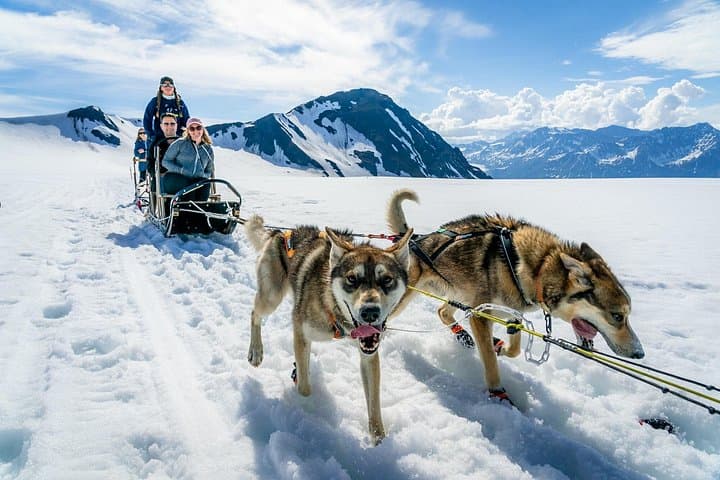
This is not a staged moment. The tour pairs a short round-trip flightseeing loop (about 30–40 minutes of airborne panoramas) with a full hour at the dog camp—roughly 25 minutes of sled time if you choose to stand on the runners and mush, or you can ride while the professionals run the team. The dogs, trained under six-time Iditarod champion Dallas Seavey, live and train on these summer snowfields; their presence links this high-elevation operation to Alaska’s long history of human and canine travel across ice.
Geology here is loud: blue crevasses press into older grey ice, melt pools wink in basins, and moraines mark where glaciers have chewed the landscape. Bear Glacier Lagoon and the surrounding floats of bergs form where ice meets sea, creating dramatic contrasts between the slow work of rock and the rapid churn of tide and current. Culturally, Seward sits on land historically used by the Alutiiq (Sugpiaq) people; today the town is a gateway to Kenai Fjords National Park and a hub for outdoor industries that balance tourism and local livelihoods.
Practically, the experience is intensive and compact. Expect a two-hour total window including check-in; the operator asks you to arrive 30 minutes early. Dress in layers with a waterproof outer shell—the dog camp sits at higher elevation and conditions on the glacier can be markedly colder and windier than the coast. Overboots are provided, but warm socks, gloves, and sunglasses are essential.
Logistics matter: weight and balance can limit helicopter seating, and a comfort surcharge is applied for passengers over 250 pounds to ensure safe seating distribution. The operator restricts loose straps, drones, and lithium batteries; if you want photos, keep a compact camera or phone secured. The company runs transfers within Seward city limits and will cancel or reschedule when weather makes flying unsafe.
For travelers, this is a rare combination: the adrenalin of an aerial perspective with the tactile, tactile rhythm of a real sled dog team on true summer snow. It’s short enough to add as a pre- or post-cruise highlight, but memorable enough that the image of dogs, ice, and the rotor wash will stay with you long after you’ve returned to sea level.
Flightseeing is approximately 30–40 minutes round-trip, including the landing on the glacier and return to Seward.
Yes—participants can stand on the runners and mush under handler supervision, or sit in the sled while mushers run the team.
Yes—accurate passenger weights are required for safe helicopter weight-and-balance; a comfort surcharge applies for anyone over 250 lbs.
The operator supplies waterproof overboots that slip over your shoes; still bring warm socks and sturdy footwear for before/after the sled portion.
Infants must sit on an adult’s lap; the experience is family-friendly but check the operator’s age and safety guidance when booking.
Flights operate in safe-weather conditions only; tours may be rescheduled or refunded if the operator cancels due to weather.
Alaska Helicopter Tours operates guided outdoor trips and adventures with an emphasis on safety, stewardship, and memorable experiences.

You step into a wind that still remembers winter. The helicopter thumps to life and Resurrection Bay shrinks beneath you—blue water ringed by knife-edge ridges and the first hints of glacial ice. Within minutes you’re crossing a broken spine of frozen landscape and setting down on a snowfield where champion sled dogs strain at bright harnesses, eager as any athlete before a race.
You step into a wind that still remembers winter. The helicopter thumps to life and Resurrection Bay shrinks beneath you—blue water ringed by knife-edge ridges and the first hints of glacial ice. Within minutes you’re crossing a broken spine of frozen landscape and setting down on a snowfield where champion sled dogs strain at bright harnesses, eager as any athlete before a race.
This is not a staged moment. The tour pairs a short round-trip flightseeing loop (about 30–40 minutes of airborne panoramas) with a full hour at the dog camp—roughly 25 minutes of sled time if you choose to stand on the runners and mush, or you can ride while the professionals run the team. The dogs, trained under six-time Iditarod champion Dallas Seavey, live and train on these summer snowfields; their presence links this high-elevation operation to Alaska’s long history of human and canine travel across ice.
Geology here is loud: blue crevasses press into older grey ice, melt pools wink in basins, and moraines mark where glaciers have chewed the landscape. Bear Glacier Lagoon and the surrounding floats of bergs form where ice meets sea, creating dramatic contrasts between the slow work of rock and the rapid churn of tide and current. Culturally, Seward sits on land historically used by the Alutiiq (Sugpiaq) people; today the town is a gateway to Kenai Fjords National Park and a hub for outdoor industries that balance tourism and local livelihoods.
Practically, the experience is intensive and compact. Expect a two-hour total window including check-in; the operator asks you to arrive 30 minutes early. Dress in layers with a waterproof outer shell—the dog camp sits at higher elevation and conditions on the glacier can be markedly colder and windier than the coast. Overboots are provided, but warm socks, gloves, and sunglasses are essential.
Logistics matter: weight and balance can limit helicopter seating, and a comfort surcharge is applied for passengers over 250 pounds to ensure safe seating distribution. The operator restricts loose straps, drones, and lithium batteries; if you want photos, keep a compact camera or phone secured. The company runs transfers within Seward city limits and will cancel or reschedule when weather makes flying unsafe.
For travelers, this is a rare combination: the adrenalin of an aerial perspective with the tactile, tactile rhythm of a real sled dog team on true summer snow. It’s short enough to add as a pre- or post-cruise highlight, but memorable enough that the image of dogs, ice, and the rotor wash will stay with you long after you’ve returned to sea level.