THE ADVENTURE COLLECTIVE® · Independent discovery and booking for outdoor travel

Skip the multi-day trek and reach Everest's window in hours: a helicopter lands at Kala Patthar and nearby high points for unparalleled summit views. This guided group flight blends dramatic aerial scenery with short on-ground photo stops and local commentary.
Skip the multi-day trek and reach Everest's window in hours: a helicopter lands at Kala Patthar and nearby high points for unparalleled summit views. This guided group flight blends dramatic aerial scenery with short on-ground photo stops and local commentary.
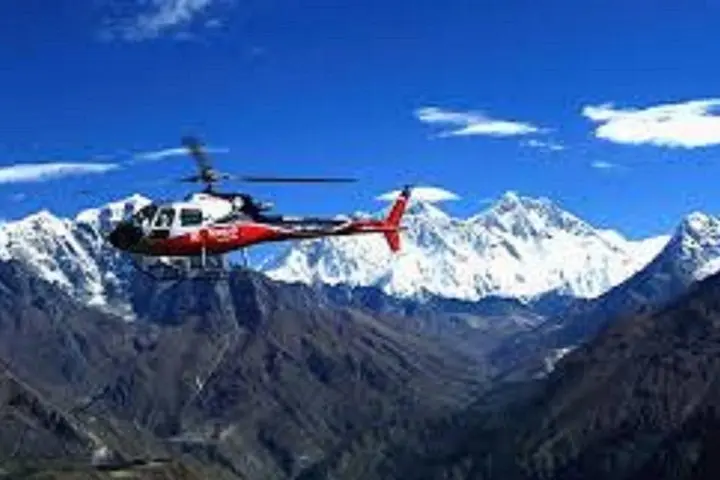
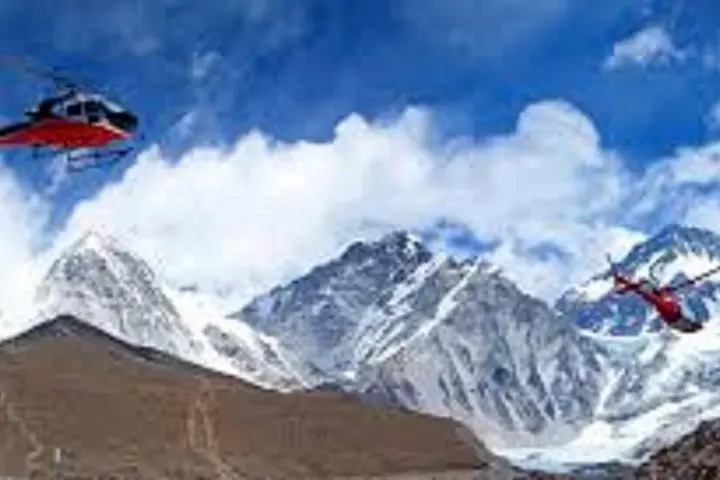
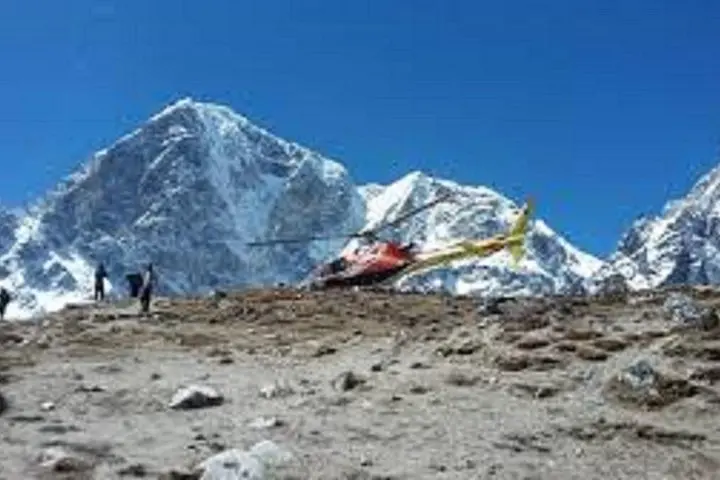
Dawn over Kathmandu gives way to the helicopter's thrum as the city recedes and the Himalaya assert themselves—jagged ridgelines cut the sky, glaciers gleam like old ice, and Mount Everest towers above in cold clarity. Within an hour the aircraft descends toward Kala Patthar and the rim of the Khumbu, where passengers step onto high, wind-bitten moraine for unobstructed views of Everest (8,848 m), Lhotse and Nuptse.
Verified experiences and guided adventures in the surrounding area.
Operated by CAN Travels · Kathmandu, Bagmati Province
Dawn over Kathmandu gives way to the helicopter's thrum as the city recedes and the Himalaya assert themselves—jagged ridgelines cut the sky, glaciers gleam like old ice, and Mount Everest towers above in cold clarity. Within an hour the aircraft descends toward Kala Patthar and the rim of the Khumbu, where passengers step onto high, wind-bitten moraine for unobstructed views of Everest (8,848 m), Lhotse and Nuptse.
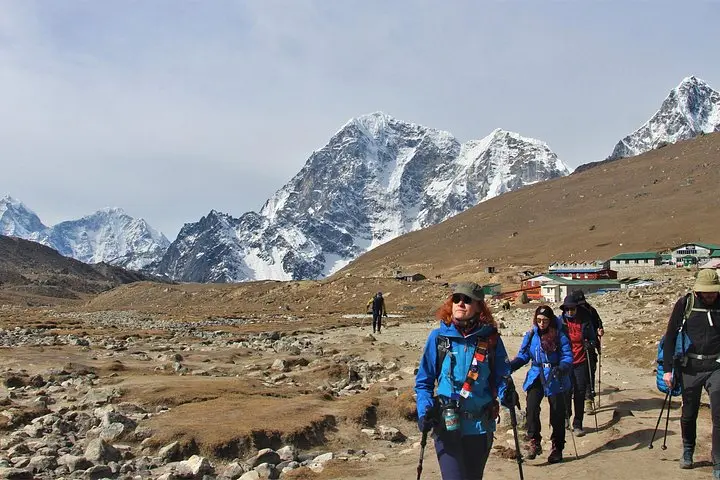
The route traces both geological drama and cultural pathways: the collision of the Indian and Eurasian plates pushed these summits skyward, while Sherpa villages like Lukla and Namche Bazaar grew as logistical hubs for mountaineering. The area has been central to Himalayan climbing history since the early 20th century; the Everest region mixes religious stupas and mani walls with tea houses and expedition camps. Local guides aboard the flight usually narrate features such as the Khumbu Glacier, Pumori's arêtes and the high vantage at Kala Patthar.
Practically, this is a high-altitude sightseeing experience rather than a trek—expect short landings (often 15–30 minutes) for photos and a brief visit to Everest View Hotel for breakfast. Mornings offer the best visibility; weather can force last-minute changes. Operators include park permits and insurance, and transfers from central Kathmandu are typically arranged.
Plan for cold wind, limited time on the ground, and simple logistics: dress in insulated layers, carry a camera with extra batteries, and allow a full morning for hotel pickup, airside procedures and the scenic return to Kathmandu.
Yes—operators typically include the Sagarmatha National Park entry permit and local landing permissions as part of the tour.
Landings are usually brief—plan on 15–30 minutes at Kala Patthar or sightseeing stops, plus a short breakfast stop at Everest View Hotel on some itineraries.
High-altitude Himalayan weather is changeable; flights are often scheduled early to minimize cancellations, but operators may reschedule or refund if conditions are unsafe.
The flight itself requires only helicopter boarding, but ground stops involve uneven terrain—advise operators of mobility issues in advance; not recommended for those with severe back or cardiovascular problems.
CAN Travels operates guided outdoor trips and adventures with an emphasis on safety, stewardship, and memorable experiences.
Dawn over Kathmandu gives way to the helicopter's thrum as the city recedes and the Himalaya assert themselves—jagged ridgelines cut the sky, glaciers gleam like old ice, and Mount Everest towers above in cold clarity. Within an hour the aircraft descends toward Kala Patthar and the rim of the Khumbu, where passengers step onto high, wind-bitten moraine for unobstructed views of Everest (8,848 m), Lhotse and Nuptse.
Dawn over Kathmandu gives way to the helicopter's thrum as the city recedes and the Himalaya assert themselves—jagged ridgelines cut the sky, glaciers gleam like old ice, and Mount Everest towers above in cold clarity. Within an hour the aircraft descends toward Kala Patthar and the rim of the Khumbu, where passengers step onto high, wind-bitten moraine for unobstructed views of Everest (8,848 m), Lhotse and Nuptse.
The route traces both geological drama and cultural pathways: the collision of the Indian and Eurasian plates pushed these summits skyward, while Sherpa villages like Lukla and Namche Bazaar grew as logistical hubs for mountaineering. The area has been central to Himalayan climbing history since the early 20th century; the Everest region mixes religious stupas and mani walls with tea houses and expedition camps. Local guides aboard the flight usually narrate features such as the Khumbu Glacier, Pumori's arêtes and the high vantage at Kala Patthar.
Practically, this is a high-altitude sightseeing experience rather than a trek—expect short landings (often 15–30 minutes) for photos and a brief visit to Everest View Hotel for breakfast. Mornings offer the best visibility; weather can force last-minute changes. Operators include park permits and insurance, and transfers from central Kathmandu are typically arranged.
Plan for cold wind, limited time on the ground, and simple logistics: dress in insulated layers, carry a camera with extra batteries, and allow a full morning for hotel pickup, airside procedures and the scenic return to Kathmandu.