THE ADVENTURE COLLECTIVE® · Independent discovery and booking for outdoor travel
See Mount Everest up close without days of trekking: a dawn helicopter flight lands at Kala Patthar and stops at the Everest View Hotel. Expect sweeping glacier views, a short high-altitude landing, strict weight limits and weather-dependent schedules.
See Mount Everest up close without days of trekking: a dawn helicopter flight lands at Kala Patthar and stops at the Everest View Hotel. Expect sweeping glacier views, a short high-altitude landing, strict weight limits and weather-dependent schedules.
Before sunrise the helicopter lifts off Kathmandu and the valley shrinks beneath a patchwork of roofs and prayer flags. Within an hour the machine climbs into thin, glittering air and the Himalaya push up, uncompromising and close; glaciers and ridgelines carve the horizon and Mount Everest dominates the skyline like a stern mapmaker.
Verified experiences and guided adventures in the surrounding area.
Operated by Himalaya Holiday service Pvt. Ltd.(HHS) · Kathmandu, Bagmati Province
Before sunrise the helicopter lifts off Kathmandu and the valley shrinks beneath a patchwork of roofs and prayer flags. Within an hour the machine climbs into thin, glittering air and the Himalaya push up, uncompromising and close; glaciers and ridgelines carve the horizon and Mount Everest dominates the skyline like a stern mapmaker.
This flight threads a route used by climbers and pilgrims for decades: over Lukla’s tiny airstrip, along the Dudh Koshi river, and into Sagarmatha National Park — a protected landscape established in the 1970s and a UNESCO World Heritage Site. Geology shows itself in stark contrasts here: crevassed ice flowing from high névés, moraines scarred with glacial melt, and black rock spines that tell a story of rapid uplift. Sherpa villages below carry a living mountaineering culture — mani stones, chortens and teahouses speak to faith and high-altitude life.
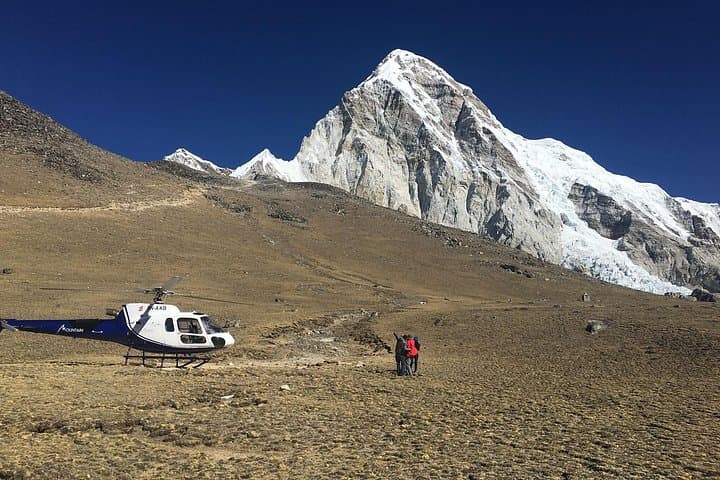
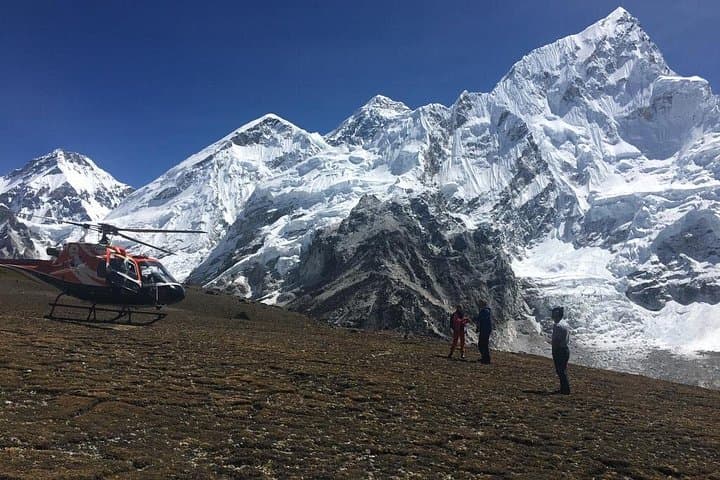
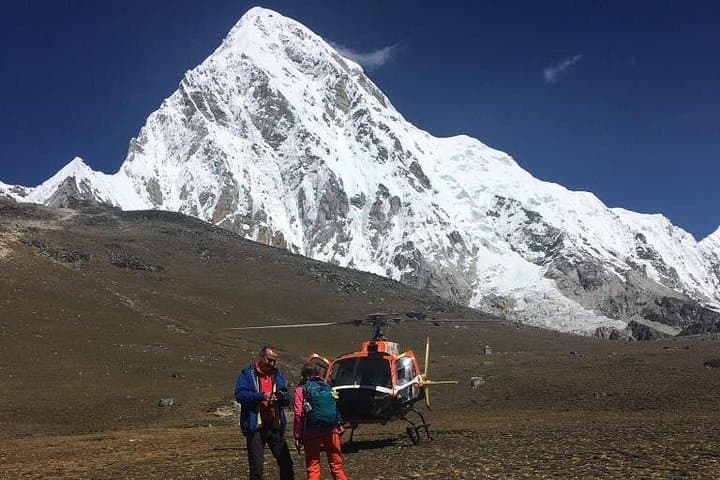
Practicalities guide the final hour: most itineraries include a brief landing or hover at Kala Patthar (~5,400–5,500 m) for photos, plus a stop at the Everest View Hotel for a hot breakfast. Expect 3–4 hours round-trip from central Kathmandu, strict weight limits (total party ~250 kg), passport checks and potential delays for weather. Dress in warm layers, bring sunglasses and hand warmers, and plan for light head pressure from rapid altitude gain. Flights are weather-dependent; refundable or rescheduled options are common. For travelers who want Everest’s close-up without multi-day trekking, the helicopter delivers maximum exposure in minimal time — dramatic, quick, and logistically simple when conditions permit.
The operator enforces a combined passenger and luggage weight limit of about 250 kg; accurate weights are required at booking.
Infants may fly but must sit on an adult’s lap; advise the operator at booking and check safety restrictions for very young children.
Flights are commonly canceled or rescheduled for safety; most providers offer full refunds or alternate dates when weather prevents flying.
The itinerary usually allows an hour at Everest View Hotel for an optional breakfast paid locally; food is not included by default.
Himalaya Holiday service Pvt. Ltd.(HHS) operates guided outdoor trips and adventures with an emphasis on safety, stewardship, and memorable experiences.
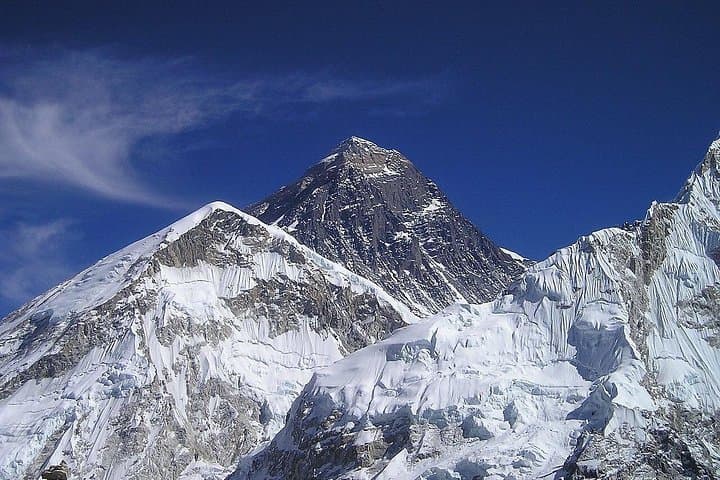
Before sunrise the helicopter lifts off Kathmandu and the valley shrinks beneath a patchwork of roofs and prayer flags. Within an hour the machine climbs into thin, glittering air and the Himalaya push up, uncompromising and close; glaciers and ridgelines carve the horizon and Mount Everest dominates the skyline like a stern mapmaker.
Before sunrise the helicopter lifts off Kathmandu and the valley shrinks beneath a patchwork of roofs and prayer flags. Within an hour the machine climbs into thin, glittering air and the Himalaya push up, uncompromising and close; glaciers and ridgelines carve the horizon and Mount Everest dominates the skyline like a stern mapmaker.
This flight threads a route used by climbers and pilgrims for decades: over Lukla’s tiny airstrip, along the Dudh Koshi river, and into Sagarmatha National Park — a protected landscape established in the 1970s and a UNESCO World Heritage Site. Geology shows itself in stark contrasts here: crevassed ice flowing from high névés, moraines scarred with glacial melt, and black rock spines that tell a story of rapid uplift. Sherpa villages below carry a living mountaineering culture — mani stones, chortens and teahouses speak to faith and high-altitude life.
Practicalities guide the final hour: most itineraries include a brief landing or hover at Kala Patthar (~5,400–5,500 m) for photos, plus a stop at the Everest View Hotel for a hot breakfast. Expect 3–4 hours round-trip from central Kathmandu, strict weight limits (total party ~250 kg), passport checks and potential delays for weather. Dress in warm layers, bring sunglasses and hand warmers, and plan for light head pressure from rapid altitude gain. Flights are weather-dependent; refundable or rescheduled options are common. For travelers who want Everest’s close-up without multi-day trekking, the helicopter delivers maximum exposure in minimal time — dramatic, quick, and logistically simple when conditions permit.
