THE ADVENTURE COLLECTIVE® · Independent discovery and booking for outdoor travel

A thirty-five minute private helicopter flight from Franz Josef that flies over two of the South Island’s major glaciers and includes a ten-minute snow landing in the Southern Alps. Expect dramatic aerial views, variable weather routing, and essential preflight check-in.
A thirty-five minute private helicopter flight from Franz Josef that flies over two of the South Island’s major glaciers and includes a ten-minute snow landing in the Southern Alps. Expect dramatic aerial views, variable weather routing, and essential preflight check-in.
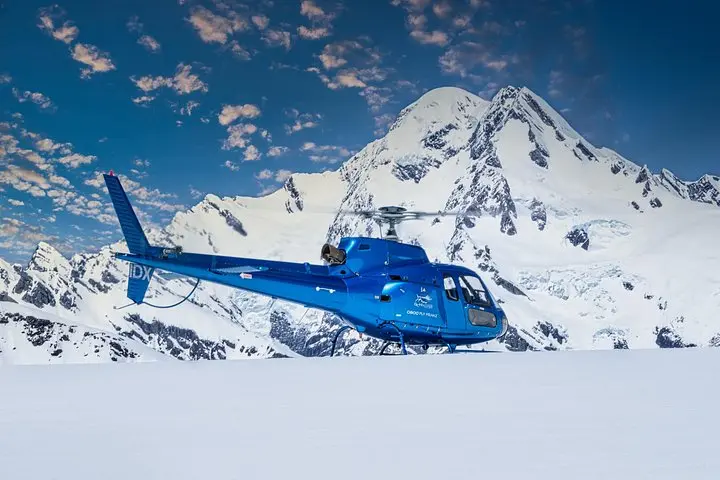
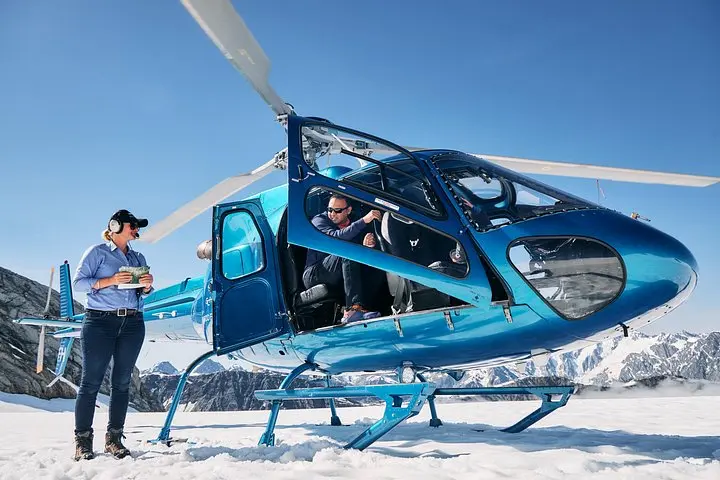
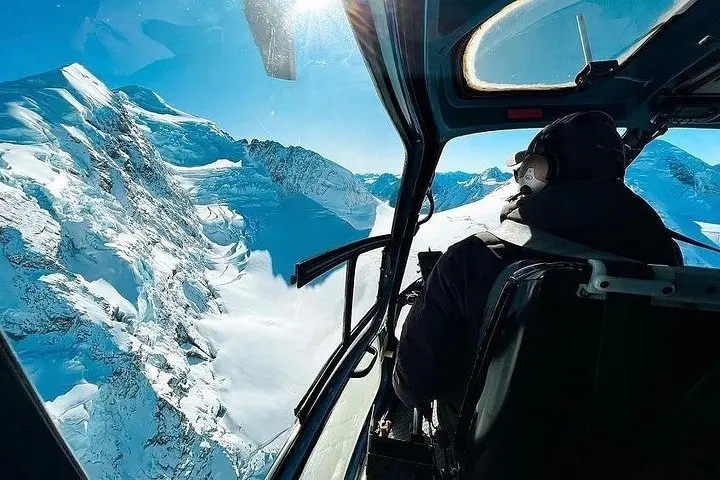
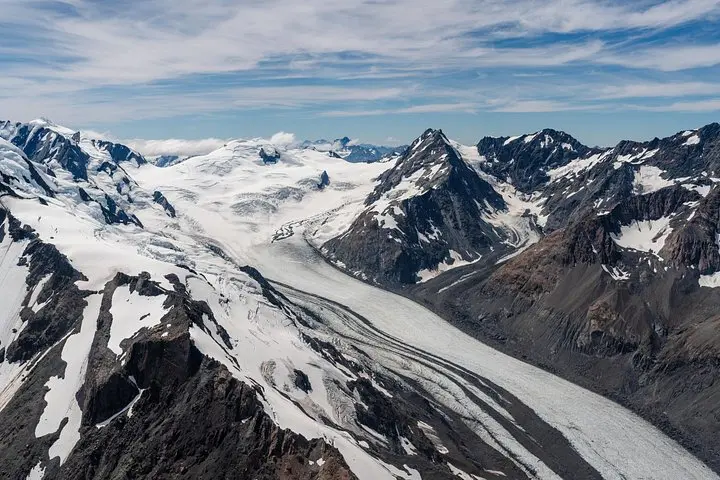
You lift off from the West Coast airstrip and the rainforest recedes beneath the rotor wash—rivers tighten their grips on valley floors and the Southern Alps begin to loom like a weathered spine. The Franz Josef Glacier unspools below, a ribbon of compressed snow and ice that seems to push and pull the land as if it has its own will. In the space of thirty-five minutes you’ll cross glacier tongues, skirt Mount Cook’s flanks, and settle for a ten-minute snow landing on a plateau in the high ranges.
Verified experiences and guided adventures in the surrounding area.
Operated by Glacier Country Helicopters · Franz Josef, West Coast
You lift off from the West Coast airstrip and the rainforest recedes beneath the rotor wash—rivers tighten their grips on valley floors and the Southern Alps begin to loom like a weathered spine. The Franz Josef Glacier unspools below, a ribbon of compressed snow and ice that seems to push and pull the land as if it has its own will. In the space of thirty-five minutes you’ll cross glacier tongues, skirt Mount Cook’s flanks, and settle for a ten-minute snow landing on a plateau in the high ranges.
The glaciers here carry obvious geological stories: rapid alpine uplift, heavy precipitation from the Tasman Sea, and the slow, grinding motion of ice carving valleys. Māori name Franz Josef as Kā Roimata o Hine Hukatere — the tears of Hine Hukatere — a reminder that these icefields sit within a living cultural landscape. Locals are a small, service-oriented community; family-run operators from Franz Josef focus on safety and minimizing environmental impacts.
Practical guidance: allow 45–90 minutes for check-in and transfers; helicopter seating is compact and operators require accurate passenger weights for balance. Weather dictates the route—on some days you’ll see Fox Glacier, on others the Tasman—so flexibility is essential. Bring layered clothing, sunglasses, and a camera with a secure strap; expect cold and wind during the snow landing. Operators follow strict landing-site protocols to limit disturbance to alpine terrain. For an efficient visit, book morning slots for more stable conditions and clearer visibility.
The airborne portion is about 35 minutes with a 10-minute snow landing included; allow 90 minutes total for check-in and transfers.
Pilots select the route based on weather and safety; you may request a preference but routes are not guaranteed.
Yes—operators require accurate passenger weights for helicopter balance; seats are approximately 40cm wide and you can book a comfort seat for extra space.
Flights can be cancelled for safety; the operator offers full refunds if cancelled at least 24 hours in advance or reschedules when possible.
Glacier Country Helicopters operates guided outdoor trips and adventures with an emphasis on safety, stewardship, and memorable experiences.
You lift off from the West Coast airstrip and the rainforest recedes beneath the rotor wash—rivers tighten their grips on valley floors and the Southern Alps begin to loom like a weathered spine. The Franz Josef Glacier unspools below, a ribbon of compressed snow and ice that seems to push and pull the land as if it has its own will. In the space of thirty-five minutes you’ll cross glacier tongues, skirt Mount Cook’s flanks, and settle for a ten-minute snow landing on a plateau in the high ranges.
You lift off from the West Coast airstrip and the rainforest recedes beneath the rotor wash—rivers tighten their grips on valley floors and the Southern Alps begin to loom like a weathered spine. The Franz Josef Glacier unspools below, a ribbon of compressed snow and ice that seems to push and pull the land as if it has its own will. In the space of thirty-five minutes you’ll cross glacier tongues, skirt Mount Cook’s flanks, and settle for a ten-minute snow landing on a plateau in the high ranges.
The glaciers here carry obvious geological stories: rapid alpine uplift, heavy precipitation from the Tasman Sea, and the slow, grinding motion of ice carving valleys. Māori name Franz Josef as Kā Roimata o Hine Hukatere — the tears of Hine Hukatere — a reminder that these icefields sit within a living cultural landscape. Locals are a small, service-oriented community; family-run operators from Franz Josef focus on safety and minimizing environmental impacts.
Practical guidance: allow 45–90 minutes for check-in and transfers; helicopter seating is compact and operators require accurate passenger weights for balance. Weather dictates the route—on some days you’ll see Fox Glacier, on others the Tasman—so flexibility is essential. Bring layered clothing, sunglasses, and a camera with a secure strap; expect cold and wind during the snow landing. Operators follow strict landing-site protocols to limit disturbance to alpine terrain. For an efficient visit, book morning slots for more stable conditions and clearer visibility.