THE ADVENTURE COLLECTIVE® · Independent discovery and booking for outdoor travel

Skip the long trek back—this helicopter transfer from Lukla to Kathmandu delivers 40–45 minutes of panoramic Himalayan flight. Expect high-altitude vistas, a strict weight limit, and weather-dependent departures.
Skip the long trek back—this helicopter transfer from Lukla to Kathmandu delivers 40–45 minutes of panoramic Himalayan flight. Expect high-altitude vistas, a strict weight limit, and weather-dependent departures.
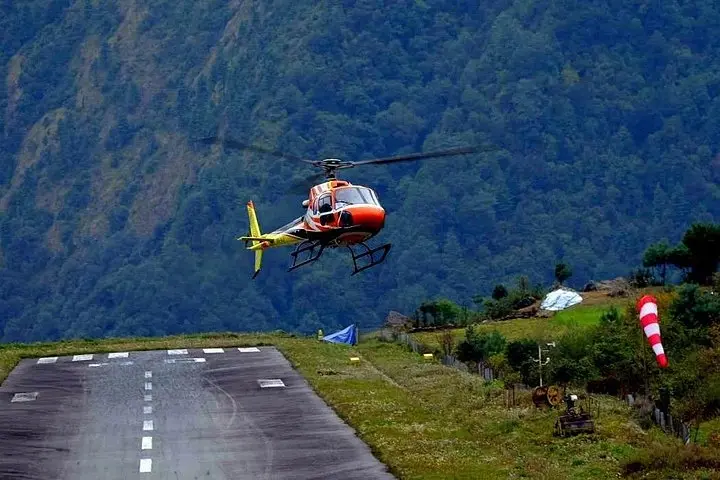
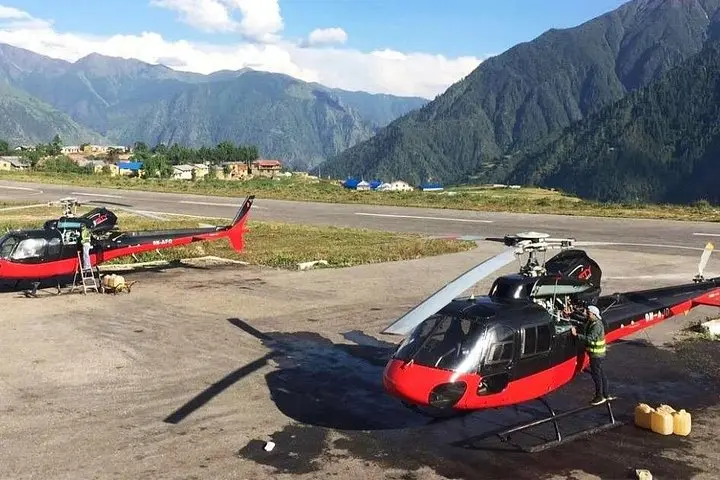
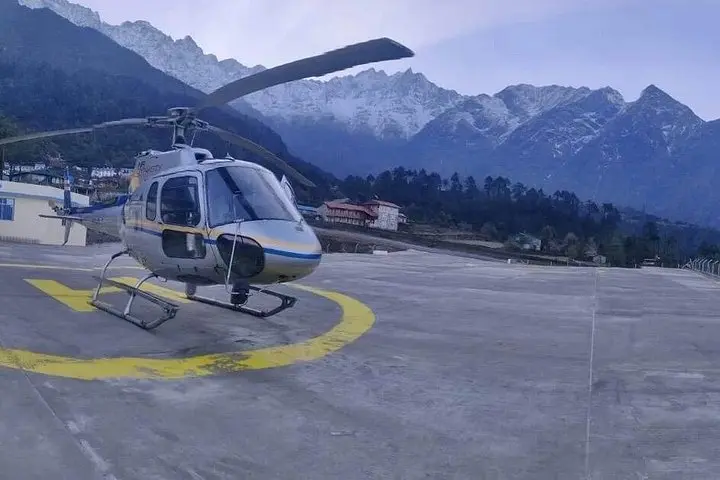
You lift from Lukla’s short helipad and the valley exhales beneath you: terraces, sherpa villages and the steep chop of moraine give way as the helicopter climbs toward a ridge of jagged, white teeth. Windows frame Ama Dablam’s tilted face, the Khumbu’s glaciers tracing pale ribbons down from higher cirques.
Verified experiences and guided adventures in the surrounding area.
Operated by Everest Experience and Assistance · Lukla, Province No. 1
You lift from Lukla’s short helipad and the valley exhales beneath you: terraces, sherpa villages and the steep chop of moraine give way as the helicopter climbs toward a ridge of jagged, white teeth. Windows frame Ama Dablam’s tilted face, the Khumbu’s glaciers tracing pale ribbons down from higher cirques.
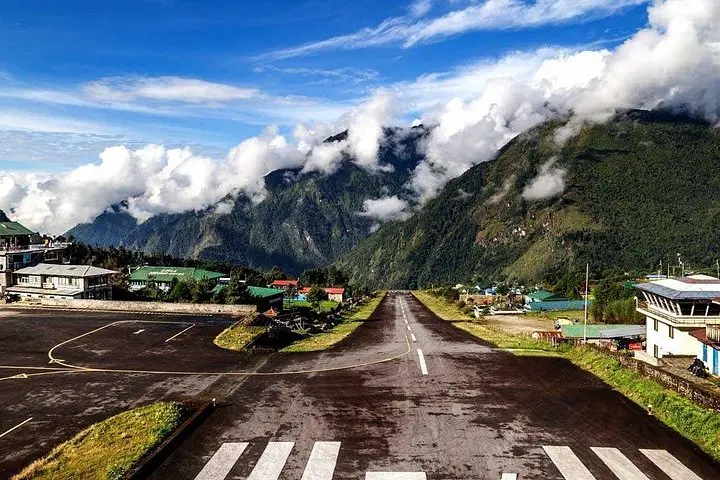
Lukla’s airstrip, constructed in the 1960s and associated with early Everest-era logistics, remains the gateway to Everest country. The flight path follows dramatic geology—young, uplifted peaks carved by glaciers—and crosses cultural ground inhabited by Sherpa communities whose lives are tied to trade routes, shrines and high-altitude agriculture.
From the air you see how settlements cling to sheltered benches and how rivers dare to cut deeper into the high valleys. Pilots trained on Himalayan weather read corridors of wind and thermals the same way mountaineers read seracs; a good crew makes the difference between a bumpy hop and a smooth, panoramic transfer.
Practical guidance: expect 40–45 minutes airborne, carry government ID and your permit info, and note the 110 kg per-person weight limit (including baggage). Flights can be canceled by weather—book buffer time into your itinerary. Dress in layers for cold at altitude, bring sunglasses and a camera with fast shutter speeds for crisp landscape shots. Arrival at Kathmandu’s Tribhuvan Airport is quick; ground transfers are straightforward but can be delayed by airport traffic. This trip isn’t a jump into the mountains—it’s a high-altitude bridge between a remote trailhead and Nepal’s capital, offering a compact, unforgettable view of the upper Himalaya.
Total airborne time is approximately 40–45 minutes, though pre-flight checks and transfers add extra time.
Luggage is limited by aircraft payload and the 110 kg per-person weight limit; soft bags are recommended—check with the operator for exact allowances.
Yes—operators regularly cancel or reschedule flights due to visibility, high winds or heavy cloud; allow buffer days.
Meet at the Lukla Airport helipad or the designated meeting point arranged by the operator—confirm exact location and time in advance.
Everest Experience and Assistance operates guided outdoor trips and adventures with an emphasis on safety, stewardship, and memorable experiences.
You lift from Lukla’s short helipad and the valley exhales beneath you: terraces, sherpa villages and the steep chop of moraine give way as the helicopter climbs toward a ridge of jagged, white teeth. Windows frame Ama Dablam’s tilted face, the Khumbu’s glaciers tracing pale ribbons down from higher cirques.
You lift from Lukla’s short helipad and the valley exhales beneath you: terraces, sherpa villages and the steep chop of moraine give way as the helicopter climbs toward a ridge of jagged, white teeth. Windows frame Ama Dablam’s tilted face, the Khumbu’s glaciers tracing pale ribbons down from higher cirques.
Lukla’s airstrip, constructed in the 1960s and associated with early Everest-era logistics, remains the gateway to Everest country. The flight path follows dramatic geology—young, uplifted peaks carved by glaciers—and crosses cultural ground inhabited by Sherpa communities whose lives are tied to trade routes, shrines and high-altitude agriculture.
From the air you see how settlements cling to sheltered benches and how rivers dare to cut deeper into the high valleys. Pilots trained on Himalayan weather read corridors of wind and thermals the same way mountaineers read seracs; a good crew makes the difference between a bumpy hop and a smooth, panoramic transfer.
Practical guidance: expect 40–45 minutes airborne, carry government ID and your permit info, and note the 110 kg per-person weight limit (including baggage). Flights can be canceled by weather—book buffer time into your itinerary. Dress in layers for cold at altitude, bring sunglasses and a camera with fast shutter speeds for crisp landscape shots. Arrival at Kathmandu’s Tribhuvan Airport is quick; ground transfers are straightforward but can be delayed by airport traffic. This trip isn’t a jump into the mountains—it’s a high-altitude bridge between a remote trailhead and Nepal’s capital, offering a compact, unforgettable view of the upper Himalaya.