THE ADVENTURE COLLECTIVE® · Independent discovery and booking for outdoor travel

Explore Herdla’s coastal forts, wartime runways and bird sanctuary on a focused one-hour guided walk. Expect flat but exposed terrain, prime birdwatching at low tide, and concentrated history at the island museum.
Explore Herdla’s coastal forts, wartime runways and bird sanctuary on a focused one-hour guided walk. Expect flat but exposed terrain, prime birdwatching at low tide, and concentrated history at the island museum.
You step off the ferry breeze onto low, wind-swept heaths where sea spray and grass tussocks argue for attention.
The path threads past concrete bunkers and abandoned runways, the island’s wartime geometry softened by gulls and heather. Across the channel, Hjeltefjorden pulls the eye toward shipping lanes; here the landscape feels active, as if the shoreline itself remembers conflict and calls you to look closer.
Verified experiences and guided adventures in the surrounding area.
Operated by lion · Askøy, Vestland
You step off the ferry breeze onto low, wind-swept heaths where sea spray and grass tussocks argue for attention.
The path threads past concrete bunkers and abandoned runways, the island’s wartime geometry softened by gulls and heather. Across the channel, Hjeltefjorden pulls the eye toward shipping lanes; here the landscape feels active, as if the shoreline itself remembers conflict and calls you to look closer.
Herdla’s history is plain in the ground: a German Luftwaffe airfield, torpedo batteries from the Cold War, and a compact museum that keeps the island’s story visible. Geologically the island is coastal moraine and glacially scoured bedrock, with peat pockets and shallow lagoons that host migratory waders each spring.
Culturally Herdla bridges Bergen’s maritime life and Askøy’s rural island traditions — expect simple fishing cottages, local golf holes splayed against the sea, and interpretive signs at key sites. Birdwatchers prize the reserve: white-tailed eagles and a variety of shorebirds are common sightings, especially at low tide.
Practical guidance: this compact guided walk is suitable for almost every fitness level and runs about an hour; bring windproof layers and binoculars. Trails are mostly flat but uneven and exposed; footwear with good grip is recommended. Respect nesting areas, keep dogs leashed, and follow the guide’s route to avoid sensitive habitat. Timing matters — late afternoon light sharpens cliff edges and late spring brings peak bird activity. With a short loop and concentrated history, this tour offers a dense, walkable slice of Norway’s coastal and military past.
The guided walk runs about 60 minutes and covers a short loop with stops at the museum and key wartime remains.
Yes; the tour is rated easy and suitable for most ages and fitness levels, though some paths are uneven.
Service animals are allowed; other dogs should be leashed and only brought if they won’t disturb nesting birds.
Facilities are limited; bring water and snacks. The Herdla Museum area may have basic amenities—check with the operator before booking.
lion operates guided outdoor trips and adventures with an emphasis on safety, stewardship, and memorable experiences.
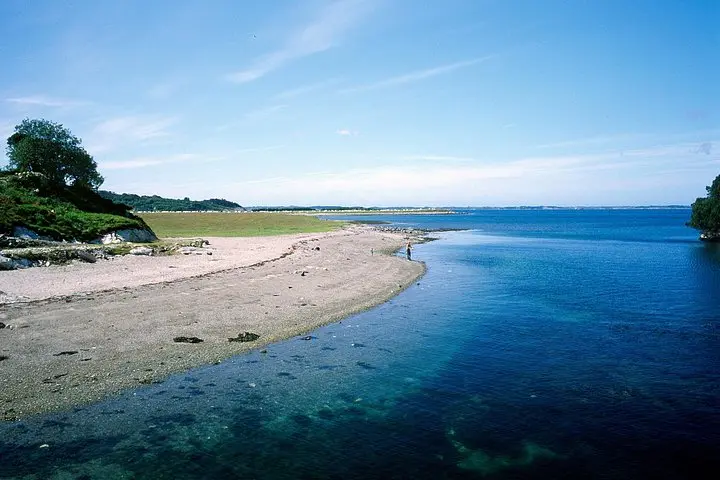



You step off the ferry breeze onto low, wind-swept heaths where sea spray and grass tussocks argue for attention.
The path threads past concrete bunkers and abandoned runways, the island’s wartime geometry softened by gulls and heather. Across the channel, Hjeltefjorden pulls the eye toward shipping lanes; here the landscape feels active, as if the shoreline itself remembers conflict and calls you to look closer.
Herdla’s history is plain in the ground: a German Luftwaffe airfield, torpedo batteries from the Cold War, and a compact museum that keeps the island’s story visible. Geologically the island is coastal moraine and glacially scoured bedrock, with peat pockets and shallow lagoons that host migratory waders each spring.
Culturally Herdla bridges Bergen’s maritime life and Askøy’s rural island traditions — expect simple fishing cottages, local golf holes splayed against the sea, and interpretive signs at key sites. Birdwatchers prize the reserve: white-tailed eagles and a variety of shorebirds are common sightings, especially at low tide.
Practical guidance: this compact guided walk is suitable for almost every fitness level and runs about an hour; bring windproof layers and binoculars. Trails are mostly flat but uneven and exposed; footwear with good grip is recommended. Respect nesting areas, keep dogs leashed, and follow the guide’s route to avoid sensitive habitat. Timing matters — late afternoon light sharpens cliff edges and late spring brings peak bird activity. With a short loop and concentrated history, this tour offers a dense, walkable slice of Norway’s coastal and military past.