THE ADVENTURE COLLECTIVE® · Independent discovery and booking for outdoor travel

Trace human and natural history on the Hermanus cliff path: a 2–2.5 hour, guide-led walk that combines whale-watching, fynbos medicine, and hands-on artefacts for an intimate coastal education.
Trace human and natural history on the Hermanus cliff path: a 2–2.5 hour, guide-led walk that combines whale-watching, fynbos medicine, and hands-on artefacts for an intimate coastal education.
The path runs like a slow conversation between sea and stone — wind-driven waves carving ledges beneath your feet as the ocean calls from Walker Bay. Start on the cliff edge and you’ll feel the immediate scale: low cliffs, foamy surf, and the long sweep of beach populated by bobbing gulls and, in season, the distinctive backs of southern right whales.
Verified experiences and guided adventures in the surrounding area.
Operated by Cape Caracal Africa · Hermanus, Western Cape
The path runs like a slow conversation between sea and stone — wind-driven waves carving ledges beneath your feet as the ocean calls from Walker Bay. Start on the cliff edge and you’ll feel the immediate scale: low cliffs, foamy surf, and the long sweep of beach populated by bobbing gulls and, in season, the distinctive backs of southern right whales.
This two-hour history-focused walk layers natural history over human stories. The coastline sits on Cape Fold Belt formations—sandstone shelves and folded strata that record a restless geological past. Ecology is equally visible: low-growing fynbos plants hug the trail, their aromatic leaves used for traditional remedies that guides often point out. Cultural threads run from Khoisan artefacts and oral histories to accounts of European shipwrecks and early colonial settlements that shaped local fishing villages.
Local guides bring the walk to life with hands-on artefacts, honeybush tea, and simple tastings of wild honey, making the past tactile rather than museum-bound. Expect frequent stops for storytelling, birding, and whale-spotting when conditions allow.
Practical edge: the route is generally flat with short rocky steps; sturdy shoes and sun protection make the walk easier. Morning light is best for whale viewing and gentler winds; afternoons can be windy. The tour is family-friendly but not recommended for those with serious spinal or cardiac conditions. Book ahead for private, small-group experiences and plan for a 2–2.5 hour outing with plenty of photo opportunities and interpretive stops.
Southern right whales are most commonly seen from June to November; guides can time walks for peak sightings during that season.
Yes—this is a family-friendly tour with interactive artefacts and short stops, but children should be supervised on cliff edges and rocky sections.
No technical climbing is required; the route is mostly coastal path with occasional rocky steps—closed-toe shoes recommended.
The operator offers full refunds if you cancel at least 24 hours before the scheduled departure time; check your confirmation for details.
Cape Caracal Africa operates guided outdoor trips and adventures with an emphasis on safety, stewardship, and memorable experiences.
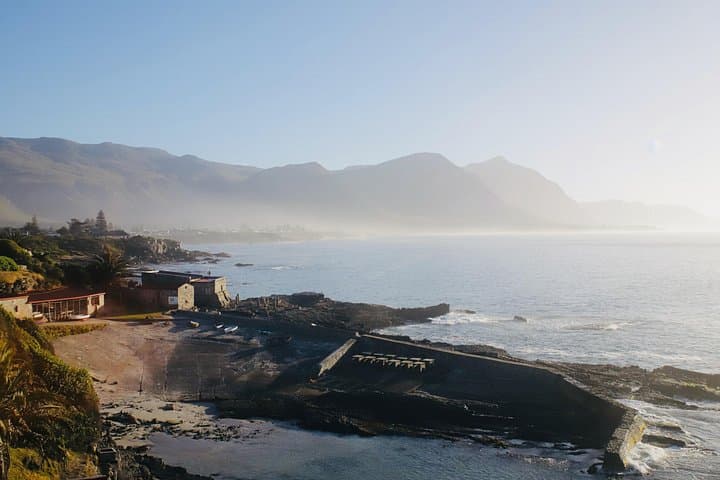


The path runs like a slow conversation between sea and stone — wind-driven waves carving ledges beneath your feet as the ocean calls from Walker Bay. Start on the cliff edge and you’ll feel the immediate scale: low cliffs, foamy surf, and the long sweep of beach populated by bobbing gulls and, in season, the distinctive backs of southern right whales.
The path runs like a slow conversation between sea and stone — wind-driven waves carving ledges beneath your feet as the ocean calls from Walker Bay. Start on the cliff edge and you’ll feel the immediate scale: low cliffs, foamy surf, and the long sweep of beach populated by bobbing gulls and, in season, the distinctive backs of southern right whales.
This two-hour history-focused walk layers natural history over human stories. The coastline sits on Cape Fold Belt formations—sandstone shelves and folded strata that record a restless geological past. Ecology is equally visible: low-growing fynbos plants hug the trail, their aromatic leaves used for traditional remedies that guides often point out. Cultural threads run from Khoisan artefacts and oral histories to accounts of European shipwrecks and early colonial settlements that shaped local fishing villages.
Local guides bring the walk to life with hands-on artefacts, honeybush tea, and simple tastings of wild honey, making the past tactile rather than museum-bound. Expect frequent stops for storytelling, birding, and whale-spotting when conditions allow.
Practical edge: the route is generally flat with short rocky steps; sturdy shoes and sun protection make the walk easier. Morning light is best for whale viewing and gentler winds; afternoons can be windy. The tour is family-friendly but not recommended for those with serious spinal or cardiac conditions. Book ahead for private, small-group experiences and plan for a 2–2.5 hour outing with plenty of photo opportunities and interpretive stops.