THE ADVENTURE COLLECTIVE® · Independent discovery and booking for outdoor travel

Explore Herzegovina in a single day: a morning at the Buna spring and Dervish tekija, a cultural stop in Počitelj’s Ottoman streets, and an afternoon swimming beneath the Kravice waterfalls. This practical tour blends geology, history and local flavors for a compact regional sampler.
Explore Herzegovina in a single day: a morning at the Buna spring and Dervish tekija, a cultural stop in Počitelj’s Ottoman streets, and an afternoon swimming beneath the Kravice waterfalls. This practical tour blends geology, history and local flavors for a compact regional sampler.
You arrive at the Buna spring before the group disperses, the river emerging cool and insistent from a cliff face that seems to breathe. The 16th‑century Dervish tekija leans over the water; its courtyard tees up mint tea and a view where the Buna dares you to step closer and listen.
Verified experiences and guided adventures in the surrounding area.
Operated by NowBosnia · Mostar, Herzegovina-Neretva Canton
You arrive at the Buna spring before the group disperses, the river emerging cool and insistent from a cliff face that seems to breathe. The 16th‑century Dervish tekija leans over the water; its courtyard tees up mint tea and a view where the Buna dares you to step closer and listen.
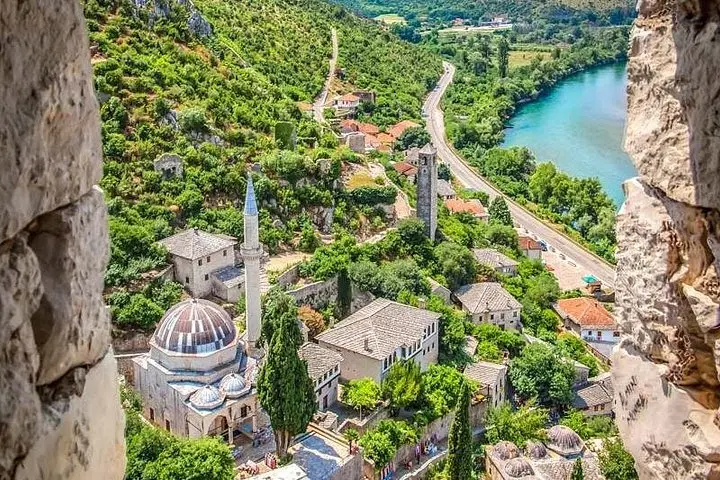
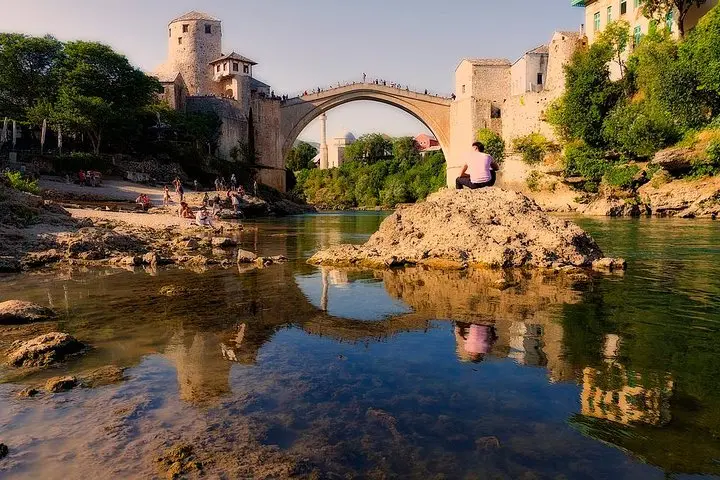
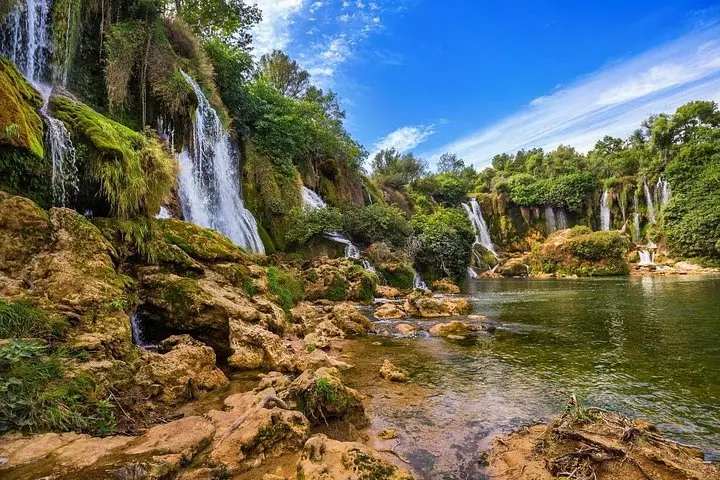
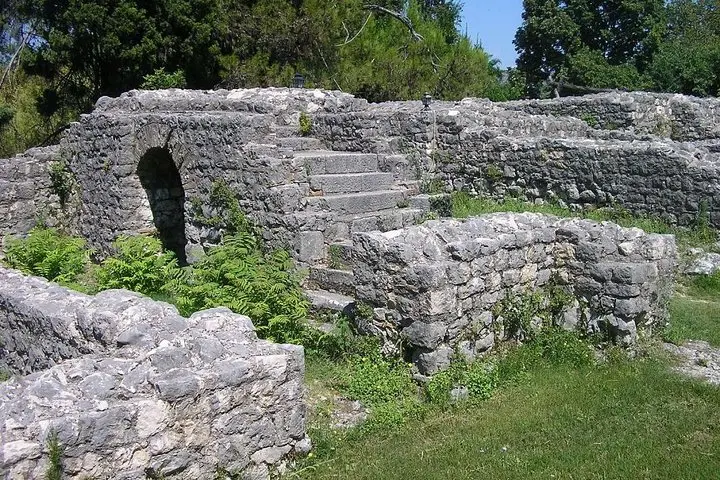
This full‑day loop through southern Herzegovina threads Ottoman architecture, medieval stonework and raw karst geology. Blagaj’s tekija marks an Ottoman-era spiritual anchor built beside one of Europe’s largest karst springs. Downriver, Počitelj preserves fortified walls and Ottoman-era houses rebuilt after conflict, while local artists still populate the hill-top studios. Further west, Kravice’s travertine terraces and a 25m curtain of water show how limestone and time build natural pools—best in spring when the falls run fullest.
Culturally the route is small‑town Herzegovina: cafés serving strong Turkish coffee, family-run konobas offering grilled lamb, and villagers who’ve long fished and farmed the karst plains. Geologically, expect limestone pavements, tufa deposits and clear, cold river pools.
Practical guide: plan 6–8 hours, wear comfortable walking shoes and a light rain layer—paths at Počitelj and the approach to Kravice include uneven stone and steps. Bring swimwear if visiting in summer, but check current conditions; swimming areas are informal and can be crowded. Photography is best in morning light at Blagaj or late afternoon at Kravice. If departing from Mostar or Sarajevo, confirm pickup points ahead; private or group options are common. Respect marked trails, avoid disturbing vegetation near the springs, and carry reusable water to reduce plastic waste.
Most group departures start in Mostar or Sarajevo; private pickups from nearby towns may be arranged with advance notice.
Yes—there are natural pools at the base of the falls commonly used for swimming in warmer months; always follow local safety guidance and watch currents.
Admission to some sites may not be included—confirm at booking; Počitelj may have small access fees while Kravice typically charges a park entrance in peak season.
The itinerary is rated easy with short walks, but Počitelj and areas near Kravice involve steps and uneven ground; stroller access is possible at some stops but check in advance.
NowBosnia operates guided outdoor trips and adventures with an emphasis on safety, stewardship, and memorable experiences.
You arrive at the Buna spring before the group disperses, the river emerging cool and insistent from a cliff face that seems to breathe. The 16th‑century Dervish tekija leans over the water; its courtyard tees up mint tea and a view where the Buna dares you to step closer and listen.
You arrive at the Buna spring before the group disperses, the river emerging cool and insistent from a cliff face that seems to breathe. The 16th‑century Dervish tekija leans over the water; its courtyard tees up mint tea and a view where the Buna dares you to step closer and listen.
This full‑day loop through southern Herzegovina threads Ottoman architecture, medieval stonework and raw karst geology. Blagaj’s tekija marks an Ottoman-era spiritual anchor built beside one of Europe’s largest karst springs. Downriver, Počitelj preserves fortified walls and Ottoman-era houses rebuilt after conflict, while local artists still populate the hill-top studios. Further west, Kravice’s travertine terraces and a 25m curtain of water show how limestone and time build natural pools—best in spring when the falls run fullest.
Culturally the route is small‑town Herzegovina: cafés serving strong Turkish coffee, family-run konobas offering grilled lamb, and villagers who’ve long fished and farmed the karst plains. Geologically, expect limestone pavements, tufa deposits and clear, cold river pools.
Practical guide: plan 6–8 hours, wear comfortable walking shoes and a light rain layer—paths at Počitelj and the approach to Kravice include uneven stone and steps. Bring swimwear if visiting in summer, but check current conditions; swimming areas are informal and can be crowded. Photography is best in morning light at Blagaj or late afternoon at Kravice. If departing from Mostar or Sarajevo, confirm pickup points ahead; private or group options are common. Respect marked trails, avoid disturbing vegetation near the springs, and carry reusable water to reduce plastic waste.