THE ADVENTURE COLLECTIVE® · Independent discovery and booking for outdoor travel

Spend a full day from Mostar exploring Blagaj’s spring, Počitelj’s fortress streets, the medieval stećci of Radimlja, Kravice’s plunging cascades and a wine tasting on karst terraces. This practical guide tells you what to expect and how to prepare.
Spend a full day from Mostar exploring Blagaj’s spring, Počitelj’s fortress streets, the medieval stećci of Radimlja, Kravice’s plunging cascades and a wine tasting on karst terraces. This practical guide tells you what to expect and how to prepare.
You step from an air-conditioned minivan into a cool pocket of karst air where the Buna River issues from a limestone mouth and cliffs lean close enough to hear water whisper. Walking toward the 16th‑century Dervish monastery at Blagaj, the river dares you to slow down; downstream, fig trees shade narrow stone lanes in Počitelj and the Neretva valley opens into warm ochre slopes.
Verified experiences and guided adventures in the surrounding area.
Operated by iHouse Travel · Mostar, Herzegovina-Neretva Canton
You step from an air-conditioned minivan into a cool pocket of karst air where the Buna River issues from a limestone mouth and cliffs lean close enough to hear water whisper. Walking toward the 16th‑century Dervish monastery at Blagaj, the river dares you to slow down; downstream, fig trees shade narrow stone lanes in Počitelj and the Neretva valley opens into warm ochre slopes.
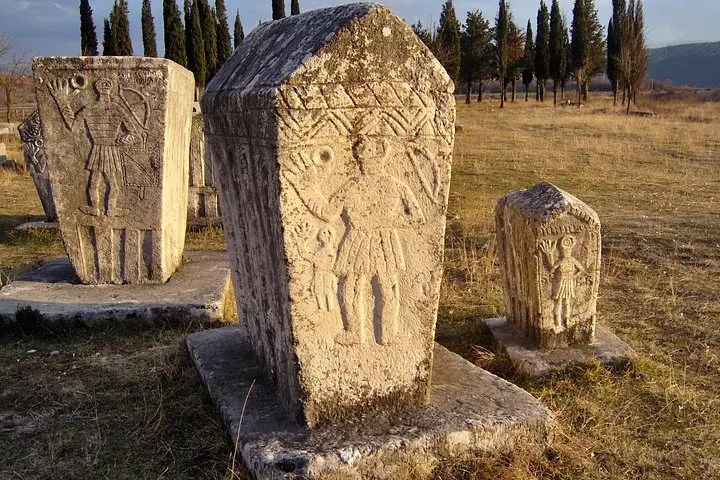
This full‑day loop stitches together Ottoman forts, medieval stećci and Orthodox and Islamic monastic sites—each place an architectural footprint of Herzegovina’s layered past. Radimlja’s carved tombstones record medieval life in stone; Počitelj’s fortified tower remembers Ottoman strategic control of the river corridor; Kravice’s travertine cascades are young geology in motion, where tufa barriers build with every season.
Expect a mix of short walks, photo stops and a swim window at Kravice in warm months. Cultural stops are low-impact but require modest dress at religious sites; Radimlja’s necropolis demands respectful footing to preserve fragile reliefs. The vineyards of Kameni Vinogradi sit on thin, sunbaked soils—perfect for hardy grape varieties and a compact wine tasting to close the day.
Practical guidance: book with pickup from Mostar, bring swimwear and quick‑dry layers, and carry cash for small village vendors and tips. Wear sturdy walking shoes for uneven stone streets and a light rain layer in shoulder seasons. Time your visit before mid‑afternoon in summer to avoid heat and the busiest crowds—Herzegovina rewards an early, steady pace.
Pickup is offered from selected hotels in Mostar—confirm your pickup point when booking to ensure inclusion.
Yes; visitors regularly swim at Kravice in warm months, but water can be cold and access depends on seasonal water levels and local regulations.
Yes—this itinerary includes a tasting at Kameni Vinogradi or a local winery; additional purchases are paid separately.
Many stops have limited stroller access; the operator notes stroller accessibility and infant seats are available but expect uneven surfaces at historic sites.
iHouse Travel operates guided outdoor trips and adventures with an emphasis on safety, stewardship, and memorable experiences.

You step from an air-conditioned minivan into a cool pocket of karst air where the Buna River issues from a limestone mouth and cliffs lean close enough to hear water whisper. Walking toward the 16th‑century Dervish monastery at Blagaj, the river dares you to slow down; downstream, fig trees shade narrow stone lanes in Počitelj and the Neretva valley opens into warm ochre slopes.
You step from an air-conditioned minivan into a cool pocket of karst air where the Buna River issues from a limestone mouth and cliffs lean close enough to hear water whisper. Walking toward the 16th‑century Dervish monastery at Blagaj, the river dares you to slow down; downstream, fig trees shade narrow stone lanes in Počitelj and the Neretva valley opens into warm ochre slopes.
This full‑day loop stitches together Ottoman forts, medieval stećci and Orthodox and Islamic monastic sites—each place an architectural footprint of Herzegovina’s layered past. Radimlja’s carved tombstones record medieval life in stone; Počitelj’s fortified tower remembers Ottoman strategic control of the river corridor; Kravice’s travertine cascades are young geology in motion, where tufa barriers build with every season.
Expect a mix of short walks, photo stops and a swim window at Kravice in warm months. Cultural stops are low-impact but require modest dress at religious sites; Radimlja’s necropolis demands respectful footing to preserve fragile reliefs. The vineyards of Kameni Vinogradi sit on thin, sunbaked soils—perfect for hardy grape varieties and a compact wine tasting to close the day.
Practical guidance: book with pickup from Mostar, bring swimwear and quick‑dry layers, and carry cash for small village vendors and tips. Wear sturdy walking shoes for uneven stone streets and a light rain layer in shoulder seasons. Time your visit before mid‑afternoon in summer to avoid heat and the busiest crowds—Herzegovina rewards an early, steady pace.