THE ADVENTURE COLLECTIVE® · Independent discovery and booking for outdoor travel

Escape Marrakech for a six-hour guided hike into the High Atlas to visit an authentic Berber village. Walk ancient footpaths, share mint tea with locals, and trade noisy bus stops for sweeping mountain views.
Escape Marrakech for a six-hour guided hike into the High Atlas to visit an authentic Berber village. Walk ancient footpaths, share mint tea with locals, and trade noisy bus stops for sweeping mountain views.
You step off the air-conditioned van and the Atlas opens: a patchwork of terraced fields, dry stone walls and a ribbon of donkey tracks that lead uphill. Air here is thinner and sharper; the wind through the gullies seems to push you toward the ridge where the village perches — low white houses with flat roofs, smoke from wood fires, and the clipped cadence of Tamazight conversation.
Verified experiences and guided adventures in the surrounding area.
Operated by MTB Morocco · Marrakech, Marrakech-Safi
You step off the air-conditioned van and the Atlas opens: a patchwork of terraced fields, dry stone walls and a ribbon of donkey tracks that lead uphill. Air here is thinner and sharper; the wind through the gullies seems to push you toward the ridge where the village perches — low white houses with flat roofs, smoke from wood fires, and the clipped cadence of Tamazight conversation.
The High Atlas is a young, uplifted range carved by tectonic collision and seasonal torrents; granite outcrops and red-brown schists frame the valleys you walk. The landscape has been shaped by centuries of Berber (Amazigh) agriculture — agdal terraces and irrigation channels that keep olive and fig trees alive on steep slopes. Culture is visible in everyday gestures: mint tea shared on a doorstep, woven textiles drying on a wall, and simple stone ovens used to bake flatbread.
Expect narrow mule tracks, loose scree on steeper pitches, and panoramic viewpoints that reward steady climbs. A local guide will explain keystone practices like transhumance and point out local flora. Wildlife is discreet: raptors wheel above and, with luck, a macaque might watch from a juniper.
Practical guidance: wear sturdy, grippy footwear and layers for temperature swings; bring 1–2 liters of water, sun protection, and cash for tea or a small lunch. The hike is best in spring or fall for cooler temperatures and blooming terraces; summer can be hot and winter may bring snow at higher elevations. Respect private land, ask before photographing families, and leave no trace — these routes remain lived-in places, not parks.
The operator rates it suitable for all fitness levels; expect steady walking, some short climbs, and uneven terrain but no technical scrambling.
Local guides commonly speak Tamazight and Arabic; many also speak French and basic English.
Older children who can comfortably walk several hours and handle uneven ground will do fine; check with the operator about age limits.
Tipping is customary; a small tip to guides and a modest amount if you share a meal with a family is appreciated.
MTB Morocco operates guided outdoor trips and adventures with an emphasis on safety, stewardship, and memorable experiences.
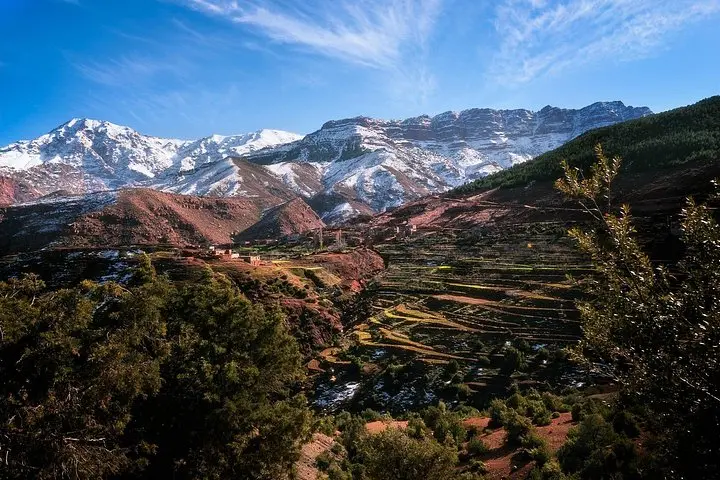
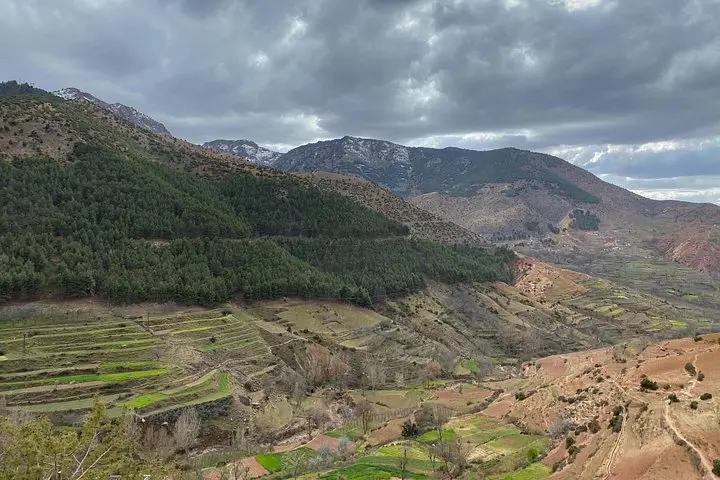
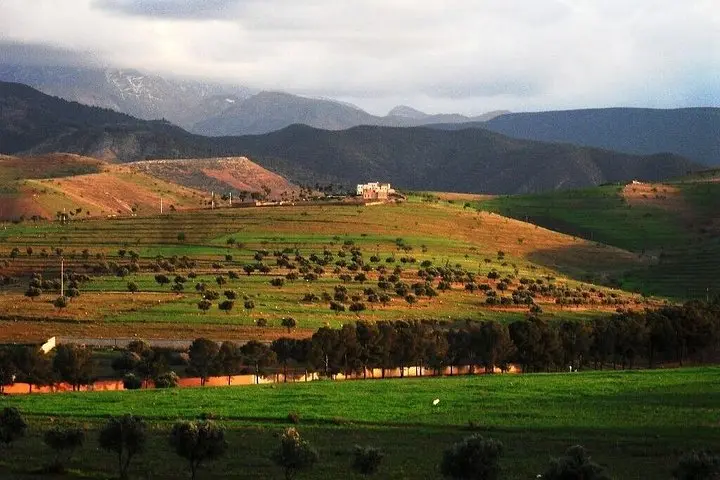
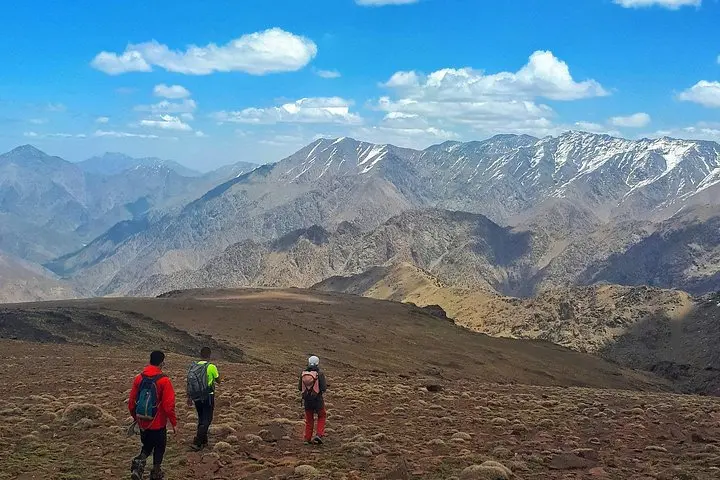
You step off the air-conditioned van and the Atlas opens: a patchwork of terraced fields, dry stone walls and a ribbon of donkey tracks that lead uphill. Air here is thinner and sharper; the wind through the gullies seems to push you toward the ridge where the village perches — low white houses with flat roofs, smoke from wood fires, and the clipped cadence of Tamazight conversation.
You step off the air-conditioned van and the Atlas opens: a patchwork of terraced fields, dry stone walls and a ribbon of donkey tracks that lead uphill. Air here is thinner and sharper; the wind through the gullies seems to push you toward the ridge where the village perches — low white houses with flat roofs, smoke from wood fires, and the clipped cadence of Tamazight conversation.
The High Atlas is a young, uplifted range carved by tectonic collision and seasonal torrents; granite outcrops and red-brown schists frame the valleys you walk. The landscape has been shaped by centuries of Berber (Amazigh) agriculture — agdal terraces and irrigation channels that keep olive and fig trees alive on steep slopes. Culture is visible in everyday gestures: mint tea shared on a doorstep, woven textiles drying on a wall, and simple stone ovens used to bake flatbread.
Expect narrow mule tracks, loose scree on steeper pitches, and panoramic viewpoints that reward steady climbs. A local guide will explain keystone practices like transhumance and point out local flora. Wildlife is discreet: raptors wheel above and, with luck, a macaque might watch from a juniper.
Practical guidance: wear sturdy, grippy footwear and layers for temperature swings; bring 1–2 liters of water, sun protection, and cash for tea or a small lunch. The hike is best in spring or fall for cooler temperatures and blooming terraces; summer can be hot and winter may bring snow at higher elevations. Respect private land, ask before photographing families, and leave no trace — these routes remain lived-in places, not parks.