THE ADVENTURE COLLECTIVE® · Independent discovery and booking for outdoor travel

Descend 30 metres beneath Clapham South for a 75-minute guided tour of a WWII deep-level shelter. Experience recreated wardens’ booths and canteens while learning about wartime life and shelter design.
Descend 30 metres beneath Clapham South for a 75-minute guided tour of a WWII deep-level shelter. Experience recreated wardens’ booths and canteens while learning about wartime life and shelter design.
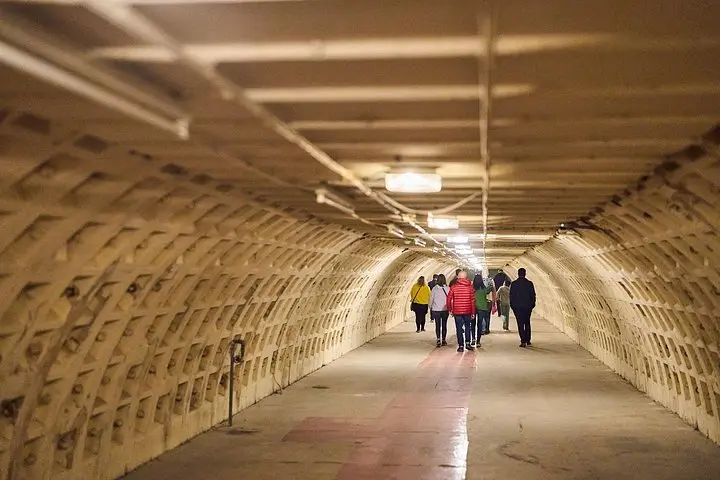
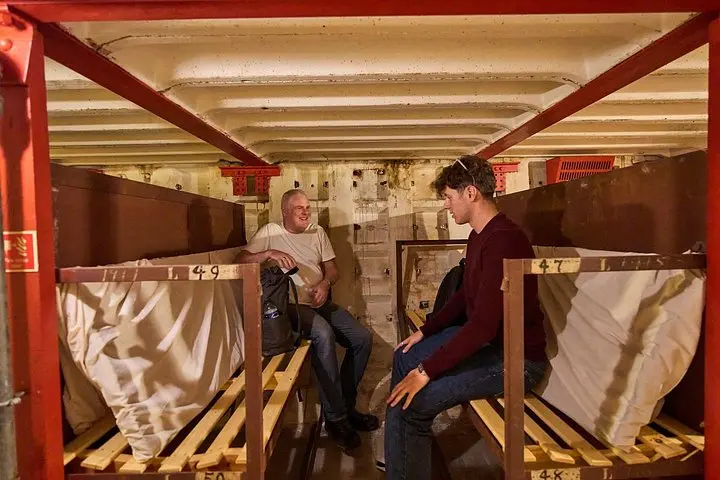
A cold stone stairway swallows the city’s noise as you descend; the air cools and the lamps throw small islands of light across corrugated, soot-dark walls. At 30 metres below Clapham South, a corridor widens into the shelter’s main artery — a place that once held kitchens, bunks and a laundry of voices. Guides lead the group slowly, the steps creaking in unison with visitors' breath as they trace routes used by Londoners during the Blitz.
Verified experiences and guided adventures in the surrounding area.
Operated by London Transport Museum · Clapham, Greater London
A cold stone stairway swallows the city’s noise as you descend; the air cools and the lamps throw small islands of light across corrugated, soot-dark walls. At 30 metres below Clapham South, a corridor widens into the shelter’s main artery — a place that once held kitchens, bunks and a laundry of voices. Guides lead the group slowly, the steps creaking in unison with visitors' breath as they trace routes used by Londoners during the Blitz.
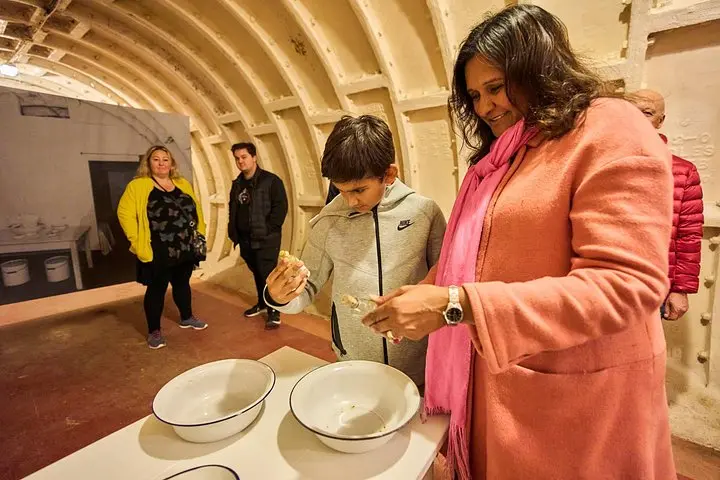
Built in 1944 as one of eight deep-level shelters, the Clapham South complex was intended to protect thousands and includes spaces recreated as a warden’s booth, canteen and medical bay. Geologically, the tunnels are carved through London clay and reinforced with concrete rings; the confined geometry channels sound and gives the passageways a deliberate, enclosed character. Culturally, the shelter is a reminder of communal wartime life in South London — local stories, rationing improvisations and the role of volunteer wardens are threaded through the tour.
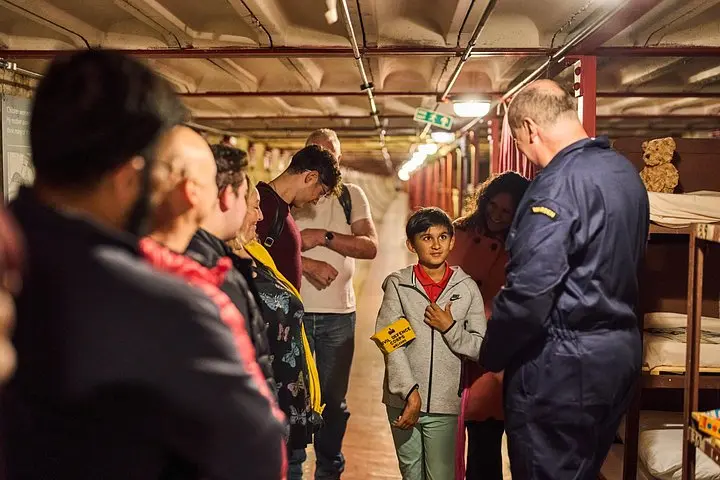
Practical guidance: the experience is a largely on-foot, 75-minute guided walk with several flights of stairs, uneven surfaces and dim lighting. Wear closed-toe shoes, bring photo ID and pace yourself on the descent. Tours impose strict safety rules — no large bags, no food or drink, and children under 10 are not permitted. Expect theatrical interpretation from costumed guides and interpretive displays that recreate daily routines underground.
This is an immersive, historically focused short adventure: part urban exploration, part living museum, ideal for history-minded travelers comfortable with narrow, stair-filled spaces.
No — the tour includes many stairs and there is no elevator access; it is not step-free.
Photography is generally allowed but follow guide instructions; avoid using flash where asked to preserve displays.
Children under 10 are not permitted; a maximum of four children aged 10–15 may join per adult.
This tour is not recommended for those with claustrophobia or significant mobility limitations due to confined spaces and staircases.
London Transport Museum operates guided outdoor trips and adventures with an emphasis on safety, stewardship, and memorable experiences.
A cold stone stairway swallows the city’s noise as you descend; the air cools and the lamps throw small islands of light across corrugated, soot-dark walls. At 30 metres below Clapham South, a corridor widens into the shelter’s main artery — a place that once held kitchens, bunks and a laundry of voices. Guides lead the group slowly, the steps creaking in unison with visitors' breath as they trace routes used by Londoners during the Blitz.
A cold stone stairway swallows the city’s noise as you descend; the air cools and the lamps throw small islands of light across corrugated, soot-dark walls. At 30 metres below Clapham South, a corridor widens into the shelter’s main artery — a place that once held kitchens, bunks and a laundry of voices. Guides lead the group slowly, the steps creaking in unison with visitors' breath as they trace routes used by Londoners during the Blitz.
Built in 1944 as one of eight deep-level shelters, the Clapham South complex was intended to protect thousands and includes spaces recreated as a warden’s booth, canteen and medical bay. Geologically, the tunnels are carved through London clay and reinforced with concrete rings; the confined geometry channels sound and gives the passageways a deliberate, enclosed character. Culturally, the shelter is a reminder of communal wartime life in South London — local stories, rationing improvisations and the role of volunteer wardens are threaded through the tour.
Practical guidance: the experience is a largely on-foot, 75-minute guided walk with several flights of stairs, uneven surfaces and dim lighting. Wear closed-toe shoes, bring photo ID and pace yourself on the descent. Tours impose strict safety rules — no large bags, no food or drink, and children under 10 are not permitted. Expect theatrical interpretation from costumed guides and interpretive displays that recreate daily routines underground.
This is an immersive, historically focused short adventure: part urban exploration, part living museum, ideal for history-minded travelers comfortable with narrow, stair-filled spaces.