THE ADVENTURE COLLECTIVE® · Independent discovery and booking for outdoor travel

Beat the crowds with early access to Hierve el Agua and a bilingual personal guide. Hike along petrified cascades, swim in mineral pools and learn the geology and Zapotec history that shaped this dramatic site.
Beat the crowds with early access to Hierve el Agua and a bilingual personal guide. Hike along petrified cascades, swim in mineral pools and learn the geology and Zapotec history that shaped this dramatic site.
The bus lets you out before sunrise and the terraces of Hierve el Agua are already cooling from night — calcified cascades catch the first light like a slow-moving sea turned to stone. Your guide walks ahead, pointing out mineral flows that once dripped with hot, mineral-rich water; now they stand as broad, scalloped cliffs and rimmed pools where visitors can step in and shake off the road dust.
Verified experiences and guided adventures in the surrounding area.
Operated by Oaxacan Journey · Oaxaca de Juárez, Oaxaca
The bus lets you out before sunrise and the terraces of Hierve el Agua are already cooling from night — calcified cascades catch the first light like a slow-moving sea turned to stone. Your guide walks ahead, pointing out mineral flows that once dripped with hot, mineral-rich water; now they stand as broad, scalloped cliffs and rimmed pools where visitors can step in and shake off the road dust.
This place is geological theatre: travertine and tufa formed over millennia as carbonate-rich springs deposited layers that built the “petrified” waterfalls you see. The site sits in the Mixteca Alta, a landscape shaped by uplift, erosion and centuries of Zapotec farming nearby; village life and centuries-old terraces frame the views. Local guides often share stories about ancestral water management and the springs’ role in community rites.
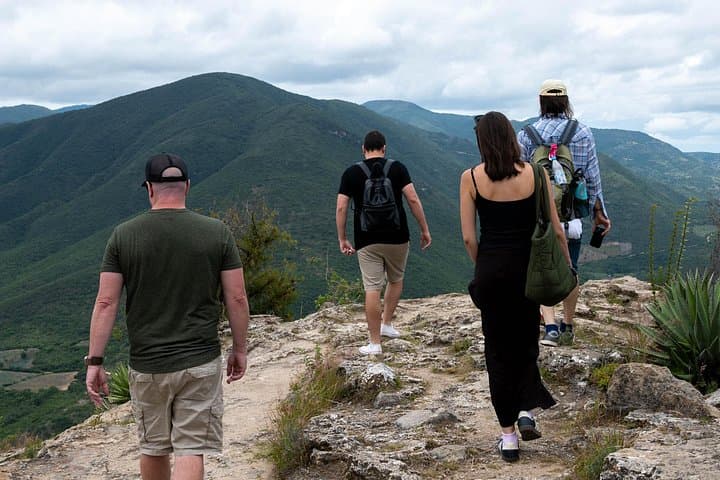
Expect 1–2 easy to moderate trails along rocky ledges and short switchbacks to viewpoints. Trails are exposed; the sun and wind are part of the scenery and can be relentless. Pools are fed by natural springs — they invite a dip, but do not use soaps or sunscreen in the water to protect the travertine.
Practically: arrive early to avoid buses, wear sturdy shoes with traction, bring layered sun protection and 1–2 liters of water. The half-day tour with pickup compresses transport and interpretation into a comfortable rhythm so you can hike, photograph and swim without rushing. Respect fenced areas and local rules — the formations are fragile and recovery from damage can take generations.
Pickup times vary by hotel location, but expect about 1–1.5 hours each way on an air-conditioned vehicle depending on traffic and route.
Yes — the pools are natural and usually safe for a quick swim; avoid diving and don’t use soaps or lotions to protect water and formations.
The tour is not recommended for children under five; uneven terrain and long transfers make it better suited for older kids and adults.
Hierve el Agua sits at high elevation relative to sea level; visitors with cardiovascular issues or severe back problems should avoid strenuous activity and consult a doctor.
Oaxacan Journey operates guided outdoor trips and adventures with an emphasis on safety, stewardship, and memorable experiences.



The bus lets you out before sunrise and the terraces of Hierve el Agua are already cooling from night — calcified cascades catch the first light like a slow-moving sea turned to stone. Your guide walks ahead, pointing out mineral flows that once dripped with hot, mineral-rich water; now they stand as broad, scalloped cliffs and rimmed pools where visitors can step in and shake off the road dust.
The bus lets you out before sunrise and the terraces of Hierve el Agua are already cooling from night — calcified cascades catch the first light like a slow-moving sea turned to stone. Your guide walks ahead, pointing out mineral flows that once dripped with hot, mineral-rich water; now they stand as broad, scalloped cliffs and rimmed pools where visitors can step in and shake off the road dust.
This place is geological theatre: travertine and tufa formed over millennia as carbonate-rich springs deposited layers that built the “petrified” waterfalls you see. The site sits in the Mixteca Alta, a landscape shaped by uplift, erosion and centuries of Zapotec farming nearby; village life and centuries-old terraces frame the views. Local guides often share stories about ancestral water management and the springs’ role in community rites.
Expect 1–2 easy to moderate trails along rocky ledges and short switchbacks to viewpoints. Trails are exposed; the sun and wind are part of the scenery and can be relentless. Pools are fed by natural springs — they invite a dip, but do not use soaps or sunscreen in the water to protect the travertine.
Practically: arrive early to avoid buses, wear sturdy shoes with traction, bring layered sun protection and 1–2 liters of water. The half-day tour with pickup compresses transport and interpretation into a comfortable rhythm so you can hike, photograph and swim without rushing. Respect fenced areas and local rules — the formations are fragile and recovery from damage can take generations.