THE ADVENTURE COLLECTIVE® · Independent discovery and booking for outdoor travel

Beat the crowds with an early departure to Hierve el Agua, where petrified waterfalls and terrace pools catch the morning light. Combine quiet viewpoints with a smoke-kitchen breakfast and a stop in Teotitlán del Valle to meet Zapotec weavers.
Beat the crowds with an early departure to Hierve el Agua, where petrified waterfalls and terrace pools catch the morning light. Combine quiet viewpoints with a smoke-kitchen breakfast and a stop in Teotitlán del Valle to meet Zapotec weavers.
Dawn breaks over scrubby hills as the bus eases up the switchbacks and the terraces of Hierve el Agua appear like a pale, frozen wave holding the morning light.
Verified experiences and guided adventures in the surrounding area.
Operated by Enjoy Oaxaca · Hierve el Agua, Oaxaca
Dawn breaks over scrubby hills as the bus eases up the switchbacks and the terraces of Hierve el Agua appear like a pale, frozen wave holding the morning light.
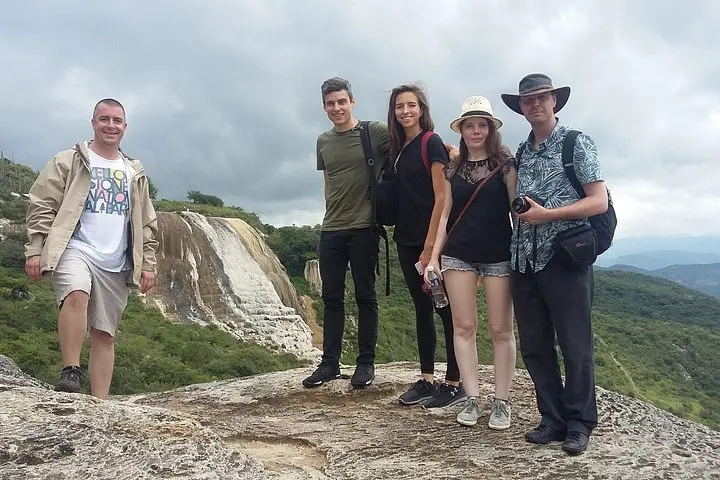
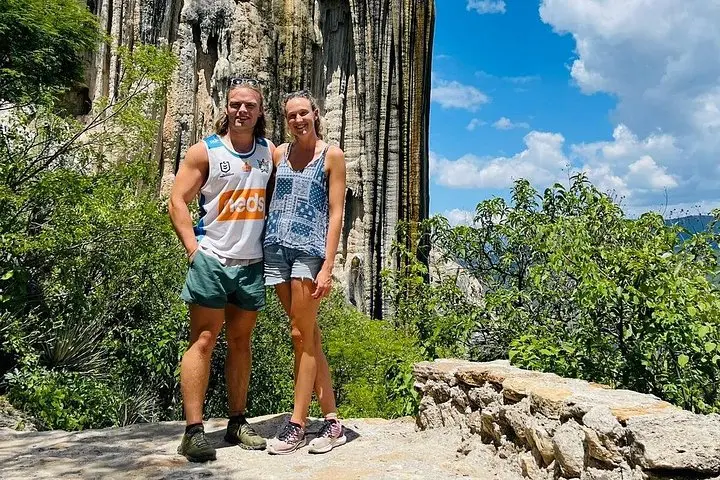
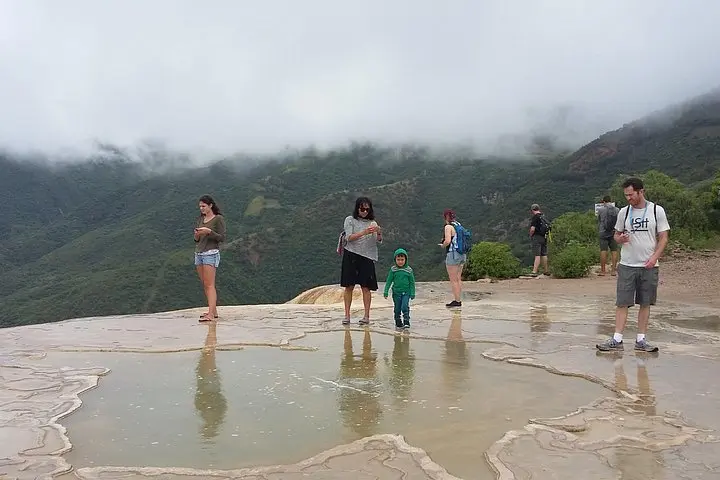
The site’s calcified cascades—travertine formations built by mineral-rich springs over millennia—feel almost geological theatre: rock that once flowed now holds small, terrace pools that mirror the sky. Walkways give access to viewpoints where the ancient processes that shaped Oaxaca’s high valley are readable in banded deposits and fragile edgings.
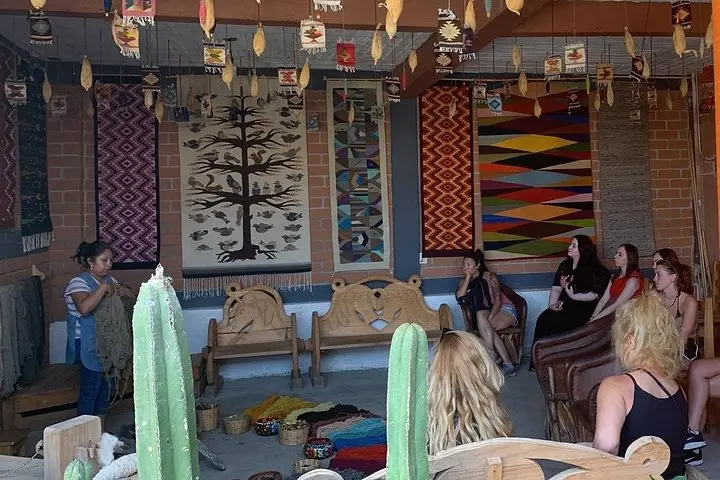
This corner of the Central Valleys has long been shaped by Zapotec communities. Nearby Teotitlán del Valle is a living workshop: artisans still dye wool with cochineal, indigo and local plants and weave patterns passed down generations. The smoke-kitchen stop offers a brief, authentic breakfast moment—hearth-fired tortillas and stews prepared the ancestral way.
Practically speaking, the early start is the advantage—fewer visitors, cooler temperatures and quieter pools. Swimming is optional and cold in the morning; community-authorized guides regulate access inside core areas, so your driver supports logistics outside those zones. Bring cash for entrance and food, wear sturdy shoes for uneven stone and terraces, and layer up: mornings at altitude are cool while midday warms quickly.
This full-day loop returns to Oaxaca by mid-afternoon, leaving time for city museums and markets. Expect short walks across compacted earth, photo-friendly light, and hands-on cultural encounters—an efficient, low-impact way to see a striking geological oddity and craft traditions in a single morning.
Some terrace pools are available for swimming, but water is cold in the morning and access varies; always follow posted rules and community guidance.
No—entrance fees and purchases at the smoke-kitchen or artisan shops are typically paid on-site in cash.
The transfer is roughly 1.5–2 hours each way depending on traffic and road conditions; the tour is scheduled to return mid-afternoon.
Only community-authorized guides may conduct tours inside Hierve el Agua; organized tours often coordinate logistics while the community guide leads in restricted areas.
Enjoy Oaxaca operates guided outdoor trips and adventures with an emphasis on safety, stewardship, and memorable experiences.
Dawn breaks over scrubby hills as the bus eases up the switchbacks and the terraces of Hierve el Agua appear like a pale, frozen wave holding the morning light.
Dawn breaks over scrubby hills as the bus eases up the switchbacks and the terraces of Hierve el Agua appear like a pale, frozen wave holding the morning light.
The site’s calcified cascades—travertine formations built by mineral-rich springs over millennia—feel almost geological theatre: rock that once flowed now holds small, terrace pools that mirror the sky. Walkways give access to viewpoints where the ancient processes that shaped Oaxaca’s high valley are readable in banded deposits and fragile edgings.
This corner of the Central Valleys has long been shaped by Zapotec communities. Nearby Teotitlán del Valle is a living workshop: artisans still dye wool with cochineal, indigo and local plants and weave patterns passed down generations. The smoke-kitchen stop offers a brief, authentic breakfast moment—hearth-fired tortillas and stews prepared the ancestral way.
Practically speaking, the early start is the advantage—fewer visitors, cooler temperatures and quieter pools. Swimming is optional and cold in the morning; community-authorized guides regulate access inside core areas, so your driver supports logistics outside those zones. Bring cash for entrance and food, wear sturdy shoes for uneven stone and terraces, and layer up: mornings at altitude are cool while midday warms quickly.
This full-day loop returns to Oaxaca by mid-afternoon, leaving time for city museums and markets. Expect short walks across compacted earth, photo-friendly light, and hands-on cultural encounters—an efficient, low-impact way to see a striking geological oddity and craft traditions in a single morning.