THE ADVENTURE COLLECTIVE® · Independent discovery and booking for outdoor travel

A single-day loop from Oaxaca City that pairs the surreal petrified cascades of Hierve el Agua with Zapotec ruins, a 2,000-year-old cypress and traditional mezcal tasting. Expect short walks, cultural stops, and scenic swims.
A single-day loop from Oaxaca City that pairs the surreal petrified cascades of Hierve el Agua with Zapotec ruins, a 2,000-year-old cypress and traditional mezcal tasting. Expect short walks, cultural stops, and scenic swims.
You climb out of Oaxaca City before sunrise and the road opens into scrubby hills that feel like they're daring you to slow down. By mid-morning the landscape changes: the air cools, limestone cliffs rise, and mineral-rich springs have built the white, scalloped cliffs of Hierve el Agua — a petrified waterfall that looks frozen mid-collapse. Small natural pools rim the edge; some visitors strip down for a shockingly clear dip while winds push at the plateau.
Verified experiences and guided adventures in the surrounding area.
Operated by Bamba Travel · Oaxaca City, Oaxaca
You climb out of Oaxaca City before sunrise and the road opens into scrubby hills that feel like they're daring you to slow down. By mid-morning the landscape changes: the air cools, limestone cliffs rise, and mineral-rich springs have built the white, scalloped cliffs of Hierve el Agua — a petrified waterfall that looks frozen mid-collapse. Small natural pools rim the edge; some visitors strip down for a shockingly clear dip while winds push at the plateau.
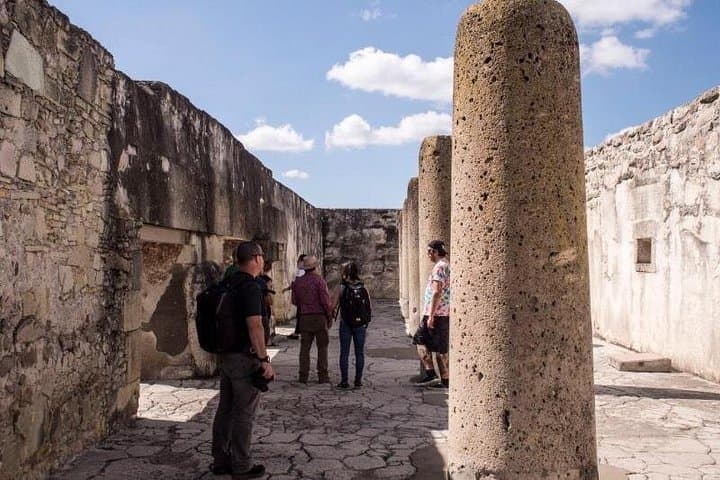
This route stitches together Oaxaca’s living history. Hierve el Agua is a geological record of mineral-saturated springs and pre-Hispanic irrigation that left calcium deposits over centuries. Nearby Mitla holds Zapotec stonework with geometric fretwork that marks a ceremonial center and burial traditions. In Santa María El Tule, the ahuehuete cypress—over 2,000 years old—dominates a plaza where locals sell snacks and textiles. Teotitlán del Valle introduces hand-woven wool rugs dyed with indigo and cochineal, a craft still practiced on family looms. A final stop at a mezcal distillery explains how agave becomes smoke and spirit; the guide usually offers a measured tasting.
Practical edge: this is a long day with multiple short walks, light altitude (around 1,700–2,000 m), and variable weather. Expect dusty paths, uneven stone steps at Mitla, and bright sun at the viewpoints. Bring cash for small entrances, a refillable water bottle, sturdy shoes for rocky trails, sun protection, and an appetite for bold flavors and cultures.
The tour is roughly 9 hours round-trip and departs from Oaxaca City with hotel or hostel pickup included.
Yes—there are natural pools for swimming when open, but access can be limited during the rainy season and conditions vary.
This tour lists entrance fees to sites like Hierve el Agua, Mitla and the mezcal factory as included, but carry cash for small purchases and tips.
Yes—physical demands are light, though visitors should be comfortable with short walks on uneven terrain and exposure to sun and altitude.
Bamba Travel operates guided outdoor trips and adventures with an emphasis on safety, stewardship, and memorable experiences.
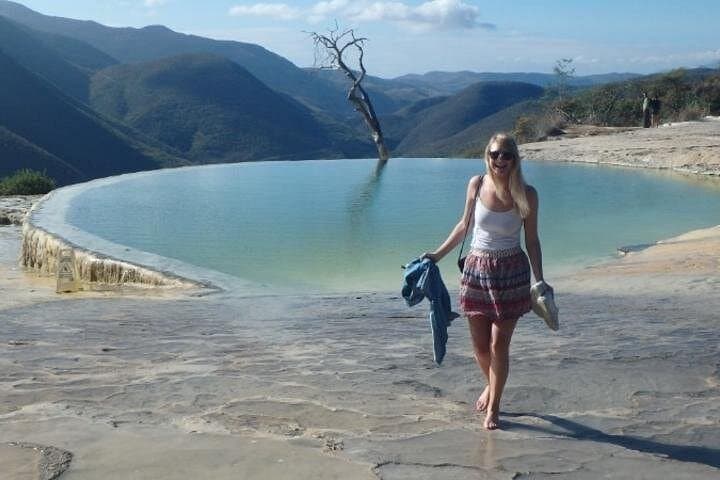
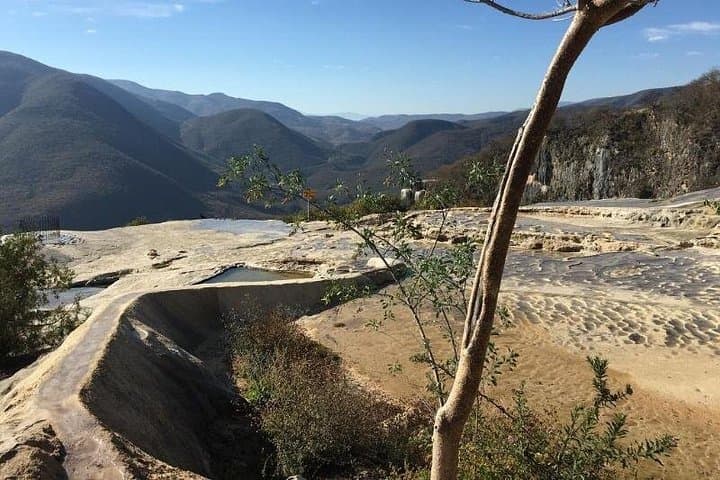
You climb out of Oaxaca City before sunrise and the road opens into scrubby hills that feel like they're daring you to slow down. By mid-morning the landscape changes: the air cools, limestone cliffs rise, and mineral-rich springs have built the white, scalloped cliffs of Hierve el Agua — a petrified waterfall that looks frozen mid-collapse. Small natural pools rim the edge; some visitors strip down for a shockingly clear dip while winds push at the plateau.
You climb out of Oaxaca City before sunrise and the road opens into scrubby hills that feel like they're daring you to slow down. By mid-morning the landscape changes: the air cools, limestone cliffs rise, and mineral-rich springs have built the white, scalloped cliffs of Hierve el Agua — a petrified waterfall that looks frozen mid-collapse. Small natural pools rim the edge; some visitors strip down for a shockingly clear dip while winds push at the plateau.
This route stitches together Oaxaca’s living history. Hierve el Agua is a geological record of mineral-saturated springs and pre-Hispanic irrigation that left calcium deposits over centuries. Nearby Mitla holds Zapotec stonework with geometric fretwork that marks a ceremonial center and burial traditions. In Santa María El Tule, the ahuehuete cypress—over 2,000 years old—dominates a plaza where locals sell snacks and textiles. Teotitlán del Valle introduces hand-woven wool rugs dyed with indigo and cochineal, a craft still practiced on family looms. A final stop at a mezcal distillery explains how agave becomes smoke and spirit; the guide usually offers a measured tasting.
Practical edge: this is a long day with multiple short walks, light altitude (around 1,700–2,000 m), and variable weather. Expect dusty paths, uneven stone steps at Mitla, and bright sun at the viewpoints. Bring cash for small entrances, a refillable water bottle, sturdy shoes for rocky trails, sun protection, and an appetite for bold flavors and cultures.