THE ADVENTURE COLLECTIVE® · Independent discovery and booking for outdoor travel

Walk from Marrakech into the High Atlas, cross two mountain passes, visit Tamsoulte waterfalls and spend a night in a Berber guesthouse. This two-day trek combines moderate hiking with cultural immersion in traditional Amazigh villages.
Walk from Marrakech into the High Atlas, cross two mountain passes, visit Tamsoulte waterfalls and spend a night in a Berber guesthouse. This two-day trek combines moderate hiking with cultural immersion in traditional Amazigh villages.
A morning wind pushes dust along the road as your minivan climbs out of Marrakech toward the High Atlas. Terra-cotta roofs give way to terraced fields, donkeys navigate narrow tracks and juniper-scented pines begin to shade the trail. By late morning you arrive in Imlil and step onto a footpath that quickly becomes a living map of Berber life — stone houses, irrigated corn plots, and terraces carved into steep slopes.
Verified experiences and guided adventures in the surrounding area.
Operated by Atlas Mountains Guided Tour · Imlil, Marrakech-Safi
A morning wind pushes dust along the road as your minivan climbs out of Marrakech toward the High Atlas. Terra-cotta roofs give way to terraced fields, donkeys navigate narrow tracks and juniper-scented pines begin to shade the trail. By late morning you arrive in Imlil and step onto a footpath that quickly becomes a living map of Berber life — stone houses, irrigated corn plots, and terraces carved into steep slopes.
The route crosses Tizi Mzik and Tizi Oudid passes, summiting near 2,600–2,700 m with sweeping views of the Toubkal massif. Geologically, the High Atlas is a young, folded mountain range of limestone and shale; the steep valleys form fast drainage lines that create seasonal waterfalls like Tamsoulte. Culturally, the valleys have long been shaped by Amazigh (Berber) herders and farmers; overnight stays in guesthouses offer direct contact with local foodways and family-run mountain hospitality.
Practical guidance: expect 4–6 hours of walking on day one over rocky, sometimes loose trails with moderate elevation gain; day two is a mix of ups-and-downs before the transfer back to Marrakech. Mules carry luggage; guides speak French, English and Spanish. Hydrate early, pace climbs to minimize altitude effects, and bring layers for cool nights. Start walks after breakfast to avoid mid-day heat in summer and aim to arrive before dusk in winter when temperatures drop quickly.
This two-day trek pairs accessible trail terrain with cultural immersion, making it suited to hikers who want solid mountain views and a straightforward introduction to life in the High Atlas.
Meals during the trek, accommodation in the village guesthouse, a mountain guide, mule to carry luggage, and hotel pickup/drop-off are included.
Yes—routes are non-technical and the pace is moderate, but participants should be able to walk 4–6 hours on uneven terrain.
Altitudes reach about 2,600–2,700 m; most travelers experience only mild effects if they hydrate, pace themselves and avoid overexertion.
Mules typically carry full luggage for the group; bring a small daypack for items you need during hikes and leave larger bags for the mule.
Atlas Mountains Guided Tour operates guided outdoor trips and adventures with an emphasis on safety, stewardship, and memorable experiences.
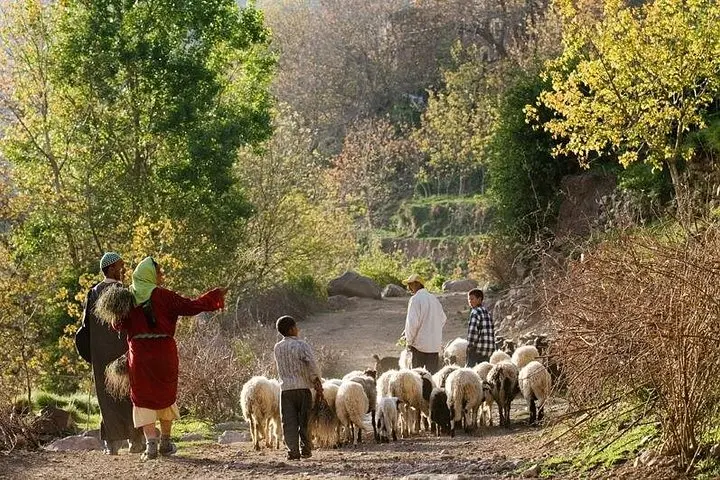
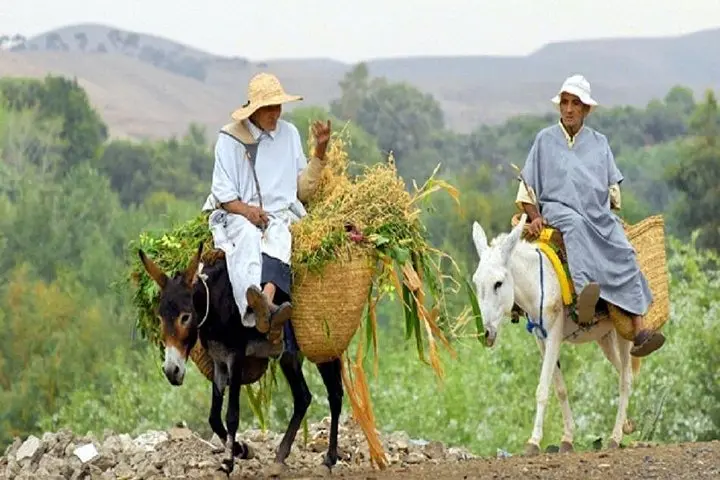
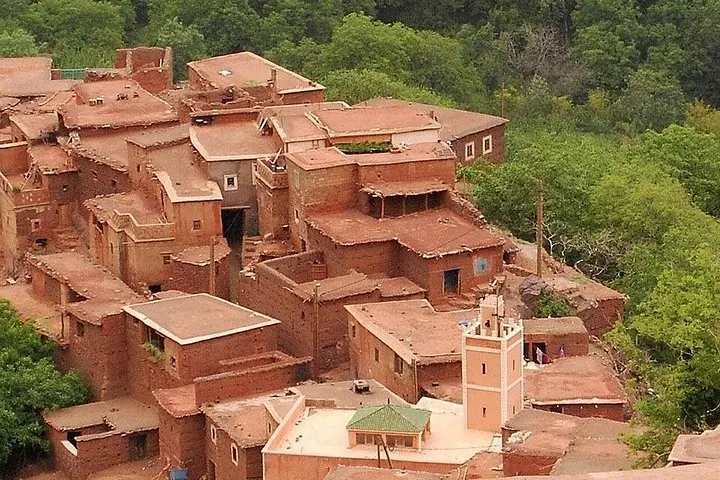
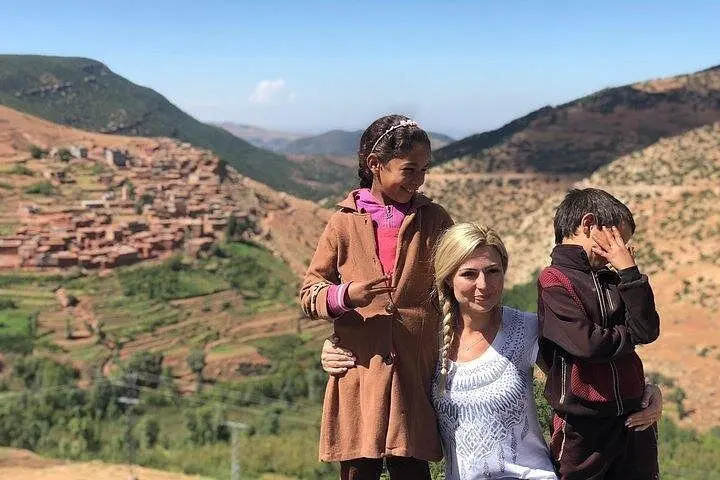
A morning wind pushes dust along the road as your minivan climbs out of Marrakech toward the High Atlas. Terra-cotta roofs give way to terraced fields, donkeys navigate narrow tracks and juniper-scented pines begin to shade the trail. By late morning you arrive in Imlil and step onto a footpath that quickly becomes a living map of Berber life — stone houses, irrigated corn plots, and terraces carved into steep slopes.
A morning wind pushes dust along the road as your minivan climbs out of Marrakech toward the High Atlas. Terra-cotta roofs give way to terraced fields, donkeys navigate narrow tracks and juniper-scented pines begin to shade the trail. By late morning you arrive in Imlil and step onto a footpath that quickly becomes a living map of Berber life — stone houses, irrigated corn plots, and terraces carved into steep slopes.
The route crosses Tizi Mzik and Tizi Oudid passes, summiting near 2,600–2,700 m with sweeping views of the Toubkal massif. Geologically, the High Atlas is a young, folded mountain range of limestone and shale; the steep valleys form fast drainage lines that create seasonal waterfalls like Tamsoulte. Culturally, the valleys have long been shaped by Amazigh (Berber) herders and farmers; overnight stays in guesthouses offer direct contact with local foodways and family-run mountain hospitality.
Practical guidance: expect 4–6 hours of walking on day one over rocky, sometimes loose trails with moderate elevation gain; day two is a mix of ups-and-downs before the transfer back to Marrakech. Mules carry luggage; guides speak French, English and Spanish. Hydrate early, pace climbs to minimize altitude effects, and bring layers for cool nights. Start walks after breakfast to avoid mid-day heat in summer and aim to arrive before dusk in winter when temperatures drop quickly.
This two-day trek pairs accessible trail terrain with cultural immersion, making it suited to hikers who want solid mountain views and a straightforward introduction to life in the High Atlas.