THE ADVENTURE COLLECTIVE® · Independent discovery and booking for outdoor travel

A full-day hike from Marrakech into the High Atlas, tracing walnut-wooded valleys up to Isk summit with panoramic views of Toubkal and stops in traditional Berber villages. Expect 4–5 hours of hiking, 700–900 m of gain, and a guided picnic in the mountains.
A full-day hike from Marrakech into the High Atlas, tracing walnut-wooded valleys up to Isk summit with panoramic views of Toubkal and stops in traditional Berber villages. Expect 4–5 hours of hiking, 700–900 m of gain, and a guided picnic in the mountains.
You leave Marrakech behind as the city heat thins and the road climbs toward the High Atlas. By mid-morning the minivan drops you into Imlil’s compact cluster of stone houses; a guide pours mint tea on a sunlit roof terrace while the valley breathes around you.
Verified experiences and guided adventures in the surrounding area.
Operated by Atlas Mountain Trekking - Day Tours · Imlil, Marrakech-Safi
You leave Marrakech behind as the city heat thins and the road climbs toward the High Atlas. By mid-morning the minivan drops you into Imlil’s compact cluster of stone houses; a guide pours mint tea on a sunlit roof terrace while the valley breathes around you.
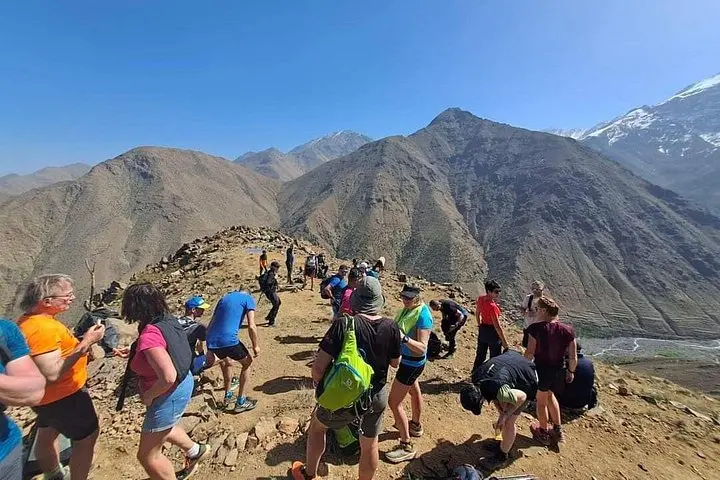
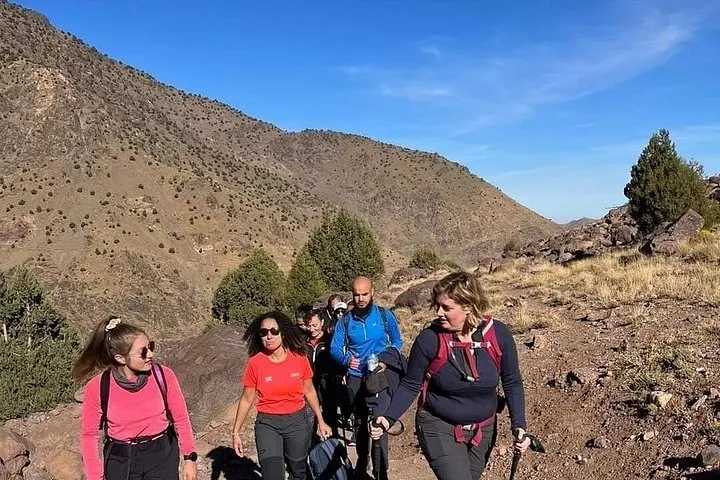
The trail starts in walnut and juniper groves, swinging onto switchbacks that cut the slope toward Tizi Notos (≈2,200 m). Rock underfoot changes from packed soil to loose scree as the air sharpens; at Isk summit (just over 2,500 m) the High Atlas opens like a map — Toubkal’s silhouette dominating the skyline and terraces and Berber villages stitched into the slopes below.
This landscape is the work of uplift and erosion: folded metamorphic and sedimentary layers carved into steep ridgelines and deep valleys during the region’s mountain-building phases. Culturally, the area remains Berber country — mule tracks, dry-stone terraces and village teahouses where history and hospitality are as much part of the route as cairns and signposts.
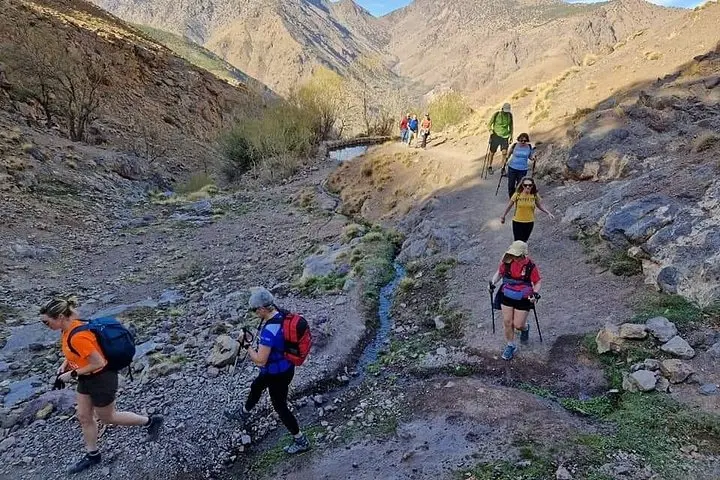
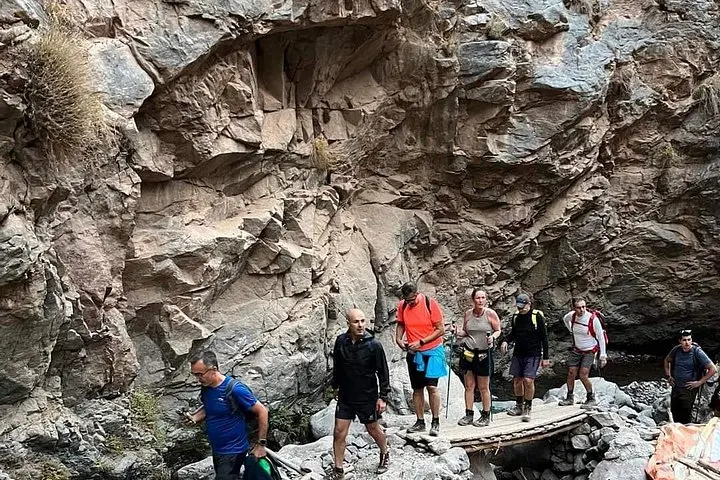
Expect 4–5 hours of walking with roughly 700–900 m of ascent spread over uneven trails, plus a 1.5-hour drive each way. You’ll pass a mountain pass with a photo-stop, descend toward seasonal waterfalls, and eat a picnic lunch in a village. Practical notes: hydrate early, wear grippy boots for rocky sections, and layer for wind at higher elevations. Local guides handle logistics and cultural translation — follow their pacing and leave time after the hike to visit village shops or a small hammam on the return to Marrakech.
Moderate: trails include sustained uphill sections and rocky ground; expect 4–5 hours walking with 700–900 m of elevation gain.
Yes — hotel pickup, air-conditioned minivan transport and a picnic lunch are included in the standard tour package.
Children can join but must be accompanied by an adult; fitness and age suitability depend on the child’s stamina and comfort on uneven terrain.
Most day-trippers adapt fine, but those with cardiovascular issues should consult a doctor; carry water, move at a steady pace, and inform your guide of any symptoms.
Atlas Mountain Trekking - Day Tours operates guided outdoor trips and adventures with an emphasis on safety, stewardship, and memorable experiences.
You leave Marrakech behind as the city heat thins and the road climbs toward the High Atlas. By mid-morning the minivan drops you into Imlil’s compact cluster of stone houses; a guide pours mint tea on a sunlit roof terrace while the valley breathes around you.
You leave Marrakech behind as the city heat thins and the road climbs toward the High Atlas. By mid-morning the minivan drops you into Imlil’s compact cluster of stone houses; a guide pours mint tea on a sunlit roof terrace while the valley breathes around you.
The trail starts in walnut and juniper groves, swinging onto switchbacks that cut the slope toward Tizi Notos (≈2,200 m). Rock underfoot changes from packed soil to loose scree as the air sharpens; at Isk summit (just over 2,500 m) the High Atlas opens like a map — Toubkal’s silhouette dominating the skyline and terraces and Berber villages stitched into the slopes below.
This landscape is the work of uplift and erosion: folded metamorphic and sedimentary layers carved into steep ridgelines and deep valleys during the region’s mountain-building phases. Culturally, the area remains Berber country — mule tracks, dry-stone terraces and village teahouses where history and hospitality are as much part of the route as cairns and signposts.
Expect 4–5 hours of walking with roughly 700–900 m of ascent spread over uneven trails, plus a 1.5-hour drive each way. You’ll pass a mountain pass with a photo-stop, descend toward seasonal waterfalls, and eat a picnic lunch in a village. Practical notes: hydrate early, wear grippy boots for rocky sections, and layer for wind at higher elevations. Local guides handle logistics and cultural translation — follow their pacing and leave time after the hike to visit village shops or a small hammam on the return to Marrakech.