THE ADVENTURE COLLECTIVE® · Independent discovery and booking for outdoor travel

A full-day guided hike from Marrakech into the High Atlas that pairs mountain walking with authentic Berber hospitality. Expect juniper forests, a high col at Tizi M'zik, seasonal waterfalls and a freshly prepared outdoor lunch.
A full-day guided hike from Marrakech into the High Atlas that pairs mountain walking with authentic Berber hospitality. Expect juniper forests, a high col at Tizi M'zik, seasonal waterfalls and a freshly prepared outdoor lunch.
Morning light from Marrakech flattens and reddens the plains as a luxury minivan climbs toward the High Atlas. By the time the group steps out in Imlil—air noticeably cleaner and cooler—a Berber family is waiting with steaming mint tea and an easy welcome: the day begins in human rhythm, not a timetable.
Verified experiences and guided adventures in the surrounding area.
Operated by ResetTravel · Imlil, Marrakesh-Safi
Morning light from Marrakech flattens and reddens the plains as a luxury minivan climbs toward the High Atlas. By the time the group steps out in Imlil—air noticeably cleaner and cooler—a Berber family is waiting with steaming mint tea and an easy welcome: the day begins in human rhythm, not a timetable.
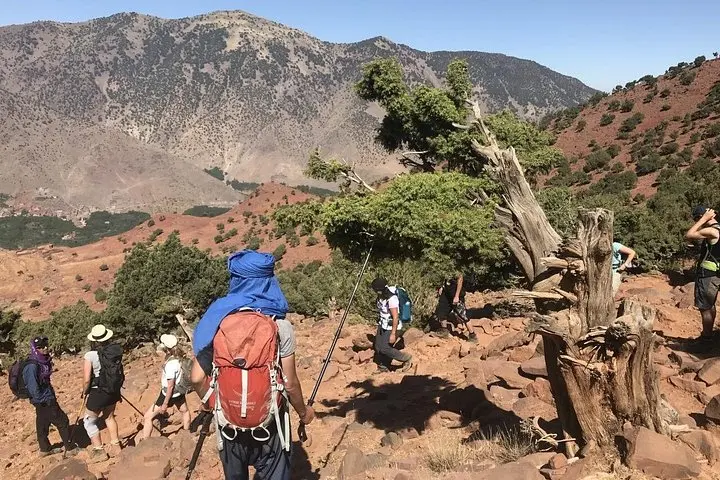
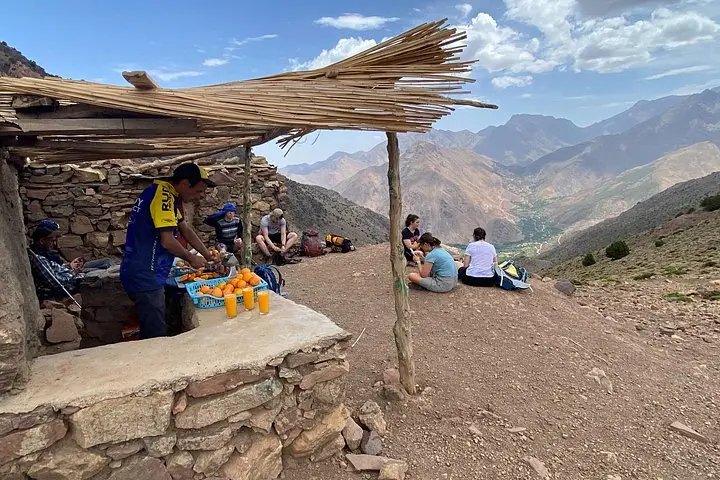
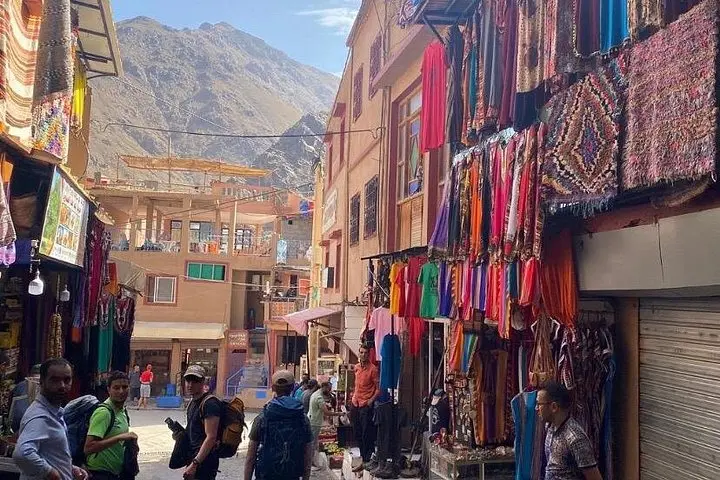
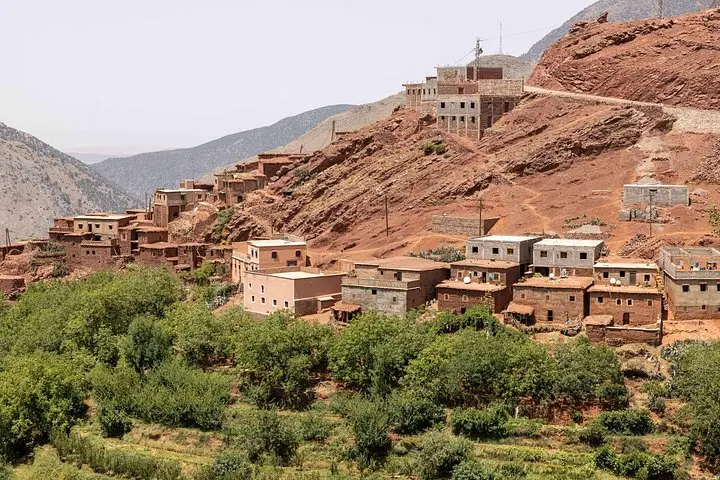
The route rises from Imlil (around 1,800 m) through juniper stands and terraced fields, climbing toward the Tizi M'zik col and across the Tasghimoute plateau. Geology here is exposed schist and volcanic outcrops carved by snowmelt; seasonal streams and small waterfalls reappear in spring. Villages are compact clusters of stone houses, where Amazigh (Berber) culture remains visible in language, crafts and hospitality. Ascent rewards with wide valley views; lunch in the open is prepared by local cooks who understand mountain timing.
Expect varied terrain: packed dirt tracks, loose scree near cols and stone-paved village paths. Descents move through cultivated terraces and spring-fed gullies where spring and autumn flows shape the land.
Practical guidance: the day is long (roughly 10–11 hours door-to-door) and best started from Marrakech. Bring sturdy boots, layered clothing for diurnal temperature swings, sun protection and at least 1 extra liter of water beyond what’s provided. Trekking poles ease steep sections. Guides will handle logistics and local introductions; respect private plots and follow Leave No Trace principles. Timing visits for spring maximizes waterfalls and wildflower display, while late autumn provides clear air and quieter trails.
The road takes about 1–1.5 hours depending on traffic and road conditions; the operator provides private luxury transport with air conditioning.
Participants should have at least moderate fitness; beginners who are comfortable with long uphill walks can join but should prepare for sustained ascent and uneven terrain.
A freshly prepared outdoor lunch and one 1L bottled water per person are included; bringing additional snacks and water is recommended.
Imlil sits around 1,800 m; most travelers experience only mild effects. Take it steady, hydrate, and inform the guide of any health concerns before departure.
ResetTravel operates guided outdoor trips and adventures with an emphasis on safety, stewardship, and memorable experiences.
Morning light from Marrakech flattens and reddens the plains as a luxury minivan climbs toward the High Atlas. By the time the group steps out in Imlil—air noticeably cleaner and cooler—a Berber family is waiting with steaming mint tea and an easy welcome: the day begins in human rhythm, not a timetable.
Morning light from Marrakech flattens and reddens the plains as a luxury minivan climbs toward the High Atlas. By the time the group steps out in Imlil—air noticeably cleaner and cooler—a Berber family is waiting with steaming mint tea and an easy welcome: the day begins in human rhythm, not a timetable.
The route rises from Imlil (around 1,800 m) through juniper stands and terraced fields, climbing toward the Tizi M'zik col and across the Tasghimoute plateau. Geology here is exposed schist and volcanic outcrops carved by snowmelt; seasonal streams and small waterfalls reappear in spring. Villages are compact clusters of stone houses, where Amazigh (Berber) culture remains visible in language, crafts and hospitality. Ascent rewards with wide valley views; lunch in the open is prepared by local cooks who understand mountain timing.
Expect varied terrain: packed dirt tracks, loose scree near cols and stone-paved village paths. Descents move through cultivated terraces and spring-fed gullies where spring and autumn flows shape the land.
Practical guidance: the day is long (roughly 10–11 hours door-to-door) and best started from Marrakech. Bring sturdy boots, layered clothing for diurnal temperature swings, sun protection and at least 1 extra liter of water beyond what’s provided. Trekking poles ease steep sections. Guides will handle logistics and local introductions; respect private plots and follow Leave No Trace principles. Timing visits for spring maximizes waterfalls and wildflower display, while late autumn provides clear air and quieter trails.