THE ADVENTURE COLLECTIVE® · Independent discovery and booking for outdoor travel

Spend a full day exploring the High Atlas from Marrakech: camel ride in Moulay Brahim, market stops, waterfalls and a guided walk through Imlil valley with lunch in a Berber family home. Practical route details and what to pack for a 7–8 hour cultural mountain outing.
Spend a full day exploring the High Atlas from Marrakech: camel ride in Moulay Brahim, market stops, waterfalls and a guided walk through Imlil valley with lunch in a Berber family home. Practical route details and what to pack for a 7–8 hour cultural mountain outing.
The day begins as you leave Marrakech's ochre walls behind and drive toward the Low High Atlas, the road sliding past olive groves until the peaks loom close and raw. A camel waits in the foothill of Moulay Brahim valley; its steady sway offers a slow, human-paced view of terraces and scrub as the air sharpens with altitude.
Verified experiences and guided adventures in the surrounding area.
Operated by Adventure Tours Morocco · Imlil, Marrakech-Safi
The day begins as you leave Marrakech's ochre walls behind and drive toward the Low High Atlas, the road sliding past olive groves until the peaks loom close and raw. A camel waits in the foothill of Moulay Brahim valley; its steady sway offers a slow, human-paced view of terraces and scrub as the air sharpens with altitude.
This region has been home to Amazigh (Berber) communities for centuries. Stone villages cling to river valleys fed by mountain snowmelt; ancient terraced irrigation still shapes the slopes. Geology here is hard, folded limestone and schist—peaks like Toubkal are volcanic-born giants higher in the massif, visible as a jagged skyline from lunch at an armed village at about 6,400 ft.
Culturally, markets in Tahnaout and Asni remain weekly anchors where argan cooperatives, woven goods, and seasonal produce are traded. The route threads waterfalls, walnut and cherry orchards, and narrow mule tracks between hamlets—terrain that alternates flat valley walking with short, steep climbs on rocky footpaths.
Practical guidance: expect a full 7–8 hour day with vehicle transfers, a camel ride of roughly 20–40 minutes, and a guided village walk covering a few miles with cumulative elevation gain up to 400–600 m. Wear sturdy walking shoes, sun protection, and layered clothing for temperature swings. Bring water and small bills for purchases or tips. Confirm pickup details and dietary needs when booking; lunches at a Berber family typically feature tajine or couscous and local hospitality.
Most operators include pickup from central Marrakech hotels—confirm your exact pickup point and time when booking.
Camel rides in this itinerary are short foothill excursions, typically 20–40 minutes, intended for scenic experience rather than long treks.
The tour is described as physically easy to moderate; children and older adults can usually participate but should be comfortable with uneven terrain and altitude changes.
Lunch is served with local dishes like tajine or couscous; notify the operator in advance about vegetarian, allergy or dietary restrictions so they can accommodate you.
Adventure Tours Morocco operates guided outdoor trips and adventures with an emphasis on safety, stewardship, and memorable experiences.


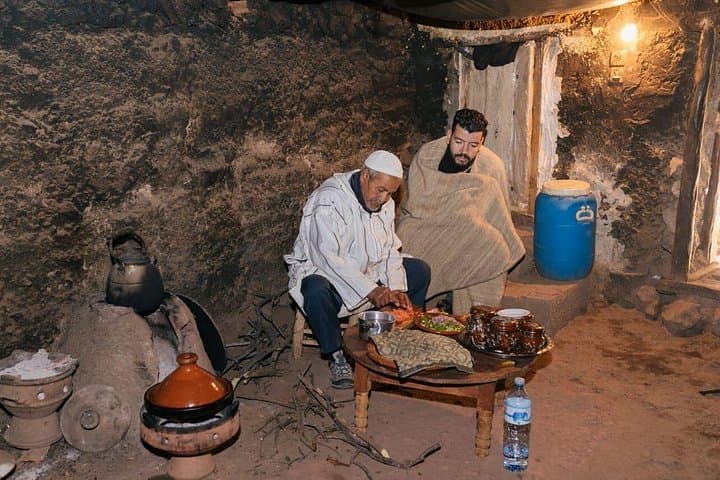
The day begins as you leave Marrakech's ochre walls behind and drive toward the Low High Atlas, the road sliding past olive groves until the peaks loom close and raw. A camel waits in the foothill of Moulay Brahim valley; its steady sway offers a slow, human-paced view of terraces and scrub as the air sharpens with altitude.
The day begins as you leave Marrakech's ochre walls behind and drive toward the Low High Atlas, the road sliding past olive groves until the peaks loom close and raw. A camel waits in the foothill of Moulay Brahim valley; its steady sway offers a slow, human-paced view of terraces and scrub as the air sharpens with altitude.
This region has been home to Amazigh (Berber) communities for centuries. Stone villages cling to river valleys fed by mountain snowmelt; ancient terraced irrigation still shapes the slopes. Geology here is hard, folded limestone and schist—peaks like Toubkal are volcanic-born giants higher in the massif, visible as a jagged skyline from lunch at an armed village at about 6,400 ft.
Culturally, markets in Tahnaout and Asni remain weekly anchors where argan cooperatives, woven goods, and seasonal produce are traded. The route threads waterfalls, walnut and cherry orchards, and narrow mule tracks between hamlets—terrain that alternates flat valley walking with short, steep climbs on rocky footpaths.
Practical guidance: expect a full 7–8 hour day with vehicle transfers, a camel ride of roughly 20–40 minutes, and a guided village walk covering a few miles with cumulative elevation gain up to 400–600 m. Wear sturdy walking shoes, sun protection, and layered clothing for temperature swings. Bring water and small bills for purchases or tips. Confirm pickup details and dietary needs when booking; lunches at a Berber family typically feature tajine or couscous and local hospitality.