THE ADVENTURE COLLECTIVE® · Independent discovery and booking for outdoor travel

Escape Marrakech for a full-day High Atlas trip that mixes easy walking, a camel ride and traditional Berber hospitality. Expect mountain vistas, village visits, and a long but accessible day that pairs natural scenery with local cuisine.
Escape Marrakech for a full-day High Atlas trip that mixes easy walking, a camel ride and traditional Berber hospitality. Expect mountain vistas, village visits, and a long but accessible day that pairs natural scenery with local cuisine.
You step out of Marrakech before dawn and the city’s heat thins behind you as the road climbs into the High Atlas. Olive terraces and dry stone walls roll past the window; the air sharpens. By midmorning the driver parks at a small village where a camel waits, patient and sure-footed, ready to carry you along mule tracks that trace the mountain’s contours.
Verified experiences and guided adventures in the surrounding area.
Operated by Tours Excursions Journeys · Marrakech, Marrakesh-Safi
You step out of Marrakech before dawn and the city’s heat thins behind you as the road climbs into the High Atlas. Olive terraces and dry stone walls roll past the window; the air sharpens. By midmorning the driver parks at a small village where a camel waits, patient and sure-footed, ready to carry you along mule tracks that trace the mountain’s contours.
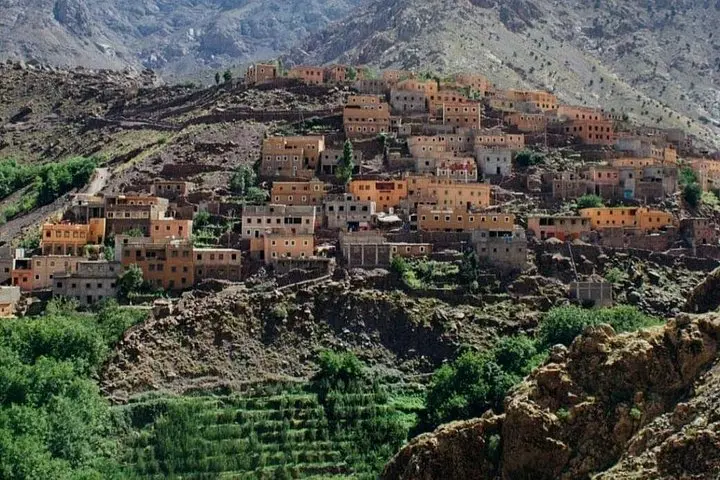
The High Atlas range formed as the African and Eurasian plates collided, lifting folded limestone and volcanic outcrops into ridges and deep valleys. Human history here is visible in terraced fields and low-lying villages where Amazigh (Berber) families practice cultivating barley, almonds and livestock grazing on ancient transhumance routes.
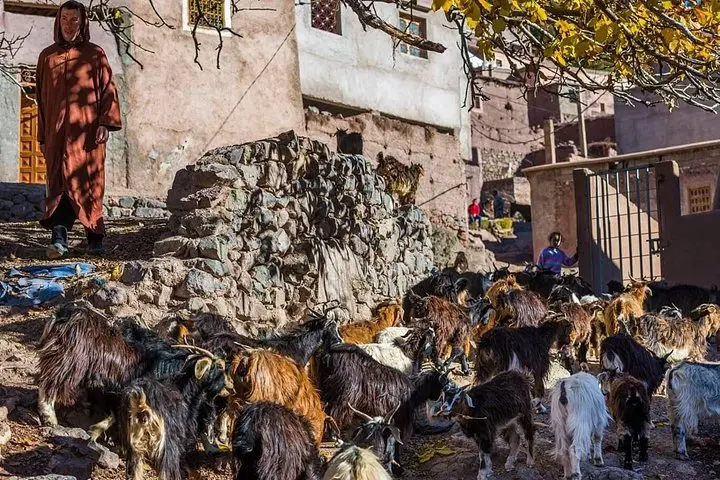
Your guide will point out local geology and introduce you to village life — from the oven-baked khobz to strong mint tea poured with flourish. Expect panoramic viewpoints, stony gullies carved by seasonal torrents, and a compact, readable culture shaped by altitude and water.
Practical guidance: this is a long day (roughly 9–11 hours) with short walks and a camel ride—no technical skills required. Wear sturdy shoes for uneven tracks, bring sun protection and at least 1.5 liters of water, and plan for a cool evening return to Marrakech. Photography windows are frequent—arrive with charged batteries—and be ready to support local businesses with modest tips. If rain or snow is forecast, operators may alter routes; confirm pickup time the night before. The trip balances easy outdoor movement with cultural encounters, making it a dependable way to experience the Atlas without committing to multi-day trekking.
The full-day excursion runs about 9–11 hours including hotel pickup and return; pickup windows are typically early morning—confirm exact time at booking.
Yes—camel rides on this tour are short and supervised; children should be accompanied by an adult and follow the guide’s instructions.
The tour is described as easy with minimal walking, but uneven village paths and mounting a camel may be difficult for those with limited mobility—check with the operator if concerned.
Bring local currency for small purchases and tipping: €10–€20 per group guide and a few euros for the camel handler or restaurant staff is customary, depending on service.
Tours Excursions Journeys operates guided outdoor trips and adventures with an emphasis on safety, stewardship, and memorable experiences.
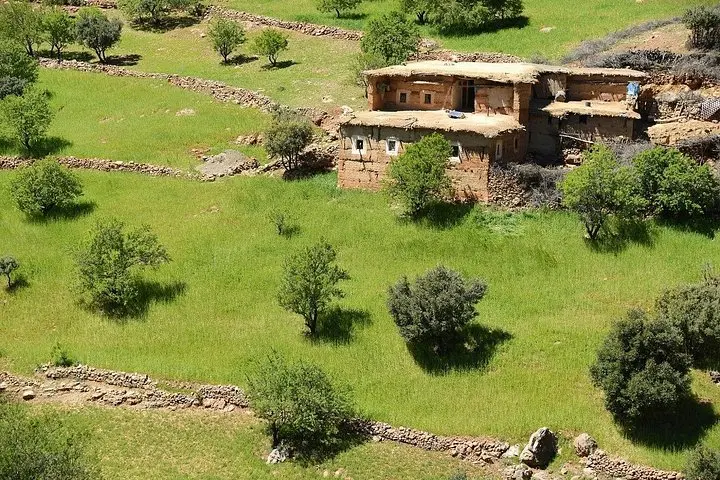
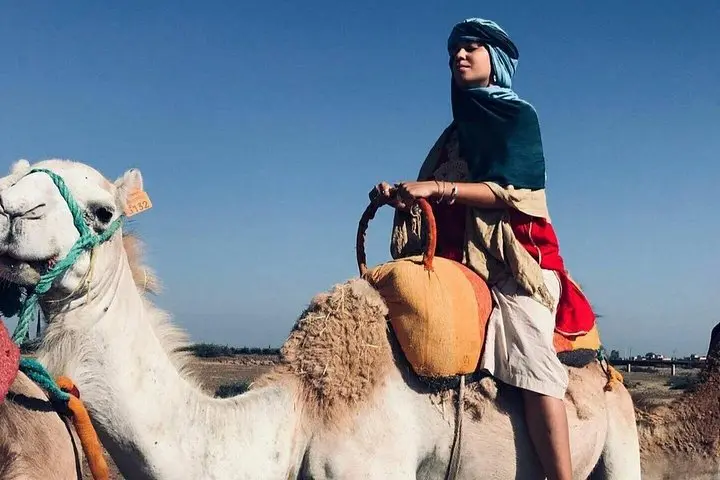
You step out of Marrakech before dawn and the city’s heat thins behind you as the road climbs into the High Atlas. Olive terraces and dry stone walls roll past the window; the air sharpens. By midmorning the driver parks at a small village where a camel waits, patient and sure-footed, ready to carry you along mule tracks that trace the mountain’s contours.
You step out of Marrakech before dawn and the city’s heat thins behind you as the road climbs into the High Atlas. Olive terraces and dry stone walls roll past the window; the air sharpens. By midmorning the driver parks at a small village where a camel waits, patient and sure-footed, ready to carry you along mule tracks that trace the mountain’s contours.
The High Atlas range formed as the African and Eurasian plates collided, lifting folded limestone and volcanic outcrops into ridges and deep valleys. Human history here is visible in terraced fields and low-lying villages where Amazigh (Berber) families practice cultivating barley, almonds and livestock grazing on ancient transhumance routes.
Your guide will point out local geology and introduce you to village life — from the oven-baked khobz to strong mint tea poured with flourish. Expect panoramic viewpoints, stony gullies carved by seasonal torrents, and a compact, readable culture shaped by altitude and water.
Practical guidance: this is a long day (roughly 9–11 hours) with short walks and a camel ride—no technical skills required. Wear sturdy shoes for uneven tracks, bring sun protection and at least 1.5 liters of water, and plan for a cool evening return to Marrakech. Photography windows are frequent—arrive with charged batteries—and be ready to support local businesses with modest tips. If rain or snow is forecast, operators may alter routes; confirm pickup time the night before. The trip balances easy outdoor movement with cultural encounters, making it a dependable way to experience the Atlas without committing to multi-day trekking.