THE ADVENTURE COLLECTIVE® · Independent discovery and booking for outdoor travel

Trade Marrakech’s riad courtyards for mountain air on a seven-hour day trip to the High Atlas. Visit Imlil’s waterfalls, a Berber argan cooperative and traditional villages with short walks and panoramic views of Mount Toubkal.
Trade Marrakech’s riad courtyards for mountain air on a seven-hour day trip to the High Atlas. Visit Imlil’s waterfalls, a Berber argan cooperative and traditional villages with short walks and panoramic views of Mount Toubkal.
Early light lifts off Marrakech and the road angles up into rock and scrub, the city heat traded for a high, dry wind that pushes you toward the High Atlas. By midmorning you’re in the Imlil valley — a string of adobe villages, terraced orchards and a small river that dares you to step closer to the falls. A sunrise camel ride, visits to a women’s argan cooperative, and a front-row view of cascades punctuate a route that finishes with lunch in a Berber house and a lookout over Toubkal, North Africa’s highest peak (4,167 m / 13,671 ft).
Verified experiences and guided adventures in the surrounding area.
Operated by Atlas Mountains Guided Tour · Imlil, Marrakech-Safi
Early light lifts off Marrakech and the road angles up into rock and scrub, the city heat traded for a high, dry wind that pushes you toward the High Atlas. By midmorning you’re in the Imlil valley — a string of adobe villages, terraced orchards and a small river that dares you to step closer to the falls. A sunrise camel ride, visits to a women’s argan cooperative, and a front-row view of cascades punctuate a route that finishes with lunch in a Berber house and a lookout over Toubkal, North Africa’s highest peak (4,167 m / 13,671 ft).
The High Atlas are relatively young fold mountains uplifted by the collision of the African and Eurasian plates; granite and schist show in weathered cliffs and stream-cut valleys. The area’s Berber (Amazigh) communities maintain traditional architecture and cooperative argan production — a cultural practice tied to local women’s livelihoods.
Expect short, uneven walks rather than long hikes: cobbled village lanes, river-hemmed trails and viewpoints at roughly 1,800 m elevation. Photography stops are frequent; the guide-led format suits travelers who want cultural context with minimal navigation. Practical notes: bring cash for cooperative purchases and tips, dress in layers for temperature swings, and time visits early to avoid midafternoon heat and crowded viewpoints.
This day trip balances scenery and cultural exchange — easy on fitness but rich in landscape and local flavor. Plan for about seven hours out of Marrakech, with an air-conditioned vehicle for transfers and several brief walks of low to moderate difficulty.
Most departures pick up from Marrakech accommodations and return to the city around mid- to late-afternoon; confirm your pickup point on booking.
Stops reach roughly 1,800 m; most travelers feel only mild effects—stay hydrated and notify the guide if you have cardio issues.
Yes; tours visit a women’s cooperative where products are sold—bring cash and be prepared to support local artisans.
Walks are short and optional, typically 10–45 minutes on uneven terrain to viewpoints and waterfalls; no technical hiking required.
Atlas Mountains Guided Tour operates guided outdoor trips and adventures with an emphasis on safety, stewardship, and memorable experiences.
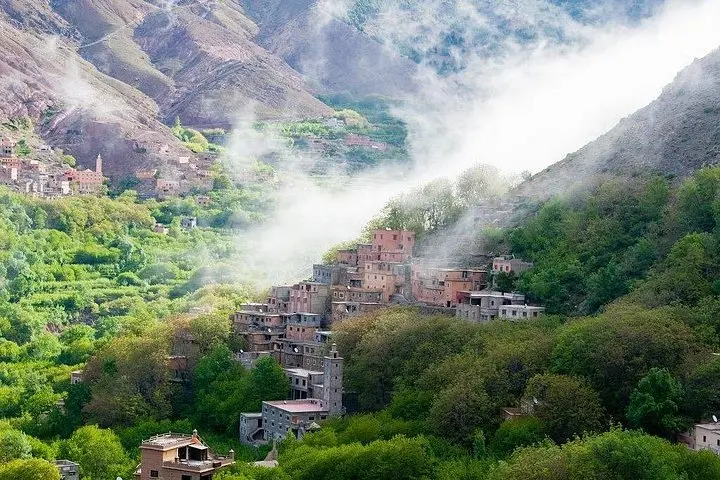
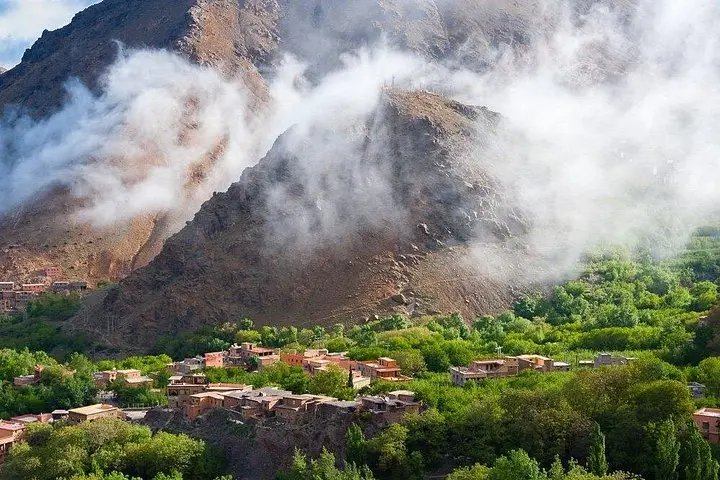
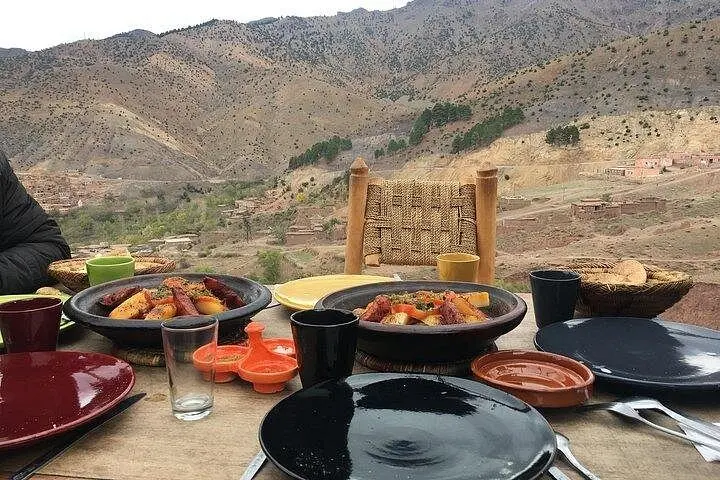
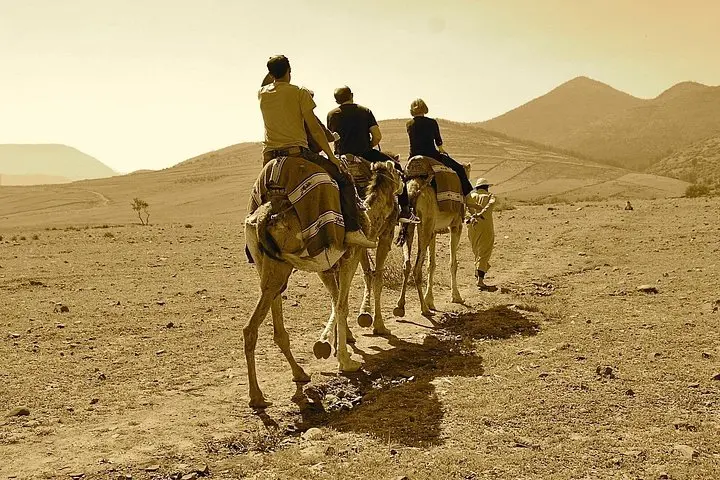
Early light lifts off Marrakech and the road angles up into rock and scrub, the city heat traded for a high, dry wind that pushes you toward the High Atlas. By midmorning you’re in the Imlil valley — a string of adobe villages, terraced orchards and a small river that dares you to step closer to the falls. A sunrise camel ride, visits to a women’s argan cooperative, and a front-row view of cascades punctuate a route that finishes with lunch in a Berber house and a lookout over Toubkal, North Africa’s highest peak (4,167 m / 13,671 ft).
Early light lifts off Marrakech and the road angles up into rock and scrub, the city heat traded for a high, dry wind that pushes you toward the High Atlas. By midmorning you’re in the Imlil valley — a string of adobe villages, terraced orchards and a small river that dares you to step closer to the falls. A sunrise camel ride, visits to a women’s argan cooperative, and a front-row view of cascades punctuate a route that finishes with lunch in a Berber house and a lookout over Toubkal, North Africa’s highest peak (4,167 m / 13,671 ft).
The High Atlas are relatively young fold mountains uplifted by the collision of the African and Eurasian plates; granite and schist show in weathered cliffs and stream-cut valleys. The area’s Berber (Amazigh) communities maintain traditional architecture and cooperative argan production — a cultural practice tied to local women’s livelihoods.
Expect short, uneven walks rather than long hikes: cobbled village lanes, river-hemmed trails and viewpoints at roughly 1,800 m elevation. Photography stops are frequent; the guide-led format suits travelers who want cultural context with minimal navigation. Practical notes: bring cash for cooperative purchases and tips, dress in layers for temperature swings, and time visits early to avoid midafternoon heat and crowded viewpoints.
This day trip balances scenery and cultural exchange — easy on fitness but rich in landscape and local flavor. Plan for about seven hours out of Marrakech, with an air-conditioned vehicle for transfers and several brief walks of low to moderate difficulty.