THE ADVENTURE COLLECTIVE® · Independent discovery and booking for outdoor travel

A full-day escape from Marrakech into the High Atlas that combines short hikes to Imlil’s waterfalls, a camel ride, an argan cooperative visit, and a Berber household lunch. Expect scenic drives, easy-to-moderate walking on uneven trails, and direct cultural exchanges with local families.
A full-day escape from Marrakech into the High Atlas that combines short hikes to Imlil’s waterfalls, a camel ride, an argan cooperative visit, and a Berber household lunch. Expect scenic drives, easy-to-moderate walking on uneven trails, and direct cultural exchanges with local families.
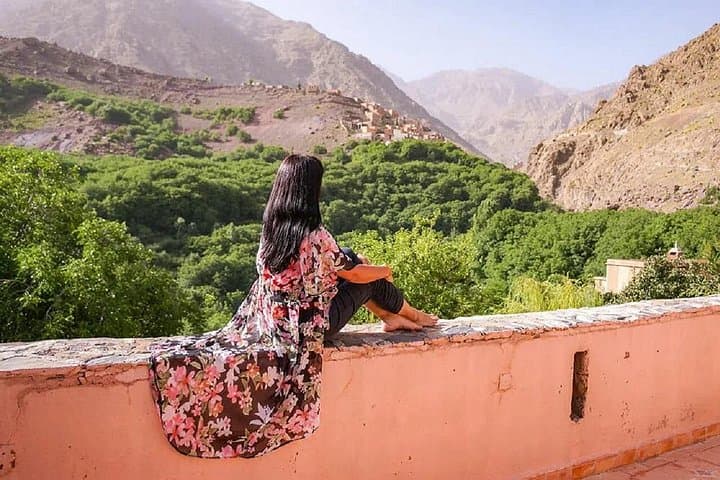
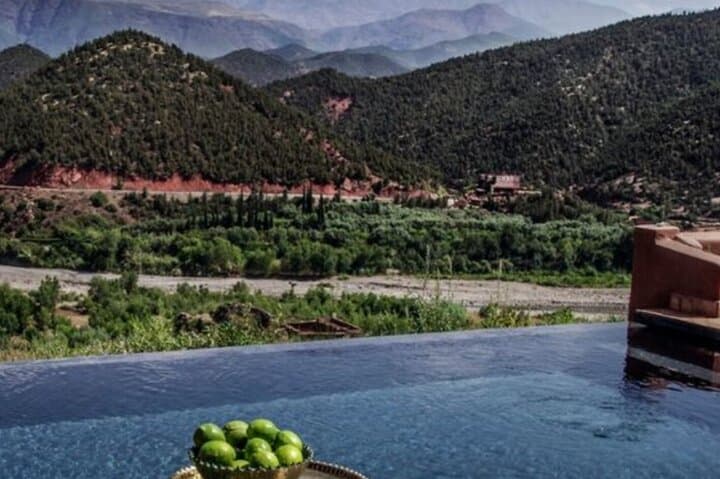
The morning leaves Marrakech behind: air-conditioned comfort shrinking the city into a distant hum while cedar-streaked ridgelines of the High Atlas grow taller through the bus window. By mid-morning the group is out of the car, toes on rocky tracks and heads lifted toward sculpted peaks; the route threads small Berber villages, argan groves, and a stony river that seems to push hikers toward the cascades.
Verified experiences and guided adventures in the surrounding area.
Operated by Marrakech Outdoor Trips · Marrakech, Marrakech-Safi
The morning leaves Marrakech behind: air-conditioned comfort shrinking the city into a distant hum while cedar-streaked ridgelines of the High Atlas grow taller through the bus window. By mid-morning the group is out of the car, toes on rocky tracks and heads lifted toward sculpted peaks; the route threads small Berber villages, argan groves, and a stony river that seems to push hikers toward the cascades.
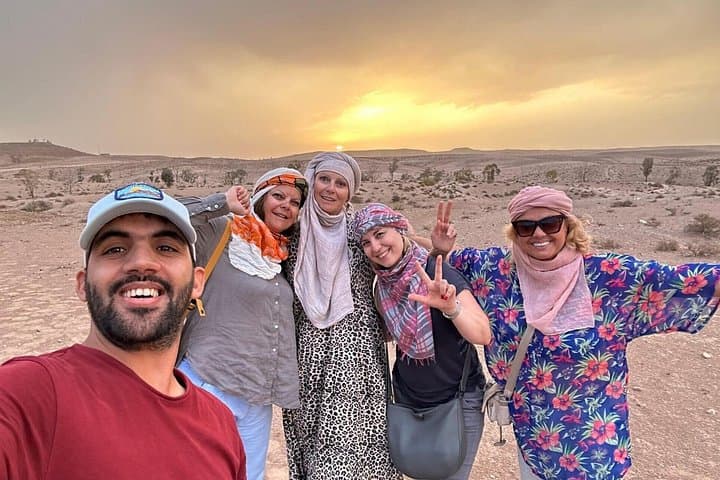
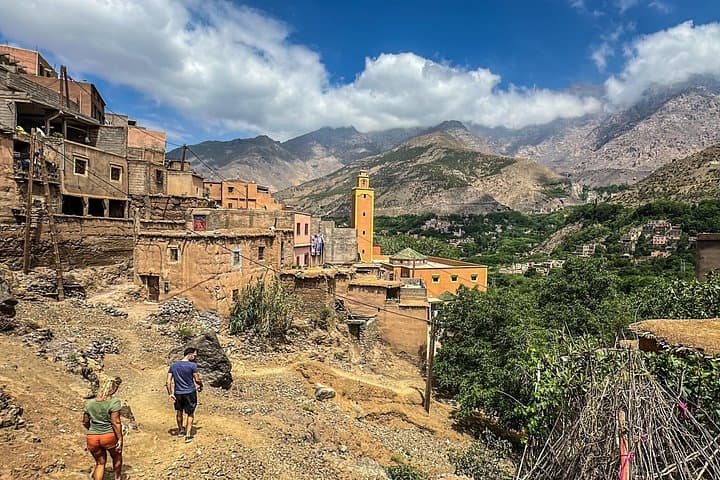
Geology here reads like a slow-motion uplift: pale schist and granite folded into ridges, cut by seasonal streams that carve narrow valleys and feed the waterfalls near Imlil. Human history is visible in terraced fields and flat-roofed houses—Amazigh (Berber) communities that have farmed and moved livestock in these valleys for centuries. Cultural notes: local cooperatives process argan oil nearby and many families host meals, sharing mint tea, tajine and stories.
On this full-day outing expect several short walks (roughly 1–3 km each) on uneven trails with up to a few hundred metres of cumulative elevation gain; nothing technical but uneven and sometimes slippery near streams. The camel ride and cooperative visit add low-impact cultural experiences between hikes. Practical guidance: start hydrated, carry sun protection and a light layer for wind on higher tracks. Cash is useful for markets, cooperatives, and tips; respectful clothing is recommended when visiting homes. Timing matters—arrive at waterfalls earlier in the day for softer light and quieter paths. Leave no trace on fragile terraces, and consider buying from cooperatives to directly support local livelihoods.
Most departures include pickup from accommodation in Marrakech or a meet point at Jemaa el-Fna, returning to Marrakech in the late afternoon.
Hikes are short (1–3 km segments) with uneven footing and moderate elevation change—suitable for most active travelers but not for those with serious mobility issues.
A traditional lunch in a Berber household is included; operators can often accommodate common dietary requests if noted at booking.
The tour is family-friendly for most children, but it’s not recommended for pregnant travelers or people with serious back/neck issues due to vehicle travel and uneven walking.
Marrakech Outdoor Trips operates guided outdoor trips and adventures with an emphasis on safety, stewardship, and memorable experiences.
The morning leaves Marrakech behind: air-conditioned comfort shrinking the city into a distant hum while cedar-streaked ridgelines of the High Atlas grow taller through the bus window. By mid-morning the group is out of the car, toes on rocky tracks and heads lifted toward sculpted peaks; the route threads small Berber villages, argan groves, and a stony river that seems to push hikers toward the cascades.
The morning leaves Marrakech behind: air-conditioned comfort shrinking the city into a distant hum while cedar-streaked ridgelines of the High Atlas grow taller through the bus window. By mid-morning the group is out of the car, toes on rocky tracks and heads lifted toward sculpted peaks; the route threads small Berber villages, argan groves, and a stony river that seems to push hikers toward the cascades.
Geology here reads like a slow-motion uplift: pale schist and granite folded into ridges, cut by seasonal streams that carve narrow valleys and feed the waterfalls near Imlil. Human history is visible in terraced fields and flat-roofed houses—Amazigh (Berber) communities that have farmed and moved livestock in these valleys for centuries. Cultural notes: local cooperatives process argan oil nearby and many families host meals, sharing mint tea, tajine and stories.
On this full-day outing expect several short walks (roughly 1–3 km each) on uneven trails with up to a few hundred metres of cumulative elevation gain; nothing technical but uneven and sometimes slippery near streams. The camel ride and cooperative visit add low-impact cultural experiences between hikes. Practical guidance: start hydrated, carry sun protection and a light layer for wind on higher tracks. Cash is useful for markets, cooperatives, and tips; respectful clothing is recommended when visiting homes. Timing matters—arrive at waterfalls earlier in the day for softer light and quieter paths. Leave no trace on fragile terraces, and consider buying from cooperatives to directly support local livelihoods.