THE ADVENTURE COLLECTIVE® · Independent discovery and booking for outdoor travel

Scale North Africa's highest peak and sleep beneath Saharan stars on a compact 5‑day expedition from Marrakech. This trek pairs alpine ascent on Mount Toubkal with a desert camp experience at Erg Chebbi for a concise taste of Morocco's extremes.
Scale North Africa's highest peak and sleep beneath Saharan stars on a compact 5‑day expedition from Marrakech. This trek pairs alpine ascent on Mount Toubkal with a desert camp experience at Erg Chebbi for a concise taste of Morocco's extremes.
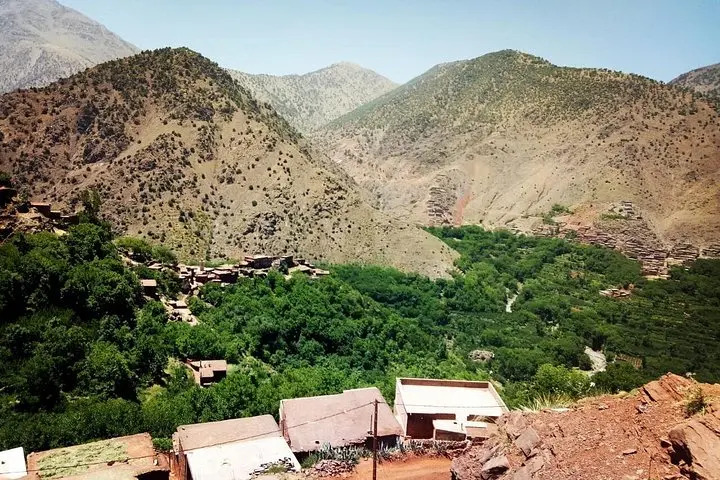
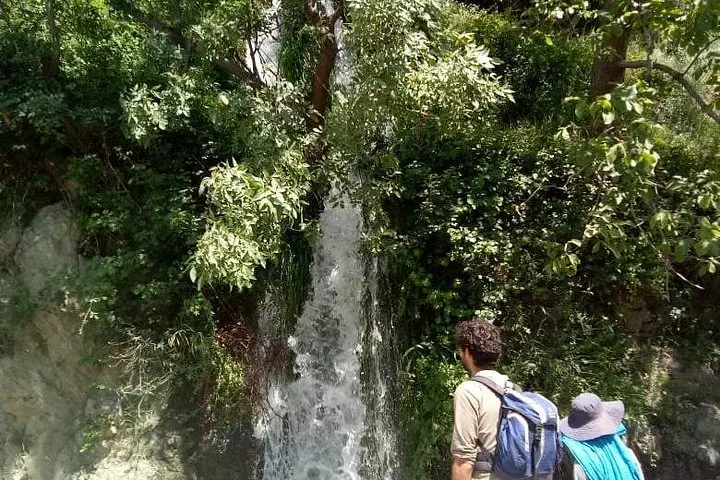
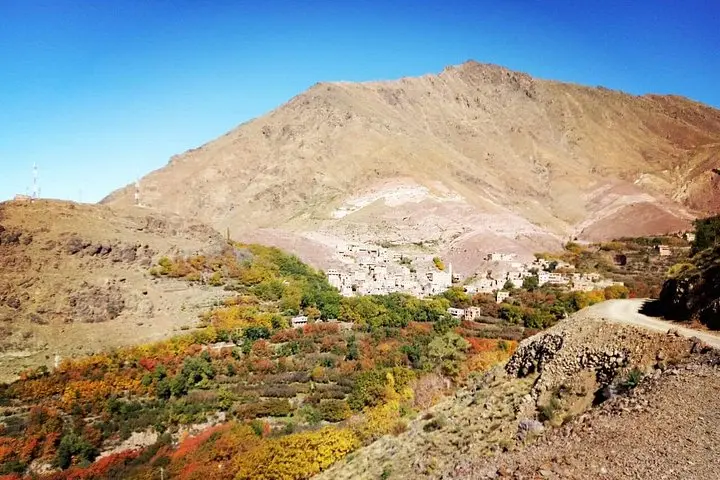
At first light the mule tracks out of Imlil feel alive — villagers moving grain, a guide checking ropes, and a skyline dominated by Toubkal that seems to hold its breath. The trail climbs through cedar groves where the air smells of sap and dust, then opens to stony passes that reveal the layers of the High Atlas: folded rock born of continental collision, streaked with snow into late spring.
Verified experiences and guided adventures in the surrounding area.
Operated by Trekking in Morocco · Marrakech, Marrakech-Safi
At first light the mule tracks out of Imlil feel alive — villagers moving grain, a guide checking ropes, and a skyline dominated by Toubkal that seems to hold its breath. The trail climbs through cedar groves where the air smells of sap and dust, then opens to stony passes that reveal the layers of the High Atlas: folded rock born of continental collision, streaked with snow into late spring.
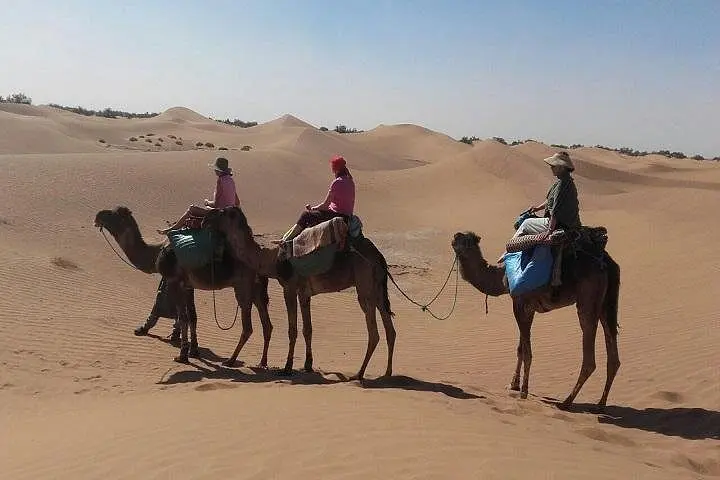
This itinerary threads history and culture. Berber villages — Ait Souka, Aremd and the earthen ksar of Ait Benhaddou — speak to long caravan routes and a living, hospitable mountain culture. Geologically, the High Atlas is compact, steep and glaciated at higher elevations; farther east the land relaxes into the Saharan corridor where wind sculpts the Erg Chebbi dunes into slow, towering crescents that dare you to walk their faces at sunrise.
Expect variety: refuge or tent nights on the mountain, a full-day summit push (10–12 hours) to 4,167 m, then long transfers across the Tichka Pass into the dramatic gorges of Dades and Todra before an evening camel ride into Merzouga and a desert camp under an enormous sky.
Practical edge: plan early starts, layered clothing for big temperature swings, and steady pacing for altitude. Guides, mules and local guesthouses smooth logistics, but you must carry a daypack and be ready for long walking days. Hydrate, protect from sun and wind, and allow time to savor both the alpine rawness of Toubkal and the patient, shifting dunes of Erg Chebbi.
Expect 10–12 hours of walking with sustained ascent to 4,167 m; it’s long and steep but non-technical — good fitness and acclimatization improve success.
No technical climbing gear is required for the normal route; in winter crampons and an ice axe may be necessary and are often supplied locally.
Transfers include several long drives—Marrakech to Imlil (~1–1.5 hrs), and the Tichka Pass to Dades/Merzouga sections can be 4–8 hours depending on stops.
Guides, most meals listed (breakfasts/dinners/lunches as described), refuge nights, guesthouses and desert camp stays are included as per the itinerary.
Trekking in Morocco operates guided outdoor trips and adventures with an emphasis on safety, stewardship, and memorable experiences.
At first light the mule tracks out of Imlil feel alive — villagers moving grain, a guide checking ropes, and a skyline dominated by Toubkal that seems to hold its breath. The trail climbs through cedar groves where the air smells of sap and dust, then opens to stony passes that reveal the layers of the High Atlas: folded rock born of continental collision, streaked with snow into late spring.
At first light the mule tracks out of Imlil feel alive — villagers moving grain, a guide checking ropes, and a skyline dominated by Toubkal that seems to hold its breath. The trail climbs through cedar groves where the air smells of sap and dust, then opens to stony passes that reveal the layers of the High Atlas: folded rock born of continental collision, streaked with snow into late spring.
This itinerary threads history and culture. Berber villages — Ait Souka, Aremd and the earthen ksar of Ait Benhaddou — speak to long caravan routes and a living, hospitable mountain culture. Geologically, the High Atlas is compact, steep and glaciated at higher elevations; farther east the land relaxes into the Saharan corridor where wind sculpts the Erg Chebbi dunes into slow, towering crescents that dare you to walk their faces at sunrise.
Expect variety: refuge or tent nights on the mountain, a full-day summit push (10–12 hours) to 4,167 m, then long transfers across the Tichka Pass into the dramatic gorges of Dades and Todra before an evening camel ride into Merzouga and a desert camp under an enormous sky.
Practical edge: plan early starts, layered clothing for big temperature swings, and steady pacing for altitude. Guides, mules and local guesthouses smooth logistics, but you must carry a daypack and be ready for long walking days. Hydrate, protect from sun and wind, and allow time to savor both the alpine rawness of Toubkal and the patient, shifting dunes of Erg Chebbi.