THE ADVENTURE COLLECTIVE® · Independent discovery and booking for outdoor travel

A compact two-day trek from Marrakech into the Azzaden Valley that pairs strenuous mountain passes with authentic Berber guesthouse stays. Expect long ascents, mule tracks, waterfalls and real cultural exchange.
A compact two-day trek from Marrakech into the Azzaden Valley that pairs strenuous mountain passes with authentic Berber guesthouse stays. Expect long ascents, mule tracks, waterfalls and real cultural exchange.
The trail begins before sunrise as a convoy leaves Marrakech and the road climbs into the High Atlas, air sharpening and terraces sliding away beneath you. By Imlil (1,740 m) the path narrows into stone-paved mule tracks; Tizi Mzik rises above like a shoulder of the range, testing every step up to 2,489 m.
Verified experiences and guided adventures in the surrounding area.
Operated by High Atlas Mountains Guide · Marrakech, Marrakech-Safi
The trail begins before sunrise as a convoy leaves Marrakech and the road climbs into the High Atlas, air sharpening and terraces sliding away beneath you. By Imlil (1,740 m) the path narrows into stone-paved mule tracks; Tizi Mzik rises above like a shoulder of the range, testing every step up to 2,489 m.
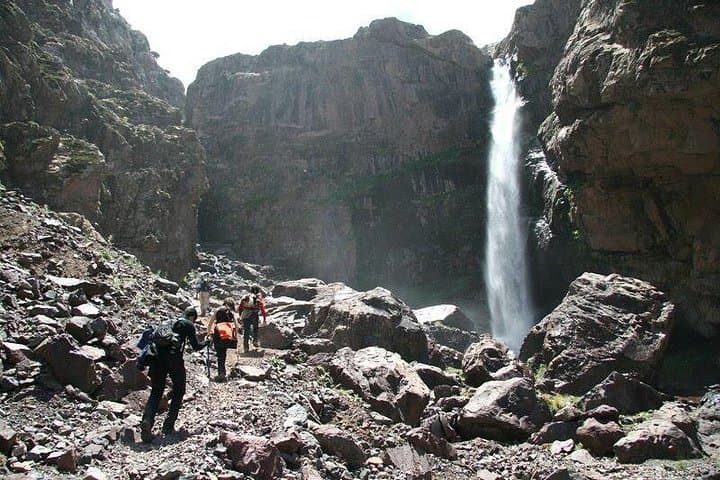
This two-day route threads classic High Atlas geography—folded schist, granite outcrops and narrow river-cut valleys—past Ighouliden waterfall and summer azibs (shepherd summer houses) into Azzaden Valley. The Berber villages here retain practical architecture: flat-roofed stone houses, irrigation channels, and fields carved into impossible slopes. Mules carry luggage, and guesthouses run by local families offer hearty tagines and room for real exchanges about daily mountain life.
On day two the trek drops through Ait Aissa, climbs to Tizi Oudite (~2,200 m) and descends to Malat and Agersioual (~1,600 m) before the return to Marrakech. The landscape alternates abrupt scree, shaded terraces and windy cols that demand attention; wind and sun both push a hiker’s pace.
Practical edge: expect 5–7 hours of walking each day on uneven, sometimes steep terrain; bring layered insulation for cold high passes, sturdy boots, 2+ liters of water, and a small first-aid kit. Best seasons are spring and fall for wildflowers and stable weather; summers bring hot lowland transfers and winter can deposit snow on higher passes. Respect local customs, tip guides and support family-run guesthouses to keep tourism sustainable in these sensitive highland communities.
Each day includes roughly 5–7 hours of walking over varied terrain with sustained ascents and descents; previous multi-hour hiking experience helps.
Yes—overnight stays are in family-run Berber guesthouses with shared facilities and home-cooked meals focused on local ingredients.
A local mountain guide accompanies the trek, handles logistics and leads the route; mules carry luggage for comfort.
Spring (March–May) and fall (September–October) offer the most stable weather; summers are hot in valleys and winters can bring snow to high passes.
High Atlas Mountains Guide operates guided outdoor trips and adventures with an emphasis on safety, stewardship, and memorable experiences.

The trail begins before sunrise as a convoy leaves Marrakech and the road climbs into the High Atlas, air sharpening and terraces sliding away beneath you. By Imlil (1,740 m) the path narrows into stone-paved mule tracks; Tizi Mzik rises above like a shoulder of the range, testing every step up to 2,489 m.
The trail begins before sunrise as a convoy leaves Marrakech and the road climbs into the High Atlas, air sharpening and terraces sliding away beneath you. By Imlil (1,740 m) the path narrows into stone-paved mule tracks; Tizi Mzik rises above like a shoulder of the range, testing every step up to 2,489 m.
This two-day route threads classic High Atlas geography—folded schist, granite outcrops and narrow river-cut valleys—past Ighouliden waterfall and summer azibs (shepherd summer houses) into Azzaden Valley. The Berber villages here retain practical architecture: flat-roofed stone houses, irrigation channels, and fields carved into impossible slopes. Mules carry luggage, and guesthouses run by local families offer hearty tagines and room for real exchanges about daily mountain life.
On day two the trek drops through Ait Aissa, climbs to Tizi Oudite (~2,200 m) and descends to Malat and Agersioual (~1,600 m) before the return to Marrakech. The landscape alternates abrupt scree, shaded terraces and windy cols that demand attention; wind and sun both push a hiker’s pace.
Practical edge: expect 5–7 hours of walking each day on uneven, sometimes steep terrain; bring layered insulation for cold high passes, sturdy boots, 2+ liters of water, and a small first-aid kit. Best seasons are spring and fall for wildflowers and stable weather; summers bring hot lowland transfers and winter can deposit snow on higher passes. Respect local customs, tip guides and support family-run guesthouses to keep tourism sustainable in these sensitive highland communities.