THE ADVENTURE COLLECTIVE® · Independent discovery and booking for outdoor travel

A five-day circuit from Chengdu across Xinduqiao, Litang and Daocheng Yading that climbs onto 4,000m plateaus and delivers sweeping views of 6,000m peaks. Expect long drives, simple lodgings, and high-altitude scenery that rewards steady pacing.
A five-day circuit from Chengdu across Xinduqiao, Litang and Daocheng Yading that climbs onto 4,000m plateaus and delivers sweeping views of 6,000m peaks. Expect long drives, simple lodgings, and high-altitude scenery that rewards steady pacing.
A wind that smells of stone and juniper pushes through the coach window as the Sichuan plain drops away and the road climbs toward 4,000-meter plateaus. Travelers on this multi-day loop from Chengdu move between Xinduqiao’s photo-ready bends, Litang’s high-altitude air, and the sacred cirque of Daocheng Yading, where three snow-capped peaks pierce the sky and alpine lakes mirror them with crystalline stillness.
Verified experiences and guided adventures in the surrounding area.
Operated by Olivia's Walks · Daocheng, Sichuan
A wind that smells of stone and juniper pushes through the coach window as the Sichuan plain drops away and the road climbs toward 4,000-meter plateaus. Travelers on this multi-day loop from Chengdu move between Xinduqiao’s photo-ready bends, Litang’s high-altitude air, and the sacred cirque of Daocheng Yading, where three snow-capped peaks pierce the sky and alpine lakes mirror them with crystalline stillness.
Geology here is recent and raw: uplifted Tibetan Plateau bedrock, glacially carved valleys, and moraine-ringed basins create steep ridgelines and turquoise tarns. Culturally, the route threads Tibetan grasslands, monasteries, and homestays where yak butter tea and local song mark long human presence on an unforgiving landscape. Daocheng Yading is protected as a nature reserve and is regarded in Tibetan Buddhism as a last pure land, its peaks treated as living deities.
Practically, expect long coach transfers, short high-elevation walks, and simple lodging—Tibetan homestays to four-star hotels in town. Altitude is the defining challenge: nights above 3,500–4,200 m are common and pace should be deliberately slow. Bring layered insulation, sun protection for intense UV, a water system for steady hydration, and a camera with spare batteries (cold shortens life). Private transport and included meals simplify logistics, but carry cash in smaller towns and respect local customs at monasteries and homestays. Timing your trip for clear windows—late spring to early autumn—maximizes views. Move deliberately, breathe slowly, and let the high country set its own rhythm; the reward is wide-open sky and peaks that dare you to look higher.
Visitors typically enter the official Yading Nature Reserve with an admission ticket; your tour operator usually arranges entrance and transport logistics.
Altitude effects are common above 3,000–3,500 m; pace yourself, hydrate, avoid alcohol, and inform guides of symptoms—descent is the primary treatment.
This tour involves mostly short walks and viewpoint hikes rather than technical trekking—suitable for travelers who can handle brief uphill sections at altitude.
Late May through October offers the most stable conditions and green grasslands; monsoon months bring more clouds, while winter has heavy snow and limited access.
Olivia's Walks operates guided outdoor trips and adventures with an emphasis on safety, stewardship, and memorable experiences.
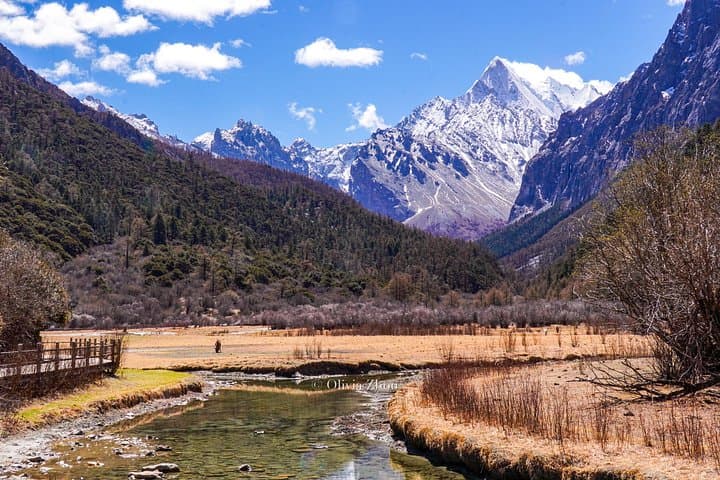

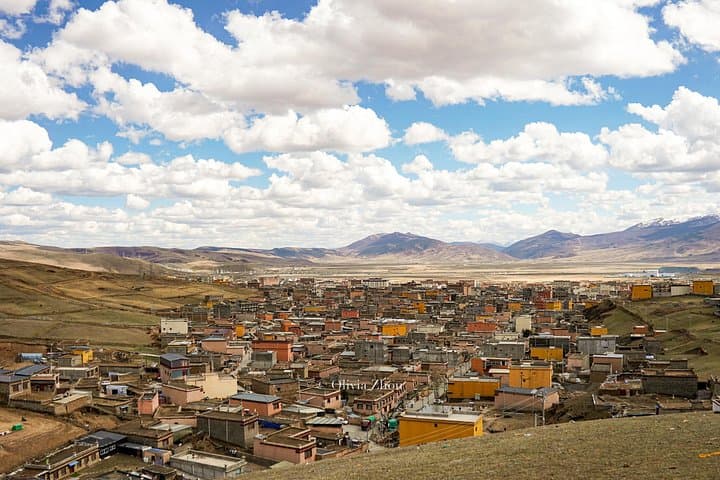

A wind that smells of stone and juniper pushes through the coach window as the Sichuan plain drops away and the road climbs toward 4,000-meter plateaus. Travelers on this multi-day loop from Chengdu move between Xinduqiao’s photo-ready bends, Litang’s high-altitude air, and the sacred cirque of Daocheng Yading, where three snow-capped peaks pierce the sky and alpine lakes mirror them with crystalline stillness.
A wind that smells of stone and juniper pushes through the coach window as the Sichuan plain drops away and the road climbs toward 4,000-meter plateaus. Travelers on this multi-day loop from Chengdu move between Xinduqiao’s photo-ready bends, Litang’s high-altitude air, and the sacred cirque of Daocheng Yading, where three snow-capped peaks pierce the sky and alpine lakes mirror them with crystalline stillness.
Geology here is recent and raw: uplifted Tibetan Plateau bedrock, glacially carved valleys, and moraine-ringed basins create steep ridgelines and turquoise tarns. Culturally, the route threads Tibetan grasslands, monasteries, and homestays where yak butter tea and local song mark long human presence on an unforgiving landscape. Daocheng Yading is protected as a nature reserve and is regarded in Tibetan Buddhism as a last pure land, its peaks treated as living deities.
Practically, expect long coach transfers, short high-elevation walks, and simple lodging—Tibetan homestays to four-star hotels in town. Altitude is the defining challenge: nights above 3,500–4,200 m are common and pace should be deliberately slow. Bring layered insulation, sun protection for intense UV, a water system for steady hydration, and a camera with spare batteries (cold shortens life). Private transport and included meals simplify logistics, but carry cash in smaller towns and respect local customs at monasteries and homestays. Timing your trip for clear windows—late spring to early autumn—maximizes views. Move deliberately, breathe slowly, and let the high country set its own rhythm; the reward is wide-open sky and peaks that dare you to look higher.