THE ADVENTURE COLLECTIVE® · Independent discovery and booking for outdoor travel

Spend a day with local guide Mehmet discovering Cappadocia’s fairy chimneys, cave churches, and panoramic viewpoints. This full-day tour blends geology, Byzantine history, and local culture with practical route knowledge to make complex terrain easy to explore.
Spend a day with local guide Mehmet discovering Cappadocia’s fairy chimneys, cave churches, and panoramic viewpoints. This full-day tour blends geology, Byzantine history, and local culture with practical route knowledge to make complex terrain easy to explore.
You arrive to a wind-sanded landscape that feels engineered by a patient artist: towers of soft volcanic rock rise like columns, their caps balanced by centuries of wind and water. Mehmet meets the group with a thermos of strong Turkish tea and a practiced smile, pointing out the route as minivans hum through Göreme. The day stretches ahead—open-air museums, hidden churches, and viewpoints where the valley floor looks mapped by geological hands.
Verified experiences and guided adventures in the surrounding area.
You arrive to a wind-sanded landscape that feels engineered by a patient artist: towers of soft volcanic rock rise like columns, their caps balanced by centuries of wind and water. Mehmet meets the group with a thermos of strong Turkish tea and a practiced smile, pointing out the route as minivans hum through Göreme. The day stretches ahead—open-air museums, hidden churches, and viewpoints where the valley floor looks mapped by geological hands.
Cappadocia is volcanic architecture. Millions of years ago, eruptions from Erciyes and Hasan laid down thick layers of tuff; erosion then carved those layers into the region’s signature chimneys and ridges. Byzantium shaped the human story inside that geology: monks cut cave churches and frescoed their interiors, creating quiet galleries protected from the elements. Ottoman and local Anatolian cultures later repurposed these hollows into homes and storerooms; today, living communities still occupy some caves while others are preserved as museums.
Mehmet’s commentary moves easily between geology and local life—why certain valleys were chosen for settlements, where pigeons were kept for fertilizer, and which frescoes survived iconoclasm. The tour threads through Göreme Open Air Museum, a panoramic stop at Uchisar Castle, and a walk through a valley of fairy chimneys; expect short hikes on uneven, rocky trails and steps into small cave chapels. Distances are modest—most driving legs run 5–40 km across the region—so the day feels busy but not rushed.
Practical notes: the area sits around 1,000–1,200 meters elevation, meaning sun burns faster and mornings are crisp. Footwear with good tread is essential—many paths are packed dirt, broken stone, or narrow ledges. Bring 1–2 liters of water, sunscreen, and a light layer for wind. If you want sunrise balloon photos, arrange a separate pre-dawn flight; this full-day tour starts later and focuses on cultural and geological highlights.
Culinary moments punctuate the day: stop for gözleme and black tea at a small café, and buy locally made pottery in Avanos. Respect fragile rock surfaces and frescoes—follow the guide’s route, and avoid touching painted walls. Mehmet’s local knowledge shortens lines, explains signage, and opens quieter corners of popular sites, turning a checklist into a coherent story of stone, faith, and daily life.
By evening you'll have walked between eras: Hittite traces in the landscape, Byzantine art in the caves, and modern Anatolian rhythms in village squares. The tour is ideal for travelers who want context with their photos—history and geology delivered alongside practical navigation of an otherworldly landscape.
Most departures are from central Göreme; the tour typically returns to the original meeting point at the end of the day.
Expect multiple short walks—15–45 minutes—on uneven trails and steps into cave churches; there are also vehicle transfers between sites.
Yes if participants can handle uneven ground and some short climbs; let the operator know about mobility concerns so routes can be adjusted when possible.
Confirm at booking—some tours include museum entry while others require guests to pay on-site; the confirmation page should state specifics.
Many cave sites and trails are not wheelchair-accessible; strollers are impractical on narrow paths—contact the operator for accessibility options.
Tipping is customary for good service in Turkey; 10–15% of the tour price or a small local-currency amount is appreciated.
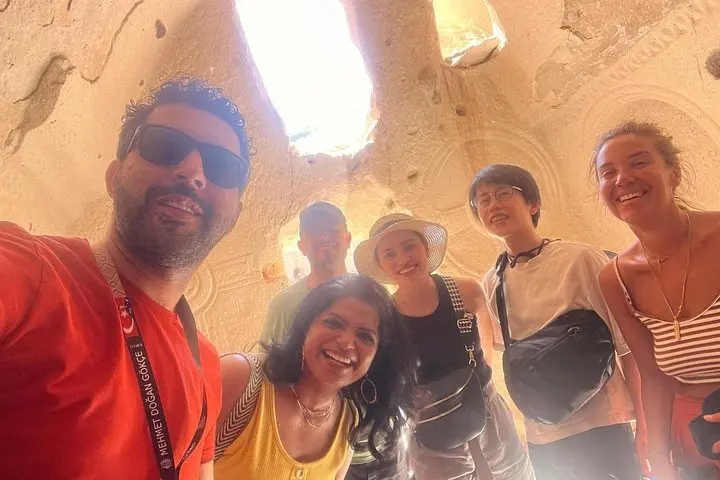
You arrive to a wind-sanded landscape that feels engineered by a patient artist: towers of soft volcanic rock rise like columns, their caps balanced by centuries of wind and water. Mehmet meets the group with a thermos of strong Turkish tea and a practiced smile, pointing out the route as minivans hum through Göreme. The day stretches ahead—open-air museums, hidden churches, and viewpoints where the valley floor looks mapped by geological hands.
You arrive to a wind-sanded landscape that feels engineered by a patient artist: towers of soft volcanic rock rise like columns, their caps balanced by centuries of wind and water. Mehmet meets the group with a thermos of strong Turkish tea and a practiced smile, pointing out the route as minivans hum through Göreme. The day stretches ahead—open-air museums, hidden churches, and viewpoints where the valley floor looks mapped by geological hands.
Cappadocia is volcanic architecture. Millions of years ago, eruptions from Erciyes and Hasan laid down thick layers of tuff; erosion then carved those layers into the region’s signature chimneys and ridges. Byzantium shaped the human story inside that geology: monks cut cave churches and frescoed their interiors, creating quiet galleries protected from the elements. Ottoman and local Anatolian cultures later repurposed these hollows into homes and storerooms; today, living communities still occupy some caves while others are preserved as museums.
Mehmet’s commentary moves easily between geology and local life—why certain valleys were chosen for settlements, where pigeons were kept for fertilizer, and which frescoes survived iconoclasm. The tour threads through Göreme Open Air Museum, a panoramic stop at Uchisar Castle, and a walk through a valley of fairy chimneys; expect short hikes on uneven, rocky trails and steps into small cave chapels. Distances are modest—most driving legs run 5–40 km across the region—so the day feels busy but not rushed.
Practical notes: the area sits around 1,000–1,200 meters elevation, meaning sun burns faster and mornings are crisp. Footwear with good tread is essential—many paths are packed dirt, broken stone, or narrow ledges. Bring 1–2 liters of water, sunscreen, and a light layer for wind. If you want sunrise balloon photos, arrange a separate pre-dawn flight; this full-day tour starts later and focuses on cultural and geological highlights.
Culinary moments punctuate the day: stop for gözleme and black tea at a small café, and buy locally made pottery in Avanos. Respect fragile rock surfaces and frescoes—follow the guide’s route, and avoid touching painted walls. Mehmet’s local knowledge shortens lines, explains signage, and opens quieter corners of popular sites, turning a checklist into a coherent story of stone, faith, and daily life.
By evening you'll have walked between eras: Hittite traces in the landscape, Byzantine art in the caves, and modern Anatolian rhythms in village squares. The tour is ideal for travelers who want context with their photos—history and geology delivered alongside practical navigation of an otherworldly landscape.