THE ADVENTURE COLLECTIVE® · Independent discovery and booking for outdoor travel

Cover Paris’s top sights in three hours with a top-rated local guide. This private walking tour starts at Opéra Garnier and weaves through Place Vendôme, the Champs-Élysées and the Eiffel Tower with local stories and practical stops.
Cover Paris’s top sights in three hours with a top-rated local guide. This private walking tour starts at Opéra Garnier and weaves through Place Vendôme, the Champs-Élysées and the Eiffel Tower with local stories and practical stops.
You meet your guide outside the Palais Garnier as taxis hiss and early-morning light silver the bronze statues. The city moves in a deliberate rhythm here—boulevards opening like pages—and for three hours a knowledgeable local pulls the threads of Paris’s past into a single, walkable line.
Verified experiences and guided adventures in the surrounding area.
Operated by Guided Tours of Paris with Alberto · Paris, Île-de-France
You meet your guide outside the Palais Garnier as taxis hiss and early-morning light silver the bronze statues. The city moves in a deliberate rhythm here—boulevards opening like pages—and for three hours a knowledgeable local pulls the threads of Paris’s past into a single, walkable line.
The route threads Place Vendôme’s jewel-box façades, crosses the formal geometry of the Tuileries and Place de la Concorde, strolls the wide avenue of the Champs-Élysées to the Arc de Triomphe, and finally crosses the Seine on Pont Alexandre III to finish at the Eiffel Tower. Underfoot are Haussmann-era stones and, deeper, the Paris Basin’s Lutetian limestone—quarries that shaped both buildings and basements. Guides often highlight Roman Lutetia’s footprint here and Napoleon’s imprint on the city’s boulevards, tying architecture to political and cultural shifts.
The tour balances context and practicality: stories about the Ritz, Napoleonic monuments, and the art scene mix with stops for coffee or a pastry. The Seine daringly redirects attention at each bridge; statues and museums offer counterpoints to commerce and café life.
Practical notes: expect three hours of mostly flat walking on paved streets and some steps; wear supportive shoes and bring water. Morning light is best for photos and cooler temperatures; late afternoons show the city’s warm glow but are busier. Private guides tailor pacing and can recommend nearby lesser-known cafés or a short detour to Palais-Royal if time allows. This walk is both orientation and intimate introduction to Paris’s layered history—efficient, human, and immediate.
The tour departs from the main façade of Opéra Garnier (8 Rue Scribe) and concludes at the Eiffel Tower area; guides can advise on onward transport.
Yes—strollers are accessible on most parts of the route, though some stretches have wider sidewalks and occasional steps.
No; this walking tour provides external viewpoints and narration—entrance fees to monuments are not included.
Yes—private guides adapt pacing, suggest coffee or lunch stops, and can add short detours when time permits.
Guided Tours of Paris with Alberto operates guided outdoor trips and adventures with an emphasis on safety, stewardship, and memorable experiences.
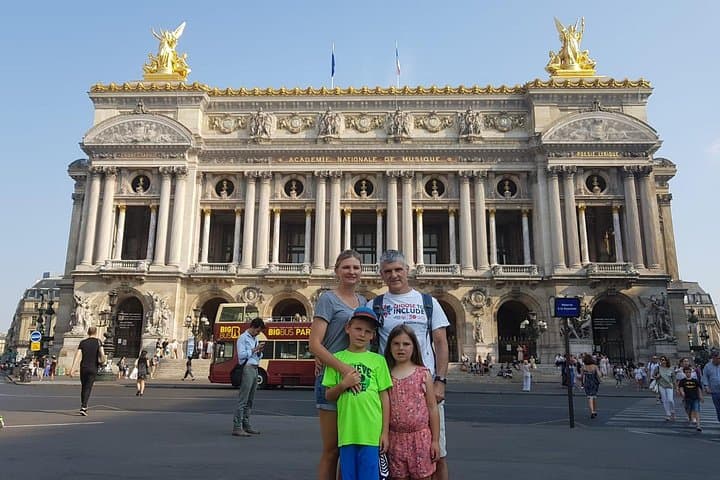
You meet your guide outside the Palais Garnier as taxis hiss and early-morning light silver the bronze statues. The city moves in a deliberate rhythm here—boulevards opening like pages—and for three hours a knowledgeable local pulls the threads of Paris’s past into a single, walkable line.
You meet your guide outside the Palais Garnier as taxis hiss and early-morning light silver the bronze statues. The city moves in a deliberate rhythm here—boulevards opening like pages—and for three hours a knowledgeable local pulls the threads of Paris’s past into a single, walkable line.
The route threads Place Vendôme’s jewel-box façades, crosses the formal geometry of the Tuileries and Place de la Concorde, strolls the wide avenue of the Champs-Élysées to the Arc de Triomphe, and finally crosses the Seine on Pont Alexandre III to finish at the Eiffel Tower. Underfoot are Haussmann-era stones and, deeper, the Paris Basin’s Lutetian limestone—quarries that shaped both buildings and basements. Guides often highlight Roman Lutetia’s footprint here and Napoleon’s imprint on the city’s boulevards, tying architecture to political and cultural shifts.
The tour balances context and practicality: stories about the Ritz, Napoleonic monuments, and the art scene mix with stops for coffee or a pastry. The Seine daringly redirects attention at each bridge; statues and museums offer counterpoints to commerce and café life.
Practical notes: expect three hours of mostly flat walking on paved streets and some steps; wear supportive shoes and bring water. Morning light is best for photos and cooler temperatures; late afternoons show the city’s warm glow but are busier. Private guides tailor pacing and can recommend nearby lesser-known cafés or a short detour to Palais-Royal if time allows. This walk is both orientation and intimate introduction to Paris’s layered history—efficient, human, and immediate.