THE ADVENTURE COLLECTIVE® · Independent discovery and booking for outdoor travel

Cover the essentials of Sri Lanka in eight days: ancient capitals, a rock fortress, misty tea country and blue whale country. This private tour pairs an air-conditioned vehicle with expert guides to deliver culture, wildlife and coastal adventure without the rush.
Cover the essentials of Sri Lanka in eight days: ancient capitals, a rock fortress, misty tea country and blue whale country. This private tour pairs an air-conditioned vehicle with expert guides to deliver culture, wildlife and coastal adventure without the rush.
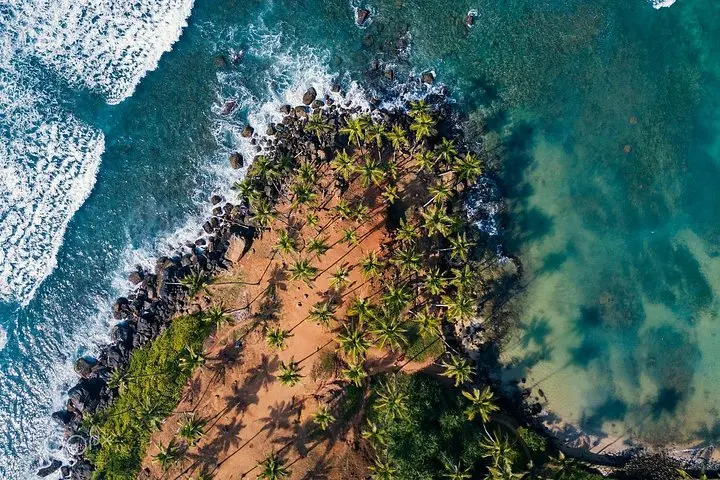
When the plane dips low over the island, a patchwork of emerald tea terraces, palm-fringed coastline and low-lying tanks stretches beneath you—Sri Lanka arrives with shape and scent. On an eight-day private circuit from Negombo you move through that landscape deliberately: ancient brick stupas rising from grasslands at Anuradhapura, the coral-colored face of Sigiriya looming above rice paddies, the cool, misted highlands of Nuwara Eliya, and then the Atlantic-slick sea at Mirissa where blue whales punch the surface.
Verified experiences and guided adventures in the surrounding area.
Operated by Lanka Tour Trails · Negombo, Western Province
When the plane dips low over the island, a patchwork of emerald tea terraces, palm-fringed coastline and low-lying tanks stretches beneath you—Sri Lanka arrives with shape and scent. On an eight-day private circuit from Negombo you move through that landscape deliberately: ancient brick stupas rising from grasslands at Anuradhapura, the coral-colored face of Sigiriya looming above rice paddies, the cool, misted highlands of Nuwara Eliya, and then the Atlantic-slick sea at Mirissa where blue whales punch the surface.
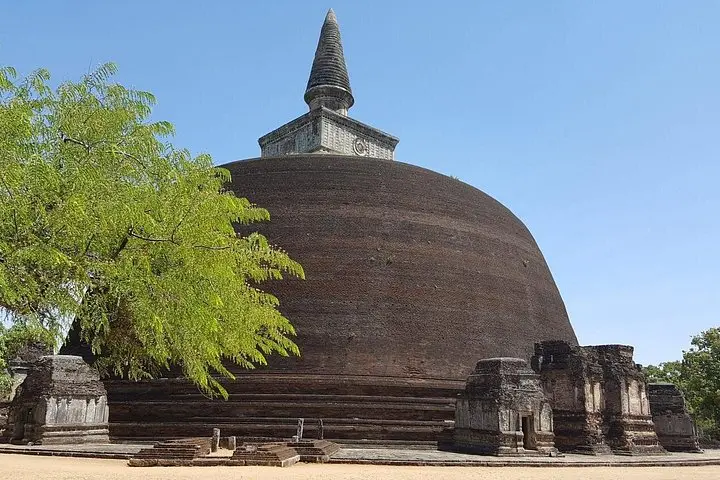
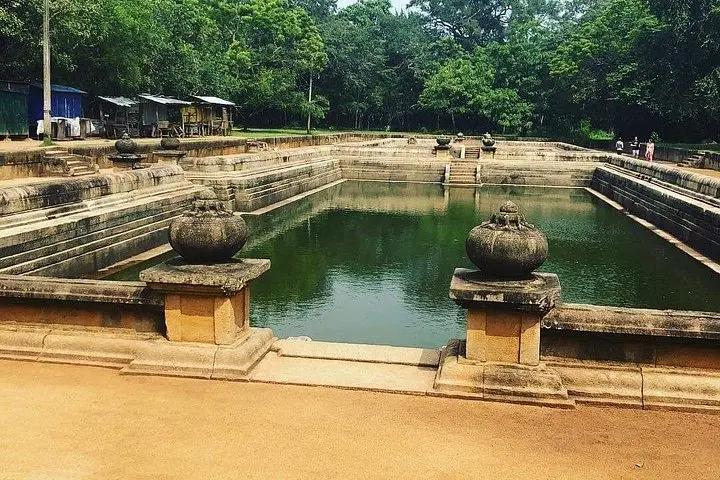
The route reads like a compact history of the island. Anuradhapura, founded around 380 BCE, was Sri Lanka’s first great capital; its stone dagobas and monastic complexes map the reach of early Sinhalese statecraft. Sigiriya—the 5th-century rock fortress—shows an almost modern approach to urban planning, with its watered gardens and frescoed mirror wall carved into basalt. The central highlands are volcanic in origin: steep ridgelines and plateaus where cool temperatures and frequent mist created the right conditions for the colonial-era tea estates that still define Nuwara Eliya’s economy and skyline.
Culture arrives at every stop: temple oil lamps at the Temple of the Tooth, dutch-era ramparts of Galle Fort, and the quiet penance of monks at Ritigala. Wildlife punctuates the itinerary—Minneriya’s seasonal gatherings can deliver hundreds of Asian elephants in one sweep, and the southern seas off Mirissa are one of the best places on earth to see blue whales.
Practical guidance for packing and pacing: expect a mix of short hikes (Mini Adam’s Peak is 1,141 m elevation) and easy walking through city streets and heritage sites. Temperatures swing—coastal zones are hot and humid, hill country drops to cool mornings—so layer. For Sigiriya plan for roughly 1–2 hours of climbing and stair negotiation; wear good traction shoes and carry sun protection. Whale watching departs before dawn for calmer seas and better sightings; if seas are rough operators sometimes delay departures.
Logistics are straightforward: this is a private tour with airport pickup, an air-conditioned vehicle and an English-speaking chauffeur-guide. Many entry fees, breakfasts and bottled water are included—still carry cash (LKR) for small purchases, tips and local markets. Respect temple dress codes (shoulders and knees covered) and the conservation work along the way—support turtle hatcheries and approved elephant transit programs rather than opportunistic animal encounters.
Eight days here feel generous enough to see a cross-section of Sri Lanka’s geology, culture and wildlife without rushing. Move slowly in each place—watch the light shift on the tea slopes at dusk, listen for the low trumpet of elephants at Minneriya, and let the island’s layered history unfold on the road between one world-class ruin and the next.
Yes—the operator marks it suitable for all fitness levels; private transport, flexible pacing and included infant seats make it family-friendly, though some walking and climbs are required.
Most nationalities require an eTA (Electronic Travel Authorization) before arrival—check official government sites to apply ahead of travel.
The dry season (roughly June to September) concentrates herds around remaining water sources and improves chances for large congregations.
Can I customize pickup? Yes—pickup is offered from the airport and other locations; the tour allows custom traveler pickup points when arranged in advance.
Lanka Tour Trails operates guided outdoor trips and adventures with an emphasis on safety, stewardship, and memorable experiences.
When the plane dips low over the island, a patchwork of emerald tea terraces, palm-fringed coastline and low-lying tanks stretches beneath you—Sri Lanka arrives with shape and scent. On an eight-day private circuit from Negombo you move through that landscape deliberately: ancient brick stupas rising from grasslands at Anuradhapura, the coral-colored face of Sigiriya looming above rice paddies, the cool, misted highlands of Nuwara Eliya, and then the Atlantic-slick sea at Mirissa where blue whales punch the surface.
When the plane dips low over the island, a patchwork of emerald tea terraces, palm-fringed coastline and low-lying tanks stretches beneath you—Sri Lanka arrives with shape and scent. On an eight-day private circuit from Negombo you move through that landscape deliberately: ancient brick stupas rising from grasslands at Anuradhapura, the coral-colored face of Sigiriya looming above rice paddies, the cool, misted highlands of Nuwara Eliya, and then the Atlantic-slick sea at Mirissa where blue whales punch the surface.
The route reads like a compact history of the island. Anuradhapura, founded around 380 BCE, was Sri Lanka’s first great capital; its stone dagobas and monastic complexes map the reach of early Sinhalese statecraft. Sigiriya—the 5th-century rock fortress—shows an almost modern approach to urban planning, with its watered gardens and frescoed mirror wall carved into basalt. The central highlands are volcanic in origin: steep ridgelines and plateaus where cool temperatures and frequent mist created the right conditions for the colonial-era tea estates that still define Nuwara Eliya’s economy and skyline.
Culture arrives at every stop: temple oil lamps at the Temple of the Tooth, dutch-era ramparts of Galle Fort, and the quiet penance of monks at Ritigala. Wildlife punctuates the itinerary—Minneriya’s seasonal gatherings can deliver hundreds of Asian elephants in one sweep, and the southern seas off Mirissa are one of the best places on earth to see blue whales.
Practical guidance for packing and pacing: expect a mix of short hikes (Mini Adam’s Peak is 1,141 m elevation) and easy walking through city streets and heritage sites. Temperatures swing—coastal zones are hot and humid, hill country drops to cool mornings—so layer. For Sigiriya plan for roughly 1–2 hours of climbing and stair negotiation; wear good traction shoes and carry sun protection. Whale watching departs before dawn for calmer seas and better sightings; if seas are rough operators sometimes delay departures.
Logistics are straightforward: this is a private tour with airport pickup, an air-conditioned vehicle and an English-speaking chauffeur-guide. Many entry fees, breakfasts and bottled water are included—still carry cash (LKR) for small purchases, tips and local markets. Respect temple dress codes (shoulders and knees covered) and the conservation work along the way—support turtle hatcheries and approved elephant transit programs rather than opportunistic animal encounters.
Eight days here feel generous enough to see a cross-section of Sri Lanka’s geology, culture and wildlife without rushing. Move slowly in each place—watch the light shift on the tea slopes at dusk, listen for the low trumpet of elephants at Minneriya, and let the island’s layered history unfold on the road between one world-class ruin and the next.