THE ADVENTURE COLLECTIVE® · Independent discovery and booking for outdoor travel

From Mirissa’s early-morning whale watches to climbing Sigiriya’s crown of rock and the ritual life of Kandy, this four-day loop compresses Sri Lanka’s natural and cultural highlights into a practical, experience-driven tour. Expect long drives, early starts, and unforgettable wildlife encounters.
From Mirissa’s early-morning whale watches to climbing Sigiriya’s crown of rock and the ritual life of Kandy, this four-day loop compresses Sri Lanka’s natural and cultural highlights into a practical, experience-driven tour. Expect long drives, early starts, and unforgettable wildlife encounters.
A morning in Mirissa begins with the sea silvering beneath a low sun. Boats bob like quiet punctuation marks, and the horizon seems to wait—patient, then suddenly alive—when a blowhole breaks the surface and a blue whale arches into view. That moment, when distance collapses into scale, is the opening note of a four-day sweep across Sri Lanka: colonial Galle, the belly of Sigiriya’s ancient rock, the ritual heartbeat of Kandy, and a last pass through Colombo’s civic bustle.
Verified experiences and guided adventures in the surrounding area.
Operated by Ceylon Travel Dream · Colombo, Western Province
A morning in Mirissa begins with the sea silvering beneath a low sun. Boats bob like quiet punctuation marks, and the horizon seems to wait—patient, then suddenly alive—when a blowhole breaks the surface and a blue whale arches into view. That moment, when distance collapses into scale, is the opening note of a four-day sweep across Sri Lanka: colonial Galle, the belly of Sigiriya’s ancient rock, the ritual heartbeat of Kandy, and a last pass through Colombo’s civic bustle.
The route threads coastal geology into island history. Galle’s fort, built by Portuguese and refashioned by the Dutch, sits on a limestone promontory whose ramparts still defy ocean storms. Inland, Sigiriya rises from scrub and paddy as a 200-meter volcanic plug—an engineered stronghold from the 5th century that demands a brisk climb of metal staircases and rock-cut steps to reach its frescoed galleries and mirror-like water gardens. Kandy, perched in cooler hills, is the cultural axis: the Temple of the Tooth relic anchors centuries of Kandyan court ritual and seasonal processions.
This is both an expedition and a cultural primer. Expect long drives—Colombo to Mirissa roughly 3–3.5 hours; Mirissa to Sigiriya can take 4–5 hours depending on traffic—so plan for early departures and roadside tea breaks. Whale-watching launches before dawn; sightings take up to four hours and are weather dependent. Climbers should budget 1–2 hours for Sigiriya’s ascent and descent. Peradeniya’s Royal Botanical Garden offers a gentle contrast: broad avenues, towering palms, and orchids that reward a slower pace.
Practicalities matter. Dress modestly at temples—shoulders covered, shoes removed; bring a lightweight rain jacket during the monsoon windows; carry local currency (Sri Lankan rupees) for small purchases and tips. Hydration is constant: tropical sun and humidity make water your most important gear. Local guides do more than navigate—they decode ritual, point out colonial layers, and know when and where whales favor feeding lanes.
This itinerary is accessible to travelers of most fitness levels, but it rewards preparation. Comfortable walking shoes with good traction are non-negotiable for Sigiriya; a sun hat and reef-safe sunscreen make beach mornings more pleasant. If you want quieter photo opportunities, ask guides for pre- or post-dawn slots at key stops.
By day four you’ll feel the island’s rhythms: the sea’s unhurried power, the rock’s vertical memory, and Kandy’s ceremonial cadence. The Highlights of Sri Lanka is compact but layered—an invitation to stand close to history and to let the island’s natural edges rearrange your sense of scale.
The peak season is November to April when blue whales are most frequently sighted. Outside this window, sightings happen but are less predictable due to monsoon patterns.
Sigiriya rises about 200 meters and involves metal stairways and rock steps; allow 1–2 hours round-trip and wear shoes with good grip—it's steep but achievable for most people.
This tour includes four breakfasts and overnight accommodations as listed in the itinerary; confirm specifics with the operator before booking.
Most nationalities must obtain an Electronic Travel Authorization (ETA) before arrival—check the Sri Lankan government website for current requirements and fees.
Tipping is customary but discretionary; small daily amounts for drivers and a larger amount for guides at the end of the tour are appreciated.
Conservative clothing is required—cover shoulders and knees. Remove shoes and hats before entering temple interiors; women should carry a scarf for quick coverage.
Ceylon Travel Dream operates guided outdoor trips and adventures with an emphasis on safety, stewardship, and memorable experiences.
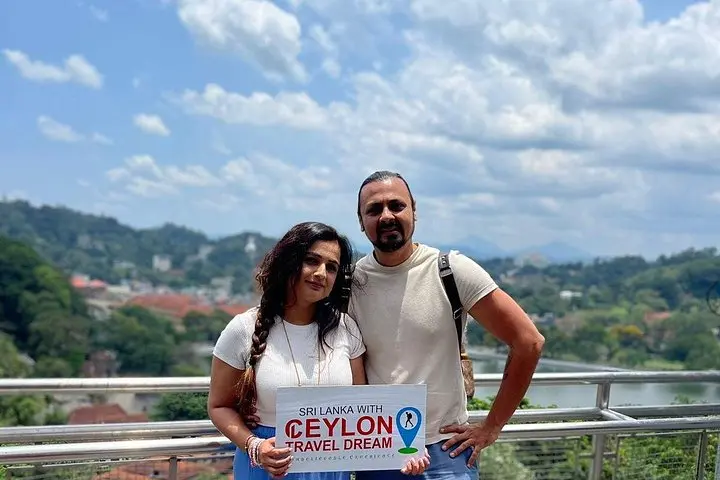
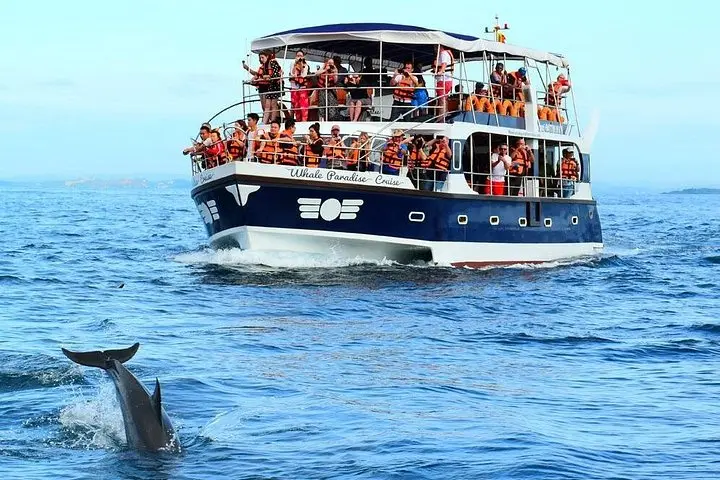
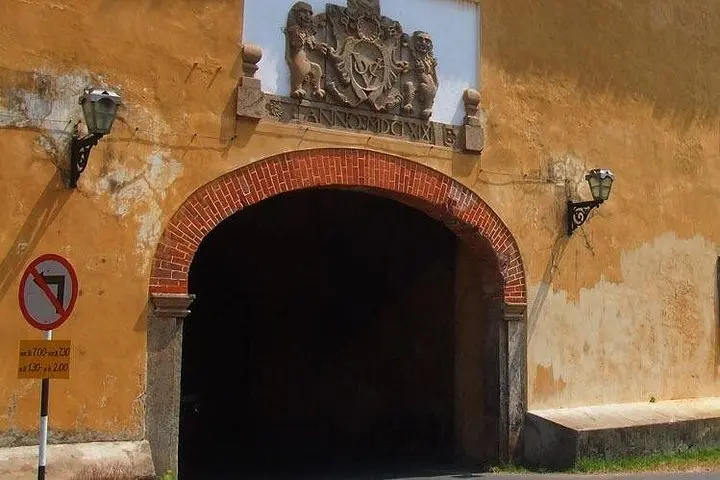
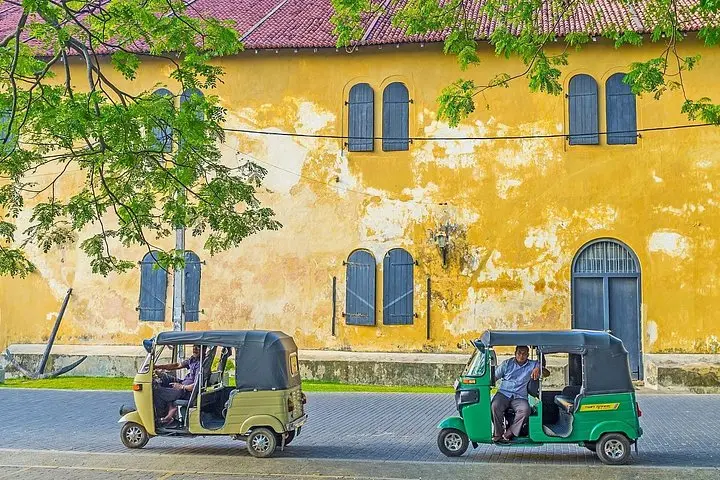
A morning in Mirissa begins with the sea silvering beneath a low sun. Boats bob like quiet punctuation marks, and the horizon seems to wait—patient, then suddenly alive—when a blowhole breaks the surface and a blue whale arches into view. That moment, when distance collapses into scale, is the opening note of a four-day sweep across Sri Lanka: colonial Galle, the belly of Sigiriya’s ancient rock, the ritual heartbeat of Kandy, and a last pass through Colombo’s civic bustle.
A morning in Mirissa begins with the sea silvering beneath a low sun. Boats bob like quiet punctuation marks, and the horizon seems to wait—patient, then suddenly alive—when a blowhole breaks the surface and a blue whale arches into view. That moment, when distance collapses into scale, is the opening note of a four-day sweep across Sri Lanka: colonial Galle, the belly of Sigiriya’s ancient rock, the ritual heartbeat of Kandy, and a last pass through Colombo’s civic bustle.
The route threads coastal geology into island history. Galle’s fort, built by Portuguese and refashioned by the Dutch, sits on a limestone promontory whose ramparts still defy ocean storms. Inland, Sigiriya rises from scrub and paddy as a 200-meter volcanic plug—an engineered stronghold from the 5th century that demands a brisk climb of metal staircases and rock-cut steps to reach its frescoed galleries and mirror-like water gardens. Kandy, perched in cooler hills, is the cultural axis: the Temple of the Tooth relic anchors centuries of Kandyan court ritual and seasonal processions.
This is both an expedition and a cultural primer. Expect long drives—Colombo to Mirissa roughly 3–3.5 hours; Mirissa to Sigiriya can take 4–5 hours depending on traffic—so plan for early departures and roadside tea breaks. Whale-watching launches before dawn; sightings take up to four hours and are weather dependent. Climbers should budget 1–2 hours for Sigiriya’s ascent and descent. Peradeniya’s Royal Botanical Garden offers a gentle contrast: broad avenues, towering palms, and orchids that reward a slower pace.
Practicalities matter. Dress modestly at temples—shoulders covered, shoes removed; bring a lightweight rain jacket during the monsoon windows; carry local currency (Sri Lankan rupees) for small purchases and tips. Hydration is constant: tropical sun and humidity make water your most important gear. Local guides do more than navigate—they decode ritual, point out colonial layers, and know when and where whales favor feeding lanes.
This itinerary is accessible to travelers of most fitness levels, but it rewards preparation. Comfortable walking shoes with good traction are non-negotiable for Sigiriya; a sun hat and reef-safe sunscreen make beach mornings more pleasant. If you want quieter photo opportunities, ask guides for pre- or post-dawn slots at key stops.
By day four you’ll feel the island’s rhythms: the sea’s unhurried power, the rock’s vertical memory, and Kandy’s ceremonial cadence. The Highlights of Sri Lanka is compact but layered—an invitation to stand close to history and to let the island’s natural edges rearrange your sense of scale.