THE ADVENTURE COLLECTIVE® · Independent discovery and booking for outdoor travel

Walk through primary forest, paddle secluded mangrove tunnels and reach limestone caves where Taíno history meets coastal ecology. This private hike-and-kayak loop from Caño Hondo delivers geology, birdlife and hands-on local interpretation in about four hours.
Walk through primary forest, paddle secluded mangrove tunnels and reach limestone caves where Taíno history meets coastal ecology. This private hike-and-kayak loop from Caño Hondo delivers geology, birdlife and hands-on local interpretation in about four hours.
The day begins before the forest exhales. Guides meet the small group at the Caseta Caño Hondo and send you off across low fields that still smell faintly of last night’s rain. After ten minutes the coconut and cacao trees close in; leaves slap softly against one another as if urging you deeper. The trail climbs gently through primary broadleaf forest, and the air acquires the metallic, mineral tang of limestone near the karst outcrops. Somewhere ahead the mangrove channels are already humming with birds.
Verified experiences and guided adventures in the surrounding area.
Operated by The Whales Las Ballenas · Sabana de la Mar, Samaná Province
The day begins before the forest exhales. Guides meet the small group at the Caseta Caño Hondo and send you off across low fields that still smell faintly of last night’s rain. After ten minutes the coconut and cacao trees close in; leaves slap softly against one another as if urging you deeper. The trail climbs gently through primary broadleaf forest, and the air acquires the metallic, mineral tang of limestone near the karst outcrops. Somewhere ahead the mangrove channels are already humming with birds.
Los Haitises National Park takes its name from the Taíno word for highlands — an apt description for the park’s jagged limestone islands, sinkholes and cave systems carved by sea and time. Geologically, the park is a limestone reef uplifted and sculpted over millennia; it’s a living museum of karst formations, ancient shell beds and stalactite-flecked caverns that hold Taíno pictographs and archaeological traces of early inhabitants. Local guides, many raised as volunteer stewards of the reserve, weave those stories into the morning: medicinal plants used by rural families, the park’s role in coastal fisheries, and the decades-long effort to protect breeding grounds for birds.
The hike itself is roughly three hours through humid, sometimes muddy terrain, rewarding frequent windows onto mangrove estuaries. You reach the Jivales spring — the water here is clear enough to read the stones — then swap boots for life jackets. The paddle through mangrove tunnels is a study in patience: channels pinch to a kayak’s width, roots claw the water, and herons watch from root knots like sentries. The route opens on San Lorenzo Bay where limestone fingers rise sharply from the water; it’s a dramatic place to rest, photograph and listen to the wind argue with the canopy.
Practical edge: the tour typically runs about four hours total and is suited to travelers comfortable walking three miles over mixed terrain and spending two hours in a sit-in kayak. Guides provide kayaks, life jackets and basic paddling instruction. Bring reef-safe sunscreen, quick-dry clothing, water, and a small dry bag for phone and camera. Expect uneven roots, bright sun on the bay, and mosquitoes in shaded areas — dawn or late afternoon departures lower heat and improve bird activity. Most importantly, follow the guide when entering caves and avoid touching rock art; these features are fragile and protected.
For travelers who want a compact but complete taste of Los Haitises, this private hike-and-kayak loop distills geology, Taíno history and mangrove ecology into a single active morning — equal parts classroom and wilderness corridor where the forest and sea keep up their quiet argument.
The operator lists a four-hour duration that includes roughly three hours of hiking and about two hours total for kayaking and transitions.
No—guides provide basic instruction and stable kayaks suitable for beginners; swimming comfort is recommended.
The meeting point is the Caseta Caño Hondo; the operator can give exact coordinates or meet you at the hotel entrance of Caño Hondo on request.
Yes—you’ll visit caves such as Cueva de la Arena and Cueva de la Línea; follow the guide inside and avoid touching rock art.
Older children comfortable with a 3-hour walk and paddling can join; check with the operator about minimum age and safety arrangements.
The tour may be canceled in bad weather for safety; check the operator’s cancellation policy (all sales final) before booking.
The Whales Las Ballenas operates guided outdoor trips and adventures with an emphasis on safety, stewardship, and memorable experiences.
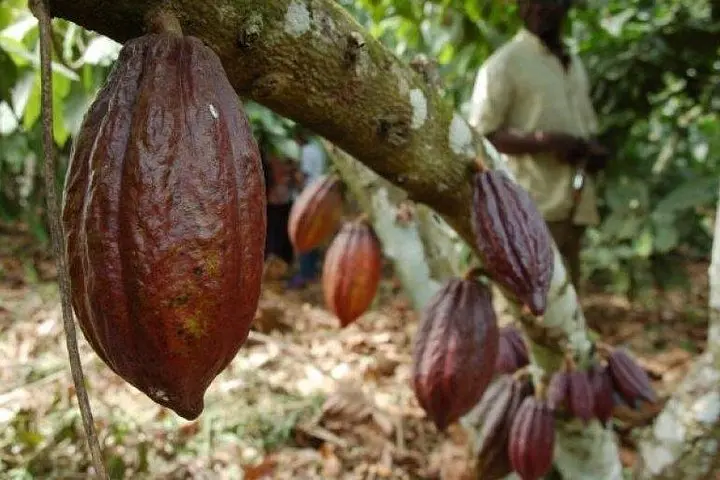
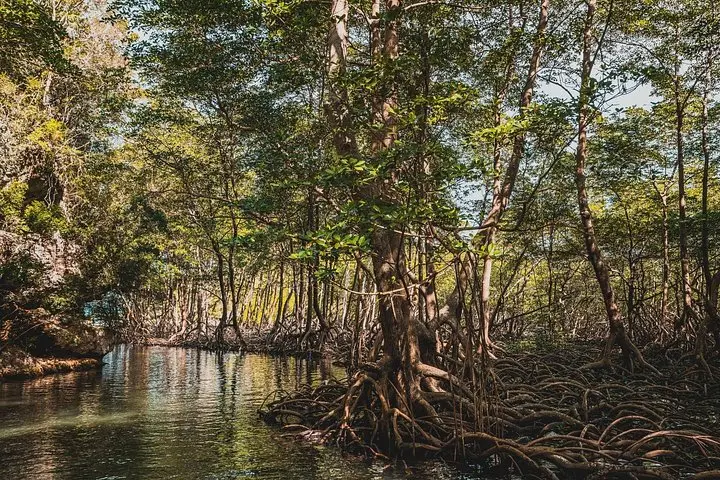
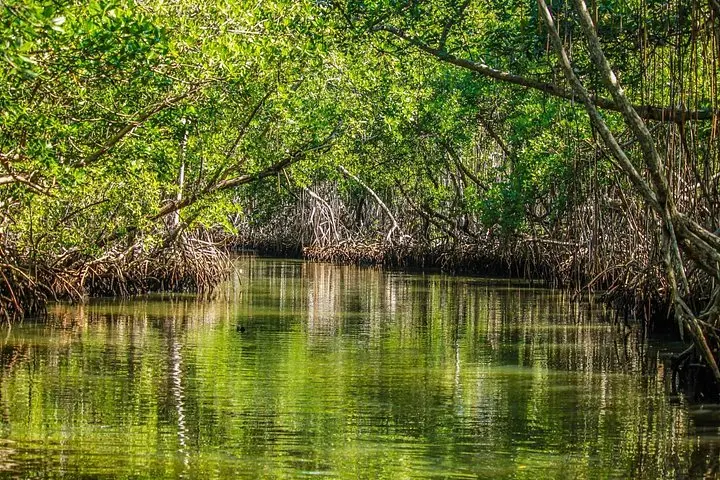
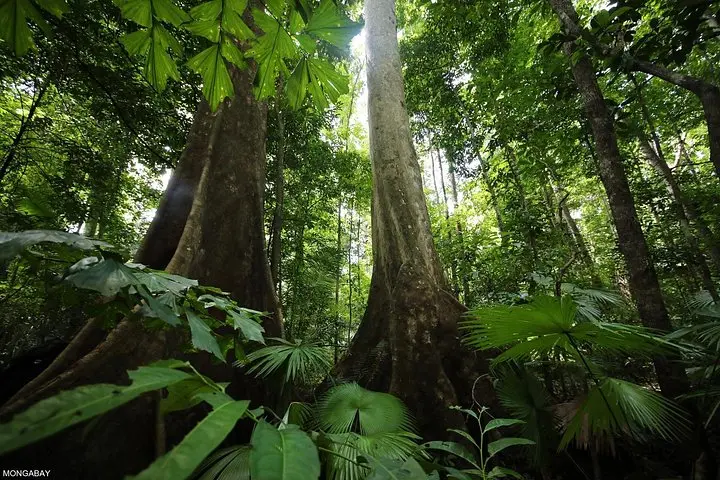
The day begins before the forest exhales. Guides meet the small group at the Caseta Caño Hondo and send you off across low fields that still smell faintly of last night’s rain. After ten minutes the coconut and cacao trees close in; leaves slap softly against one another as if urging you deeper. The trail climbs gently through primary broadleaf forest, and the air acquires the metallic, mineral tang of limestone near the karst outcrops. Somewhere ahead the mangrove channels are already humming with birds.
The day begins before the forest exhales. Guides meet the small group at the Caseta Caño Hondo and send you off across low fields that still smell faintly of last night’s rain. After ten minutes the coconut and cacao trees close in; leaves slap softly against one another as if urging you deeper. The trail climbs gently through primary broadleaf forest, and the air acquires the metallic, mineral tang of limestone near the karst outcrops. Somewhere ahead the mangrove channels are already humming with birds.
Los Haitises National Park takes its name from the Taíno word for highlands — an apt description for the park’s jagged limestone islands, sinkholes and cave systems carved by sea and time. Geologically, the park is a limestone reef uplifted and sculpted over millennia; it’s a living museum of karst formations, ancient shell beds and stalactite-flecked caverns that hold Taíno pictographs and archaeological traces of early inhabitants. Local guides, many raised as volunteer stewards of the reserve, weave those stories into the morning: medicinal plants used by rural families, the park’s role in coastal fisheries, and the decades-long effort to protect breeding grounds for birds.
The hike itself is roughly three hours through humid, sometimes muddy terrain, rewarding frequent windows onto mangrove estuaries. You reach the Jivales spring — the water here is clear enough to read the stones — then swap boots for life jackets. The paddle through mangrove tunnels is a study in patience: channels pinch to a kayak’s width, roots claw the water, and herons watch from root knots like sentries. The route opens on San Lorenzo Bay where limestone fingers rise sharply from the water; it’s a dramatic place to rest, photograph and listen to the wind argue with the canopy.
Practical edge: the tour typically runs about four hours total and is suited to travelers comfortable walking three miles over mixed terrain and spending two hours in a sit-in kayak. Guides provide kayaks, life jackets and basic paddling instruction. Bring reef-safe sunscreen, quick-dry clothing, water, and a small dry bag for phone and camera. Expect uneven roots, bright sun on the bay, and mosquitoes in shaded areas — dawn or late afternoon departures lower heat and improve bird activity. Most importantly, follow the guide when entering caves and avoid touching rock art; these features are fragile and protected.
For travelers who want a compact but complete taste of Los Haitises, this private hike-and-kayak loop distills geology, Taíno history and mangrove ecology into a single active morning — equal parts classroom and wilderness corridor where the forest and sea keep up their quiet argument.