THE ADVENTURE COLLECTIVE® · Independent discovery and booking for outdoor travel

Wadi Shab is a hike-swim hybrid where emerald pools and a waterfall cave reward a steady trek through Oman’s classic limestone canyon. Here’s how it feels—and what you need—to make the most of this iconic adventure, plus a cool-down stop at Bimmah Sinkhole.
Wadi Shab is a hike-swim hybrid where emerald pools and a waterfall cave reward a steady trek through Oman’s classic limestone canyon. Here’s how it feels—and what you need—to make the most of this iconic adventure, plus a cool-down stop at Bimmah Sinkhole.
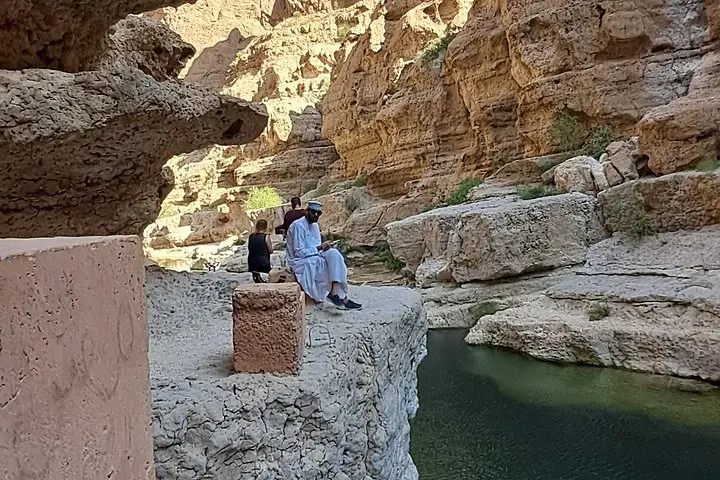
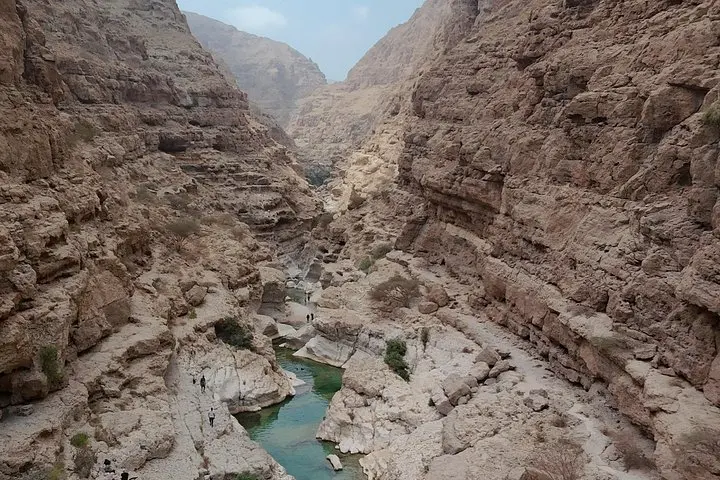
Morning light spills over the Gulf of Oman as the first motorboat hums across the mouth of Wadi Shab, ferrying hikers to the start of a canyon that wastes no time pulling you inward. Palms lean over clear runnels, luring you upstream. Limestone walls stack higher with every bend, their seams whispering of ancient seas and sudden floods. The wadi nudges, then dares—over boulders, along falaj irrigation channels, into water that glows jade under the sun.
Verified experiences and guided adventures in the surrounding area.
Operated by Choolo Tour By Nasser · Tiwi, Ash Sharqiyah South
Morning light spills over the Gulf of Oman as the first motorboat hums across the mouth of Wadi Shab, ferrying hikers to the start of a canyon that wastes no time pulling you inward. Palms lean over clear runnels, luring you upstream. Limestone walls stack higher with every bend, their seams whispering of ancient seas and sudden floods. The wadi nudges, then dares—over boulders, along falaj irrigation channels, into water that glows jade under the sun.
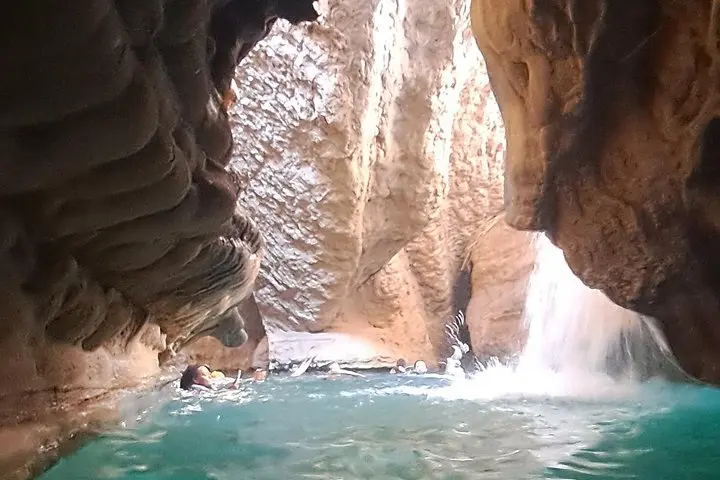
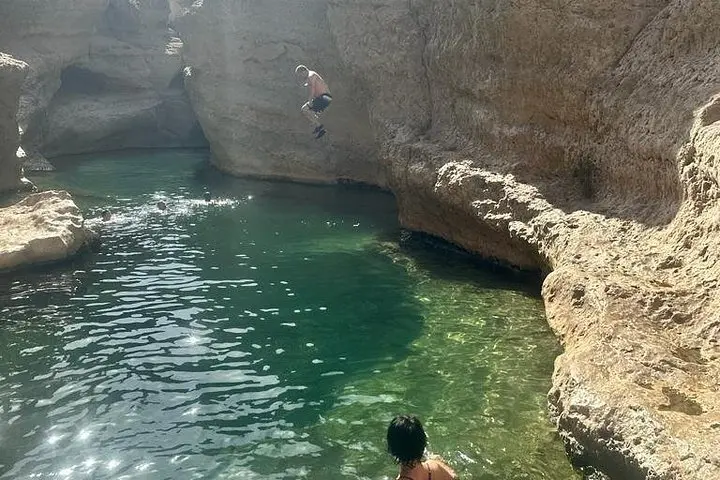
The approach is roughly 6–7 km round-trip with minimal elevation gain (about 150 m). Expect a 45–60 minute hike each way, including sections of uneven rock and short scrambles. The finale requires swimming through a chain of pools—about 150–200 meters total—into a narrow slot where a curtain of water tumbles inside a hidden cave. Here the canyon breathes cool air; the pools steady your heartbeat and urge you deeper.
Geology explains the drama. This is karst country: soluble limestone sculpted by seasonal floods and constant seepage, the same process that formed the nearby Bimmah Sinkhole (Hawiyat Najm). Villages around Tiwi have guided water for centuries via the UNESCO-recognized aflaj channels, feeding date palms and banana groves that still shade the approach. Sur, a short drive south, once built the wooden dhows that crossed the Indian Ocean—proof that water has long set the pace on this coast.
Guides set a steady rhythm: hike, wade, swim, repeat. The wadi pushes forward when the sun climbs, so early starts pay off with cooler temps and quieter pools. Footwear matters—closed-toe water shoes or sturdy amphibious sandals help on slick rock. A small dry bag keeps phones and snacks above the surface; a lightweight sun layer takes the edge off the desert glare. After the swim, the return flows faster. The canyon opens, heat rolls in, and the turquoise behind you feels like a dare you answered.
Most tours pair Wadi Shab with a stop at Bimmah Sinkhole, where mineral-blue water collects in an almost perfectly round void. The story locals tell is a fallen star; geologists say collapsing limestone. Either way, it’s a perfect cool-down and a workable Plan B if storms close the wadi.
Logistics are straightforward: Muscat to Wadi Shab is about 1.5–2 hours by road. Expect a short paid boat hop at the start and no services along the canyon—restrooms are at the car park only. Bring two liters of water per person, electrolytes, and modest cover-ups for village areas. In return, Wadi Shab gives you a canyon that moves like a living thing—inviting, insistent, and unforgettable.
Plan for 6–7 km round-trip with about 150 m of gentle gain, short scrambles, and wading. Most active travelers find it moderate.
Yes. The final stretch involves swimming about 150–200 m through three pools to enter the cave. Non-swimmers can enjoy earlier pools but won’t reach the waterfall.
Some guides carry flotation aids on request; confirm before departure. If you’re not a confident swimmer, bring a compact PFA or skip the cave section.
October to April offers milder temperatures. Year-round visits are possible, but start early in summer and avoid the wadi after heavy rain due to flash-flood risk.
Wear swimwear inside the canyon but cover shoulders and knees near the village and car park. Quick-dry shorts and a sun shirt work well for the approach.
Restrooms and kiosks are at the car park only. There are no services inside the wadi—pack water, snacks, and a trash bag.
Choolo Tour By Nasser operates guided outdoor trips and adventures with an emphasis on safety, stewardship, and memorable experiences.
Morning light spills over the Gulf of Oman as the first motorboat hums across the mouth of Wadi Shab, ferrying hikers to the start of a canyon that wastes no time pulling you inward. Palms lean over clear runnels, luring you upstream. Limestone walls stack higher with every bend, their seams whispering of ancient seas and sudden floods. The wadi nudges, then dares—over boulders, along falaj irrigation channels, into water that glows jade under the sun.
Morning light spills over the Gulf of Oman as the first motorboat hums across the mouth of Wadi Shab, ferrying hikers to the start of a canyon that wastes no time pulling you inward. Palms lean over clear runnels, luring you upstream. Limestone walls stack higher with every bend, their seams whispering of ancient seas and sudden floods. The wadi nudges, then dares—over boulders, along falaj irrigation channels, into water that glows jade under the sun.
The approach is roughly 6–7 km round-trip with minimal elevation gain (about 150 m). Expect a 45–60 minute hike each way, including sections of uneven rock and short scrambles. The finale requires swimming through a chain of pools—about 150–200 meters total—into a narrow slot where a curtain of water tumbles inside a hidden cave. Here the canyon breathes cool air; the pools steady your heartbeat and urge you deeper.
Geology explains the drama. This is karst country: soluble limestone sculpted by seasonal floods and constant seepage, the same process that formed the nearby Bimmah Sinkhole (Hawiyat Najm). Villages around Tiwi have guided water for centuries via the UNESCO-recognized aflaj channels, feeding date palms and banana groves that still shade the approach. Sur, a short drive south, once built the wooden dhows that crossed the Indian Ocean—proof that water has long set the pace on this coast.
Guides set a steady rhythm: hike, wade, swim, repeat. The wadi pushes forward when the sun climbs, so early starts pay off with cooler temps and quieter pools. Footwear matters—closed-toe water shoes or sturdy amphibious sandals help on slick rock. A small dry bag keeps phones and snacks above the surface; a lightweight sun layer takes the edge off the desert glare. After the swim, the return flows faster. The canyon opens, heat rolls in, and the turquoise behind you feels like a dare you answered.
Most tours pair Wadi Shab with a stop at Bimmah Sinkhole, where mineral-blue water collects in an almost perfectly round void. The story locals tell is a fallen star; geologists say collapsing limestone. Either way, it’s a perfect cool-down and a workable Plan B if storms close the wadi.
Logistics are straightforward: Muscat to Wadi Shab is about 1.5–2 hours by road. Expect a short paid boat hop at the start and no services along the canyon—restrooms are at the car park only. Bring two liters of water per person, electrolytes, and modest cover-ups for village areas. In return, Wadi Shab gives you a canyon that moves like a living thing—inviting, insistent, and unforgettable.