THE ADVENTURE COLLECTIVE® · Independent discovery and booking for outdoor travel

Turquoise pools, palm-shaded paths, and a hidden cave waterfall—Wadi Shab blends an approachable hike with a refreshing swim just a couple hours from Muscat. Here’s how to time it, what to bring, and where the landscape reveals its best angles.
Turquoise pools, palm-shaded paths, and a hidden cave waterfall—Wadi Shab blends an approachable hike with a refreshing swim just a couple hours from Muscat. Here’s how to time it, what to bring, and where the landscape reveals its best angles.
Dawn slides over the Gulf of Oman as the road bends into the coastal cliffs east of Muscat. By the time you reach Tiwi, heat is already licking the limestone, and Wadi Shab opens like a challenge—date palms whispering, turquoise water inviting but guarded by pale rock walls that rise and narrow. A brief wooden boat ride ferries you across the inlet. The canyon beckons, urging you upstream.
Verified experiences and guided adventures in the surrounding area.
Operated by Marhaba Dhofar · Tiwi, Ash Sharqiyah South
Dawn slides over the Gulf of Oman as the road bends into the coastal cliffs east of Muscat. By the time you reach Tiwi, heat is already licking the limestone, and Wadi Shab opens like a challenge—date palms whispering, turquoise water inviting but guarded by pale rock walls that rise and narrow. A brief wooden boat ride ferries you across the inlet. The canyon beckons, urging you upstream.
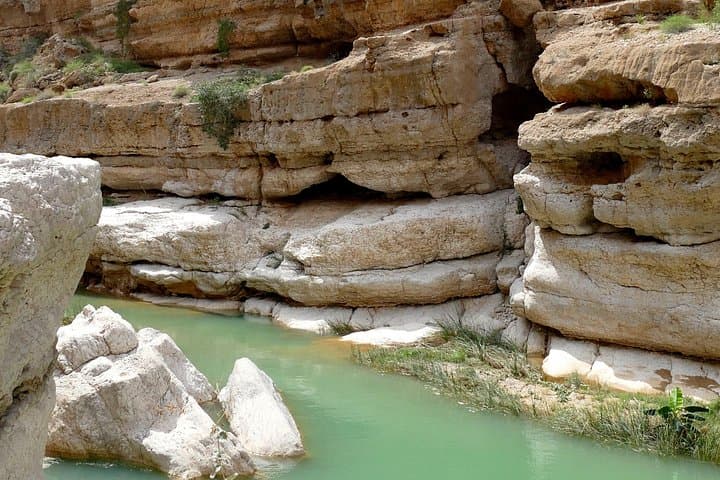
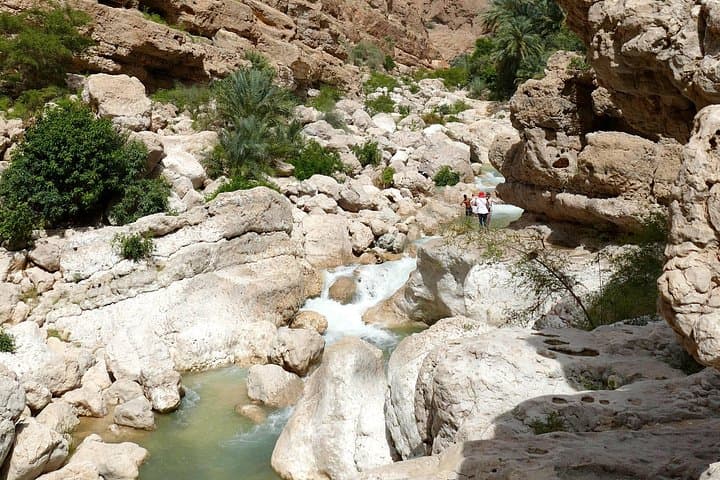
The trail is a mix of packed sand, worn limestone, and stepped terraces where falaj channels chatter alongside the path. Under the palms, the air cools; the wadi pushes you forward with the steady promise of pools ahead. Expect an undulating 3–4 km hike each way with light scrambling over boulders and ledges. Shoes hit rock, then water, then rock again—the wadi dictates the pace.
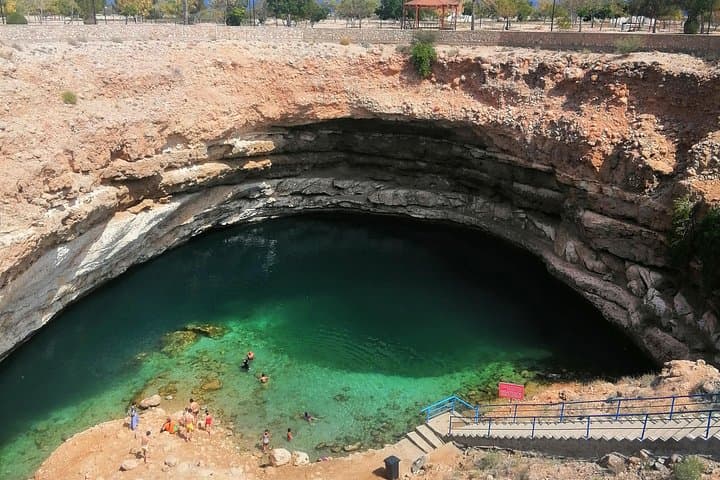
Geologically, you’re walking through Oman’s Eocene limestone, a landscape carved by seasonal floods and relentless seepage. Karst processes have hollowed pockets and polished corridors, the same chemistry behind the famed Bimmah Sinkhole you’ll visit on the return. Locals call that park Hawiyat Najm, “the Falling Star,” a wink to a popular legend; in reality, it’s a collapsed limestone chamber, its emerald water a lens into the subsurface world.
Culturally, Wadi Shab is a place for families on weekends and for travelers most days. Dress modestly; quick-dry shirts and longer swim shorts align with local norms and spare you the sun. On trail, a cheerful salam wa aleikum often earns a warm reply. The wadi rewards patience: clear pools deepen as you climb, and at the top segment, the canyon narrows to a swim-through. The water presses cool against your shoulders as you slip into a hidden chamber where a thin waterfall fans down the stone. It’s a small room, echoing with laughter and drip. The canyon grins—you made it.
Practicalities keep this adventure grounded. Start early to beat the heat and crowds. Plan for 2.5–3 hours round-trip hiking plus swims and photo stops; the full excursion from Muscat typically runs 6–7 hours including transport and the sinkhole stop. Good grip water shoes or lightweight trail shoes you’re willing to get wet are key; bare feet will lose to the wadi’s sharp edges. Bring at least 2 liters of water per person, electrolytes, sun coverage, and a dry bag for your phone and passport. In the rare event of rain, wadis can surge—if clouds gather, the canyon’s mood can turn quickly. When it does, heed it. The wadi always has the last word.
Plan on 3–4 km each way with light scrambling; including swims and breaks, most groups spend 2.5–3 hours in the wadi.
You should be comfortable swimming 50–100 meters in calm water; life jackets are not typically provided in the canyon.
Quick-dry shirts and longer swim shorts or leggings are appropriate; avoid bikinis and very short swimwear.
Yes, a short local boat ride crosses the entrance channel; on guided tours it’s usually included.
October through April offers milder temperatures; in summer, start at sunrise and limit time in the exposed sections.
There’s parking and basic kiosks near the start; once on the trail, there are no toilets, trash bins, or shops—pack out everything.
Marhaba Dhofar operates guided outdoor trips and adventures with an emphasis on safety, stewardship, and memorable experiences.
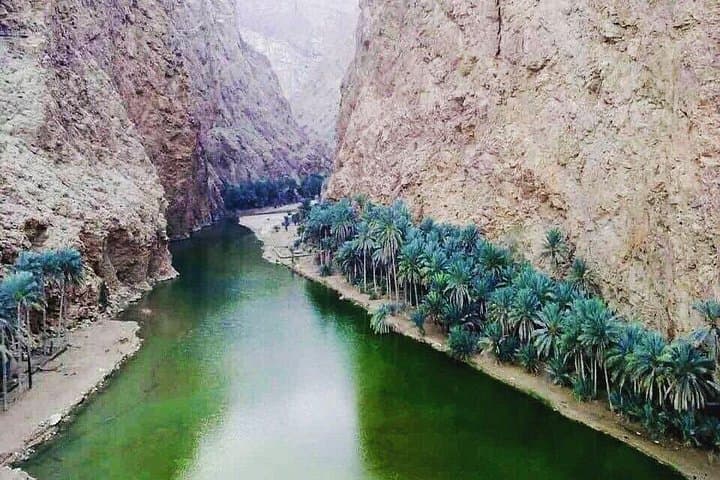
Dawn slides over the Gulf of Oman as the road bends into the coastal cliffs east of Muscat. By the time you reach Tiwi, heat is already licking the limestone, and Wadi Shab opens like a challenge—date palms whispering, turquoise water inviting but guarded by pale rock walls that rise and narrow. A brief wooden boat ride ferries you across the inlet. The canyon beckons, urging you upstream.
Dawn slides over the Gulf of Oman as the road bends into the coastal cliffs east of Muscat. By the time you reach Tiwi, heat is already licking the limestone, and Wadi Shab opens like a challenge—date palms whispering, turquoise water inviting but guarded by pale rock walls that rise and narrow. A brief wooden boat ride ferries you across the inlet. The canyon beckons, urging you upstream.
The trail is a mix of packed sand, worn limestone, and stepped terraces where falaj channels chatter alongside the path. Under the palms, the air cools; the wadi pushes you forward with the steady promise of pools ahead. Expect an undulating 3–4 km hike each way with light scrambling over boulders and ledges. Shoes hit rock, then water, then rock again—the wadi dictates the pace.
Geologically, you’re walking through Oman’s Eocene limestone, a landscape carved by seasonal floods and relentless seepage. Karst processes have hollowed pockets and polished corridors, the same chemistry behind the famed Bimmah Sinkhole you’ll visit on the return. Locals call that park Hawiyat Najm, “the Falling Star,” a wink to a popular legend; in reality, it’s a collapsed limestone chamber, its emerald water a lens into the subsurface world.
Culturally, Wadi Shab is a place for families on weekends and for travelers most days. Dress modestly; quick-dry shirts and longer swim shorts align with local norms and spare you the sun. On trail, a cheerful salam wa aleikum often earns a warm reply. The wadi rewards patience: clear pools deepen as you climb, and at the top segment, the canyon narrows to a swim-through. The water presses cool against your shoulders as you slip into a hidden chamber where a thin waterfall fans down the stone. It’s a small room, echoing with laughter and drip. The canyon grins—you made it.
Practicalities keep this adventure grounded. Start early to beat the heat and crowds. Plan for 2.5–3 hours round-trip hiking plus swims and photo stops; the full excursion from Muscat typically runs 6–7 hours including transport and the sinkhole stop. Good grip water shoes or lightweight trail shoes you’re willing to get wet are key; bare feet will lose to the wadi’s sharp edges. Bring at least 2 liters of water per person, electrolytes, sun coverage, and a dry bag for your phone and passport. In the rare event of rain, wadis can surge—if clouds gather, the canyon’s mood can turn quickly. When it does, heed it. The wadi always has the last word.