THE ADVENTURE COLLECTIVE® · Independent discovery and booking for outdoor travel

Take on the world’s longest wooden staircase: 4,444 steps climbing from the Flørli powerstation to high fjord ridges. This guided day trip pairs a Lysefjord cruise and local history with a strenuous, unforgettable ascent.
Take on the world’s longest wooden staircase: 4,444 steps climbing from the Flørli powerstation to high fjord ridges. This guided day trip pairs a Lysefjord cruise and local history with a strenuous, unforgettable ascent.
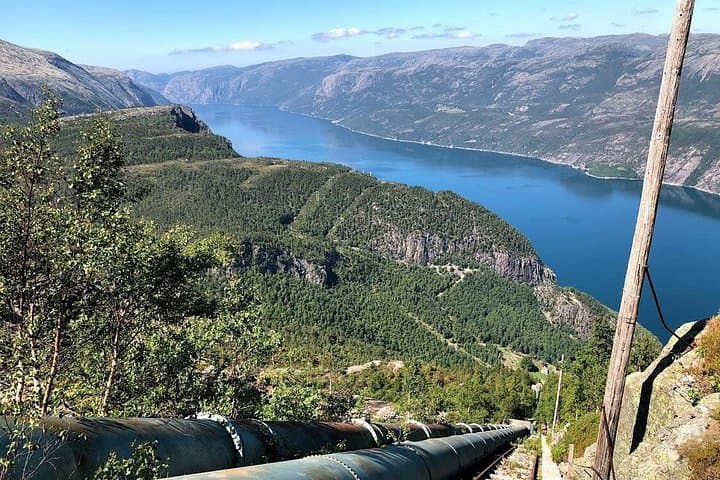
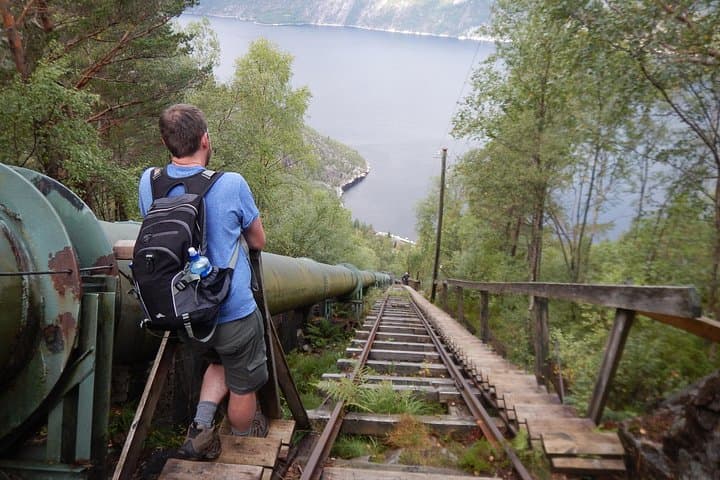
You step off the boat onto a narrow spit of land and the stairs wait—4,444 wooden risers slicing up the fjord wall. The air smells of cold water and pine; the Lysefjord gapes below, daring you to keep going. The climb is rhythmic: a breath, a step, a view. Small platforms offer vantage points where sea and stone spread like a hard, honest map.
Verified experiences and guided adventures in the surrounding area.
Operated by Lysefjorden Adventure · Flørli, Rogaland
You step off the boat onto a narrow spit of land and the stairs wait—4,444 wooden risers slicing up the fjord wall. The air smells of cold water and pine; the Lysefjord gapes below, daring you to keep going. The climb is rhythmic: a breath, a step, a view. Small platforms offer vantage points where sea and stone spread like a hard, honest map.
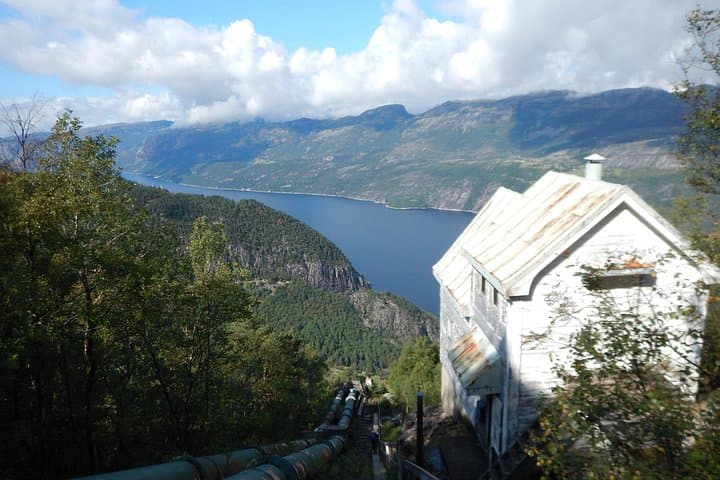
The route threads industrial history and rugged geology. The stairs were built for the Flørli Hydroelectric Power Station and the Rallarer—manual laborers who hauled heavy loads up steep slopes in the 19th and early 20th centuries. Beneath your boots, ancient bedrock and glacially polished cliffs tell the story of moving ice and fjord-carved valleys. Cultural traces—rusting turbines, the power station’s worker housing—sit quietly at the trailhead.
Expect varied terrain: continuous stair climbing interspersed with marked mountain trail on the return, passing the dam at Ternevatnet. Weather shifts fast on the fjord; wind can bite and sun can glare off wet wood. A guided format means a minivan transfer, a Lysefjord cruise with Pulpit Rock seen from below, and a communal dinner to finish.
Practical guidance: pace conservatively (this is endurance, not speed), use trekking poles on descent to protect knees, and carry 1–2 liters of water plus a windproof layer. Respect the fragile vegetation, stick to the path, and allow extra time for photos—the stairway’s rhythm is part climb, part meditation, and fully an experience that rewards steady, prepared effort.
The full guided experience runs about 7–9 hours including transfers, cruise time, the ascent and descent, and a finish dinner.
Not for true beginners—participants should have moderate to good fitness and prior experience with long climbs; the guide can adjust pace.
The wooden steps can be steep and slippery when wet; use caution, maintain three points of contact when needed, and follow the guide’s instructions.
Yes—the Lysefjord cruise section passes below Pulpit Rock, offering classic fjord-side views from the water.
Lysefjorden Adventure operates guided outdoor trips and adventures with an emphasis on safety, stewardship, and memorable experiences.

You step off the boat onto a narrow spit of land and the stairs wait—4,444 wooden risers slicing up the fjord wall. The air smells of cold water and pine; the Lysefjord gapes below, daring you to keep going. The climb is rhythmic: a breath, a step, a view. Small platforms offer vantage points where sea and stone spread like a hard, honest map.
You step off the boat onto a narrow spit of land and the stairs wait—4,444 wooden risers slicing up the fjord wall. The air smells of cold water and pine; the Lysefjord gapes below, daring you to keep going. The climb is rhythmic: a breath, a step, a view. Small platforms offer vantage points where sea and stone spread like a hard, honest map.
The route threads industrial history and rugged geology. The stairs were built for the Flørli Hydroelectric Power Station and the Rallarer—manual laborers who hauled heavy loads up steep slopes in the 19th and early 20th centuries. Beneath your boots, ancient bedrock and glacially polished cliffs tell the story of moving ice and fjord-carved valleys. Cultural traces—rusting turbines, the power station’s worker housing—sit quietly at the trailhead.
Expect varied terrain: continuous stair climbing interspersed with marked mountain trail on the return, passing the dam at Ternevatnet. Weather shifts fast on the fjord; wind can bite and sun can glare off wet wood. A guided format means a minivan transfer, a Lysefjord cruise with Pulpit Rock seen from below, and a communal dinner to finish.
Practical guidance: pace conservatively (this is endurance, not speed), use trekking poles on descent to protect knees, and carry 1–2 liters of water plus a windproof layer. Respect the fragile vegetation, stick to the path, and allow extra time for photos—the stairway’s rhythm is part climb, part meditation, and fully an experience that rewards steady, prepared effort.