THE ADVENTURE COLLECTIVE® · Independent discovery and booking for outdoor travel

Climb Hallasan via the Eorimok-to-Yeongsil route: a 13 km, 5–6 hour loop that reaches South Korea’s highest summit. Expect volcanic ridgelines, subalpine meadows, and a crater lake with local tales from licensed guides.
Climb Hallasan via the Eorimok-to-Yeongsil route: a 13 km, 5–6 hour loop that reaches South Korea’s highest summit. Expect volcanic ridgelines, subalpine meadows, and a crater lake with local tales from licensed guides.
The path begins in a cool forest where the wind carries the scent of conifer and volcanic rock; hikers step from leafy shade onto open ridgelines that push toward Hallasan’s crater. From Eorimok the trail climbs steadily, offering glimpses of Jeju’s lowland farms below, then drops toward Yeongsil where cliffs and flowering alpine meadows open like stage sets.
Verified experiences and guided adventures in the surrounding area.
Operated by 김찬 · Jeju City, Jeju-do
The path begins in a cool forest where the wind carries the scent of conifer and volcanic rock; hikers step from leafy shade onto open ridgelines that push toward Hallasan’s crater. From Eorimok the trail climbs steadily, offering glimpses of Jeju’s lowland farms below, then drops toward Yeongsil where cliffs and flowering alpine meadows open like stage sets.
Hallasan is a 1,950 m shield volcano whose geology tells of lava flows, parasitic cones and a central crater lake—Baengnokdam—that holds both myth and measurable change. The mountain has long been a cultural landmark for Jeju residents; local guides often share folktales and ecological notes as part of the route. Botanically, the trail moves through mixed broadleaf and conifer forests into subalpine vegetation, with seasonal flowers months-long enough to punctuate the climb.
Practically: the Eorimok-to-Yeongsil loop is roughly 13 km and commonly completed in 5–6 hours by hikers with moderate fitness. Trails are well-maintained but can be steep and exposed in sections; expect loose volcanic scree near the summit. Carry layered clothing, 2–3 liters of water, and sun protection. Guides provide explanations and a lunch—typically kimbap—with vegetarian options on request. Start early to avoid afternoon winds and busier park gates; check park opening rules and bus schedules, as access depends on the season.
The mountain rewards steady effort with broad views across Jeju’s coastline, the island’s rural patchwork, and a crater that quietly records the island’s volcanic past. Respect trail closures and pack out waste: Hallasan’s high-elevation plants recover slowly from trampling.
No permit is required for day hiking on marked trails, but park access and trail openings vary seasonally—check Hallasan National Park notices before you go.
It’s classed moderate: approximately 13 km with sustained climbing and descent; allow 5–6 hours depending on pace and conditions.
Yes—licensed guides often provide interpretation and a simple lunch such as kimbap; vegetarian options can usually be requested in advance.
Late spring through early fall offers stable trails and flowers; autumn provides clearer views and foliage—winter can be icy and requires winter gear and caution.
김찬 operates guided outdoor trips and adventures with an emphasis on safety, stewardship, and memorable experiences.
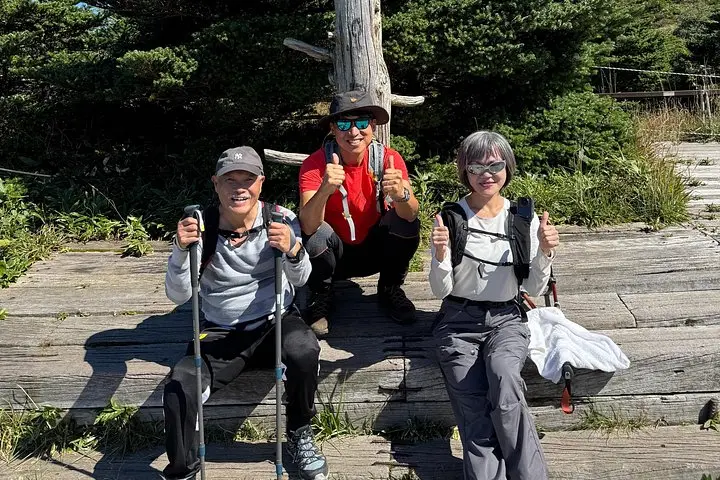
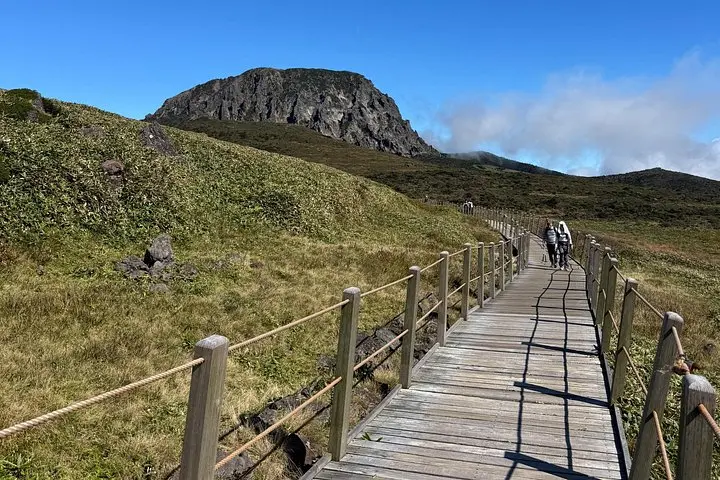
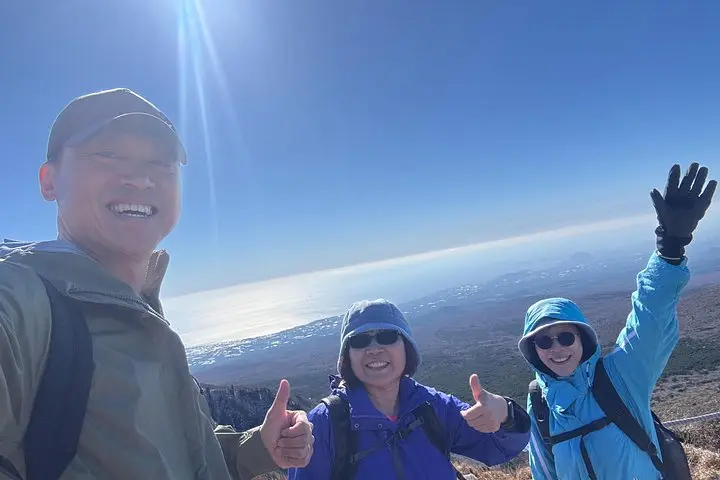
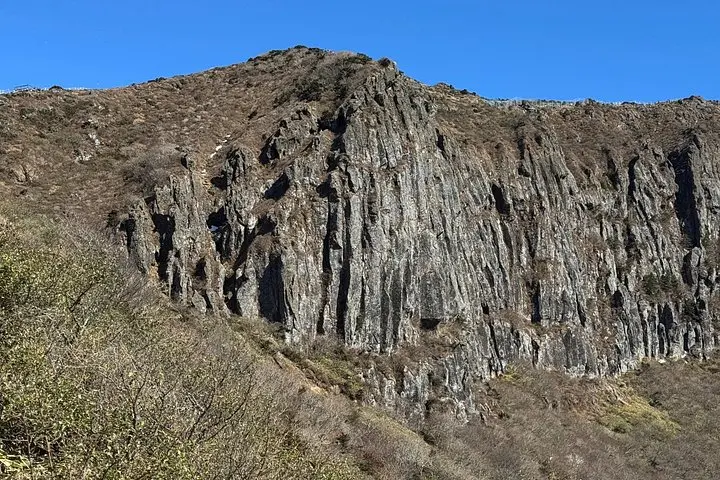
The path begins in a cool forest where the wind carries the scent of conifer and volcanic rock; hikers step from leafy shade onto open ridgelines that push toward Hallasan’s crater. From Eorimok the trail climbs steadily, offering glimpses of Jeju’s lowland farms below, then drops toward Yeongsil where cliffs and flowering alpine meadows open like stage sets.
The path begins in a cool forest where the wind carries the scent of conifer and volcanic rock; hikers step from leafy shade onto open ridgelines that push toward Hallasan’s crater. From Eorimok the trail climbs steadily, offering glimpses of Jeju’s lowland farms below, then drops toward Yeongsil where cliffs and flowering alpine meadows open like stage sets.
Hallasan is a 1,950 m shield volcano whose geology tells of lava flows, parasitic cones and a central crater lake—Baengnokdam—that holds both myth and measurable change. The mountain has long been a cultural landmark for Jeju residents; local guides often share folktales and ecological notes as part of the route. Botanically, the trail moves through mixed broadleaf and conifer forests into subalpine vegetation, with seasonal flowers months-long enough to punctuate the climb.
Practically: the Eorimok-to-Yeongsil loop is roughly 13 km and commonly completed in 5–6 hours by hikers with moderate fitness. Trails are well-maintained but can be steep and exposed in sections; expect loose volcanic scree near the summit. Carry layered clothing, 2–3 liters of water, and sun protection. Guides provide explanations and a lunch—typically kimbap—with vegetarian options on request. Start early to avoid afternoon winds and busier park gates; check park opening rules and bus schedules, as access depends on the season.
The mountain rewards steady effort with broad views across Jeju’s coastline, the island’s rural patchwork, and a crater that quietly records the island’s volcanic past. Respect trail closures and pack out waste: Hallasan’s high-elevation plants recover slowly from trampling.