THE ADVENTURE COLLECTIVE® · Independent discovery and booking for outdoor travel

Drive deep into the southern valleys of Wadi Rum and climb to Jordan’s highest peak—Jabal Um Addami. This full-day guided hike blends raw desert geology, Bedouin culture, and expansive summit views, with a cooked lunch and sunset at a Bedouin camp.
Drive deep into the southern valleys of Wadi Rum and climb to Jordan’s highest peak—Jabal Um Addami. This full-day guided hike blends raw desert geology, Bedouin culture, and expansive summit views, with a cooked lunch and sunset at a Bedouin camp.
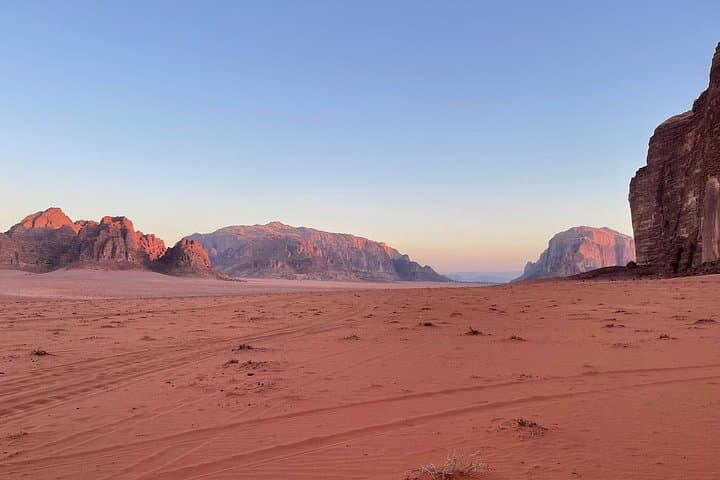
The morning begins on a ribbon of hard-packed sand, a convoy of jeeps slipping south from Wadi Rum as dawn paints the rock faces a flat, fierce red. The drive takes about 40 kilometers through Wadi Saabit’s lonely valleys — a landscape that feels deliberately vacant, as if the desert is holding its breath. When the vehicles stop, the mountain is a dark silhouette against an enormous sky; you strap on a daypack and head for the ridge.
Verified experiences and guided adventures in the surrounding area.
Operated by Bedouin Life Style Day Tour · Wadi Rum Village, Ma'an Governorate
The morning begins on a ribbon of hard-packed sand, a convoy of jeeps slipping south from Wadi Rum as dawn paints the rock faces a flat, fierce red. The drive takes about 40 kilometers through Wadi Saabit’s lonely valleys — a landscape that feels deliberately vacant, as if the desert is holding its breath. When the vehicles stop, the mountain is a dark silhouette against an enormous sky; you strap on a daypack and head for the ridge.
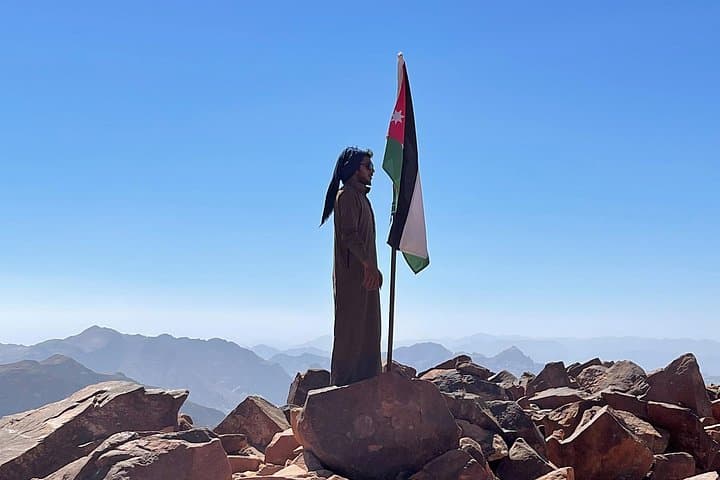
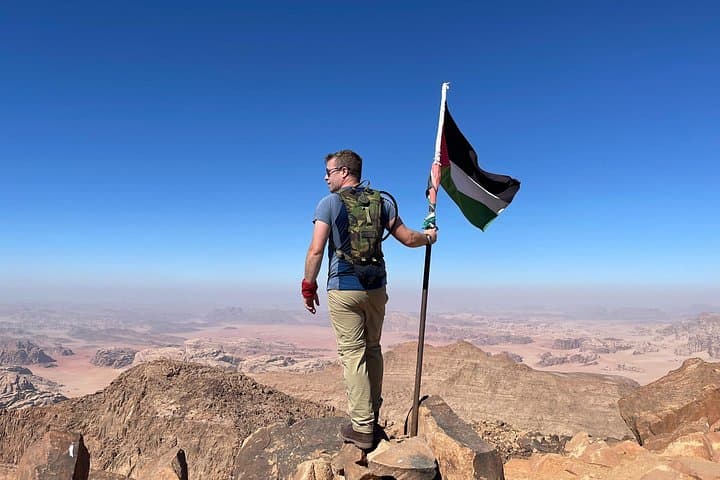
Jabal Um Addami (Umm ad Dami) rises to 1,832 meters on Jordan’s southern border. It’s not a polished alpine peak but a rugged, time-worn mass of sandstone and granite that demands steady feet and patience. The route climbs roughly 700–900 meters from the trailhead, depending on the exact start, and the ascent typically takes about 2–2.5 hours. Expect a mix of sand, loose scree and exposed slabs; there’s occasional hands-on scrambling, and the wind often chooses the moment to test your balance, pushing and tugging like an impatient guide.
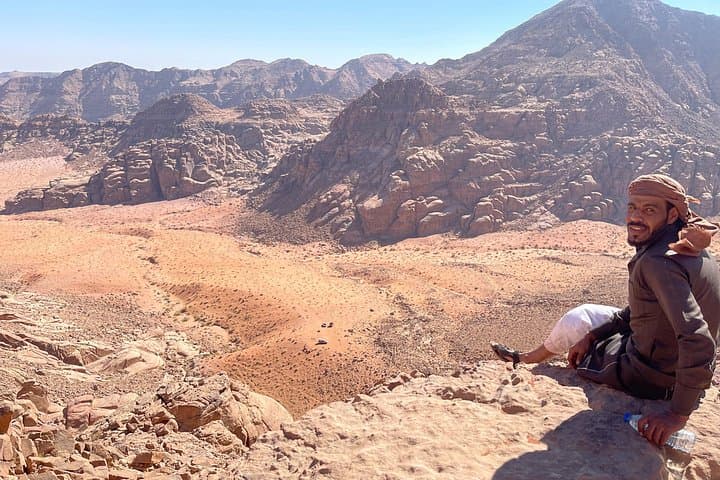
Geologically, the massif is part of the greater Arabian Shield. Sandstone here has been carved by epochs of wind and flash floods into natural bridges and fluted walls; look closely and you’ll find petroglyphs and ancient trade-route markers carved into sheltered recesses. Culturally, the area has been the domain of Bedouin clans for centuries. Guides on the hike are often local, and their stories—about clan routes, water sources, and seasonal grazing—add practical context to every cairn and hollow.
The summit reward is blunt and generous: on a clear day you can see across the border into Saudi Arabia and, far off, a sliver of the Red Sea. After a rest, the group descends to a shaded, secluded spot where the guide prepares a Bedouin lunch—fresh bread, stewed meat, and strong tea—while you explore the small canyons and alcoves nearby.
Practical essentials: this is a full-day outing (about eight hours door-to-door) and a guided route; no technical climbing gear is required but good, stiff-soled boots, 2–3 liters of water, sun protection, and layered clothing are non-negotiable. Start early to avoid the hottest midday hours; the company provides bottled water, snacks, and a cooked lunch. Mobile reception is spotty; trust your guide for route-finding. The descent includes a two-hour walk before a jeep returns you to a Bedouin Lifestyle Camp for sunset, then back to Wadi Rum village.
For travelers who want a serious day in the desert without ropes and crampons, Jabal Um Addami delivers raw exposure, wide horizons, and the quiet authority of an ancient landscape. Respect the fragile environment, follow your guide’s instructions, and you’ll carry home both a sore pair of legs and a wide, honest view of Jordan’s southernmost heights.
The ascent normally takes about 2–2.5 hours; total outing including transfers, lunch, and a sunset stop is roughly 8 hours.
This is best for hikers with previous uphill experience; the trail includes steep sections and loose scree—beginners should be fit and prepared to move slowly.
Permits are managed locally through the Wadi Rum visitor facilities; this tour includes guided access and handles local permissions.
On clear days you can see over the border into Saudi Arabia and, in very clear conditions, a distant view of the Red Sea.
The tour includes bottled water, snacks, a Bedouin-cooked lunch, a guide, and jeep transfers to and from the trailhead and the sunset camp.
Autumn through spring (October–April) offers the most comfortable temperatures; summer can be intensely hot and requires extra precautions.
Bedouin Life Style Day Tour operates guided outdoor trips and adventures with an emphasis on safety, stewardship, and memorable experiences.
The morning begins on a ribbon of hard-packed sand, a convoy of jeeps slipping south from Wadi Rum as dawn paints the rock faces a flat, fierce red. The drive takes about 40 kilometers through Wadi Saabit’s lonely valleys — a landscape that feels deliberately vacant, as if the desert is holding its breath. When the vehicles stop, the mountain is a dark silhouette against an enormous sky; you strap on a daypack and head for the ridge.
The morning begins on a ribbon of hard-packed sand, a convoy of jeeps slipping south from Wadi Rum as dawn paints the rock faces a flat, fierce red. The drive takes about 40 kilometers through Wadi Saabit’s lonely valleys — a landscape that feels deliberately vacant, as if the desert is holding its breath. When the vehicles stop, the mountain is a dark silhouette against an enormous sky; you strap on a daypack and head for the ridge.
Jabal Um Addami (Umm ad Dami) rises to 1,832 meters on Jordan’s southern border. It’s not a polished alpine peak but a rugged, time-worn mass of sandstone and granite that demands steady feet and patience. The route climbs roughly 700–900 meters from the trailhead, depending on the exact start, and the ascent typically takes about 2–2.5 hours. Expect a mix of sand, loose scree and exposed slabs; there’s occasional hands-on scrambling, and the wind often chooses the moment to test your balance, pushing and tugging like an impatient guide.
Geologically, the massif is part of the greater Arabian Shield. Sandstone here has been carved by epochs of wind and flash floods into natural bridges and fluted walls; look closely and you’ll find petroglyphs and ancient trade-route markers carved into sheltered recesses. Culturally, the area has been the domain of Bedouin clans for centuries. Guides on the hike are often local, and their stories—about clan routes, water sources, and seasonal grazing—add practical context to every cairn and hollow.
The summit reward is blunt and generous: on a clear day you can see across the border into Saudi Arabia and, far off, a sliver of the Red Sea. After a rest, the group descends to a shaded, secluded spot where the guide prepares a Bedouin lunch—fresh bread, stewed meat, and strong tea—while you explore the small canyons and alcoves nearby.
Practical essentials: this is a full-day outing (about eight hours door-to-door) and a guided route; no technical climbing gear is required but good, stiff-soled boots, 2–3 liters of water, sun protection, and layered clothing are non-negotiable. Start early to avoid the hottest midday hours; the company provides bottled water, snacks, and a cooked lunch. Mobile reception is spotty; trust your guide for route-finding. The descent includes a two-hour walk before a jeep returns you to a Bedouin Lifestyle Camp for sunset, then back to Wadi Rum village.
For travelers who want a serious day in the desert without ropes and crampons, Jabal Um Addami delivers raw exposure, wide horizons, and the quiet authority of an ancient landscape. Respect the fragile environment, follow your guide’s instructions, and you’ll carry home both a sore pair of legs and a wide, honest view of Jordan’s southernmost heights.