THE ADVENTURE COLLECTIVE® · Independent discovery and booking for outdoor travel

Follow Darwin’s footsteps through ancient Chilean palms to a dramatic 30-meter waterfall. This private day-hike in La Campana National Park combines Mediterranean-climate ecosystems, steep coastal-range geology, and practical local guidance for an accessible yet rewarding adventure.
Follow Darwin’s footsteps through ancient Chilean palms to a dramatic 30-meter waterfall. This private day-hike in La Campana National Park combines Mediterranean-climate ecosystems, steep coastal-range geology, and practical local guidance for an accessible yet rewarding adventure.
The trail begins under a sky that can shift from hard blue to sudden high clouds in an hour—a reminder that the Coastal Range owns its weather. You set off through groves of Chilean palms (Jubaea chilensis), their stout trunks older than the houses back in Santiago, fronds whispering as if keeping secrets. The path climbs through scrub and pockets of forest, granite outcrops appearing like shipwrecks of stone, until the world opens and a 30-meter waterfall announces itself with a constant, cool roar.
Verified experiences and guided adventures in the surrounding area.
Operated by AndoAndes · Olmué, Valparaíso Region
The trail begins under a sky that can shift from hard blue to sudden high clouds in an hour—a reminder that the Coastal Range owns its weather. You set off through groves of Chilean palms (Jubaea chilensis), their stout trunks older than the houses back in Santiago, fronds whispering as if keeping secrets. The path climbs through scrub and pockets of forest, granite outcrops appearing like shipwrecks of stone, until the world opens and a 30-meter waterfall announces itself with a constant, cool roar.
Charles Darwin walked here in August 1834; today the route still feels like a naturalist’s field notebook. La Campana National Park is part of the La Campana-Peñuelas Biosphere Reserve, protected to preserve the southernmost palm species in the world and a host of endemic shrubs and herbs adapted to the Mediterranean-like climate. Geologically the area is part of Chile’s Coastal Range—old metamorphic and igneous rocks carved into sharp ridges and rounded domes—so expect short, steep pitches and sudden rocky steps.
Culturally the palms have a complicated history. Colonial-era honey production and later extraction practices reduced natural regeneration, which prompted the park’s protection. Today those palms stand like living markers: slow-growing, long-lived, and central to the park’s conservation narrative.
On the Sendero La Cascada trail you cover roughly 12 km round-trip. Terrain varies from packed dirt and gravel to loose scree on steeper slogs; total ascent on the route is moderate—plan for several sustained climbs and some switchbacks to reach the waterfall lookout. The full-day private tour typically runs as a 12-hour outing from Santiago with hotel pickup in Providencia, Vitacura, Las Condes or Santiago Centro—active hiking time is about 6–8 hours depending on pace and breaks.
Practical edge: wear sturdy trekking shoes, bring 2–3 liters of water, and layer for sun and wind. Early starts avoid midday heat and give the best light for photographs, while late afternoons can bring sharper winds. Guides on private tours carry a box lunch and bilingual narration that points out endemic plants and the best viewpoints.
If you want a quieter experience, ask about starting from the less-used southern trailhead, or combine the visit with a night in nearby Olmué to explore local mountain cuisine. Respect trail closures and stick to established paths—palms take decades to recover from off-trail trampling. In short, La Campana is a place where history, geology, and living forests meet: bring curiosity, proper gear, and a willingness to keep a steady pace uphill—nature will do the rest.
The Sendero La Cascada is about 12 km round-trip with moderate, sustained climbs; expect 6–8 hours hiking time and a full-day tour when transport and breaks are included.
This listing is a guided private tour with bilingual guides; no separate permit is required for day hikes but park entrance fees apply and a guide improves safety and interpretation.
Spring and fall offer mild temperatures and greener vegetation; summer is hotter and drier but accessible, while winter can be windier and show intermittent rain.
Minimum age listed is 12; younger children may find the sustained climbs difficult and the terrain exposed in places.
Basic facilities exist near the park entrance; the tour includes a box lunch and bottled water provided by the operator.
Pickup covers hotels in Providencia, Vitacura, Las Condes and Santiago Centro—specify your exact location during booking and be ready 30 minutes before departure if pickup is requested.
AndoAndes operates guided outdoor trips and adventures with an emphasis on safety, stewardship, and memorable experiences.

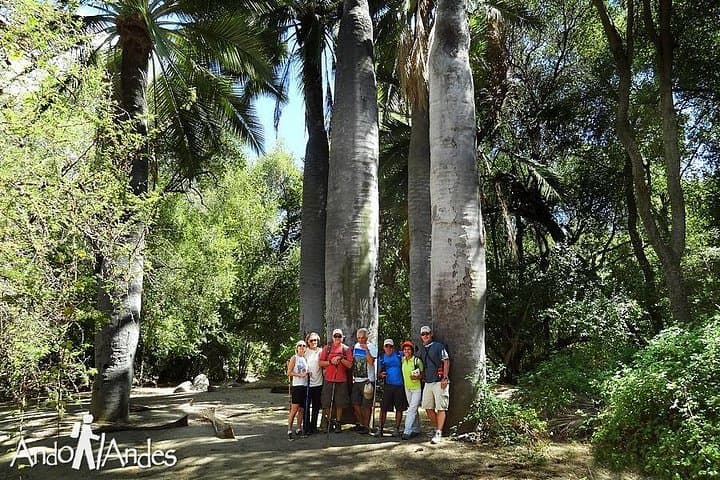
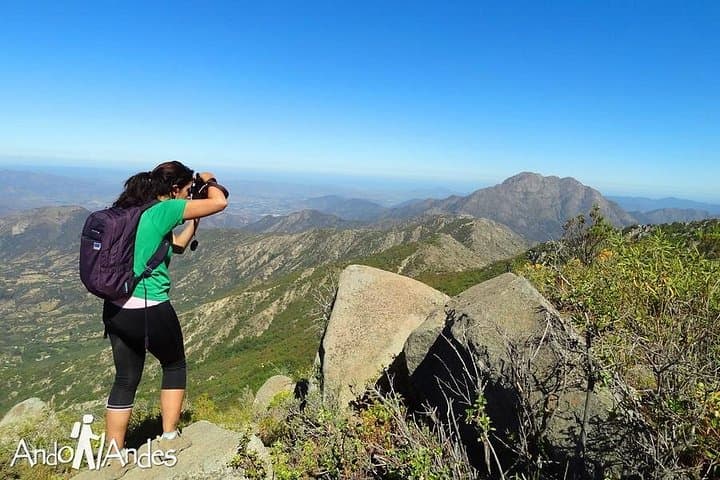
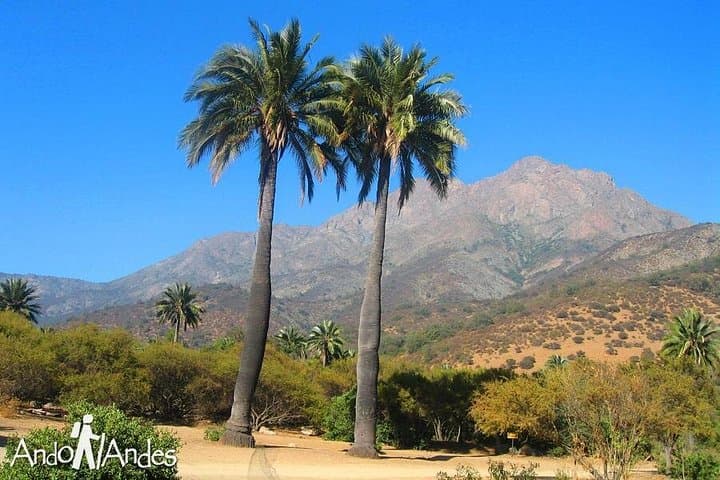
The trail begins under a sky that can shift from hard blue to sudden high clouds in an hour—a reminder that the Coastal Range owns its weather. You set off through groves of Chilean palms (Jubaea chilensis), their stout trunks older than the houses back in Santiago, fronds whispering as if keeping secrets. The path climbs through scrub and pockets of forest, granite outcrops appearing like shipwrecks of stone, until the world opens and a 30-meter waterfall announces itself with a constant, cool roar.
The trail begins under a sky that can shift from hard blue to sudden high clouds in an hour—a reminder that the Coastal Range owns its weather. You set off through groves of Chilean palms (Jubaea chilensis), their stout trunks older than the houses back in Santiago, fronds whispering as if keeping secrets. The path climbs through scrub and pockets of forest, granite outcrops appearing like shipwrecks of stone, until the world opens and a 30-meter waterfall announces itself with a constant, cool roar.
Charles Darwin walked here in August 1834; today the route still feels like a naturalist’s field notebook. La Campana National Park is part of the La Campana-Peñuelas Biosphere Reserve, protected to preserve the southernmost palm species in the world and a host of endemic shrubs and herbs adapted to the Mediterranean-like climate. Geologically the area is part of Chile’s Coastal Range—old metamorphic and igneous rocks carved into sharp ridges and rounded domes—so expect short, steep pitches and sudden rocky steps.
Culturally the palms have a complicated history. Colonial-era honey production and later extraction practices reduced natural regeneration, which prompted the park’s protection. Today those palms stand like living markers: slow-growing, long-lived, and central to the park’s conservation narrative.
On the Sendero La Cascada trail you cover roughly 12 km round-trip. Terrain varies from packed dirt and gravel to loose scree on steeper slogs; total ascent on the route is moderate—plan for several sustained climbs and some switchbacks to reach the waterfall lookout. The full-day private tour typically runs as a 12-hour outing from Santiago with hotel pickup in Providencia, Vitacura, Las Condes or Santiago Centro—active hiking time is about 6–8 hours depending on pace and breaks.
Practical edge: wear sturdy trekking shoes, bring 2–3 liters of water, and layer for sun and wind. Early starts avoid midday heat and give the best light for photographs, while late afternoons can bring sharper winds. Guides on private tours carry a box lunch and bilingual narration that points out endemic plants and the best viewpoints.
If you want a quieter experience, ask about starting from the less-used southern trailhead, or combine the visit with a night in nearby Olmué to explore local mountain cuisine. Respect trail closures and stick to established paths—palms take decades to recover from off-trail trampling. In short, La Campana is a place where history, geology, and living forests meet: bring curiosity, proper gear, and a willingness to keep a steady pace uphill—nature will do the rest.