THE ADVENTURE COLLECTIVE® · Independent discovery and booking for outdoor travel

A half-day trekking tour from Ushuaia that leads up through beech forest, across peat bog and past beaver-altered waterways to the vivid glacial waters of Laguna Esmeralda. Expect interpretive guides, a boxed brunch on the shore, and about 5–6 hours total including transfers.
A half-day trekking tour from Ushuaia that leads up through beech forest, across peat bog and past beaver-altered waterways to the vivid glacial waters of Laguna Esmeralda. Expect interpretive guides, a boxed brunch on the shore, and about 5–6 hours total including transfers.
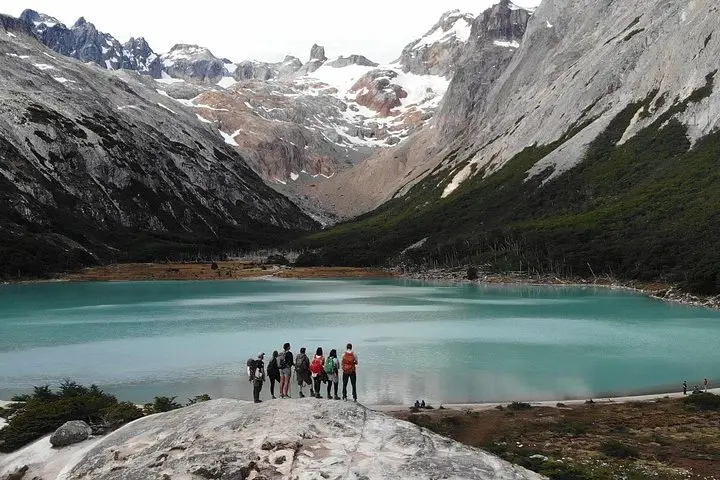
You step off the minivan into a wind that carries briny air from the Beagle Channel and a cold that tugs at the cuffs of your jacket. The trail peels away from the service road and immediately narrows into a ribbon of roots, mud and boardwalks that thread through southern beech forest. Every few strides a pocket of light opens through the canopy, throwing the next ridge into relief; at the far end of the valley the lagoon waits—an impossible green-blue that looks almost deliberate.
Verified experiences and guided adventures in the surrounding area.
Operated by Explore Tierra del Fuego · Ushuaia, Tierra del Fuego
You step off the minivan into a wind that carries briny air from the Beagle Channel and a cold that tugs at the cuffs of your jacket. The trail peels away from the service road and immediately narrows into a ribbon of roots, mud and boardwalks that thread through southern beech forest. Every few strides a pocket of light opens through the canopy, throwing the next ridge into relief; at the far end of the valley the lagoon waits—an impossible green-blue that looks almost deliberate.
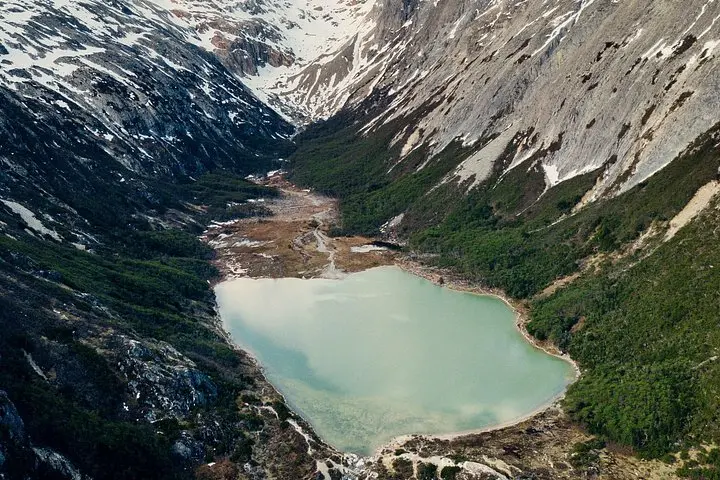
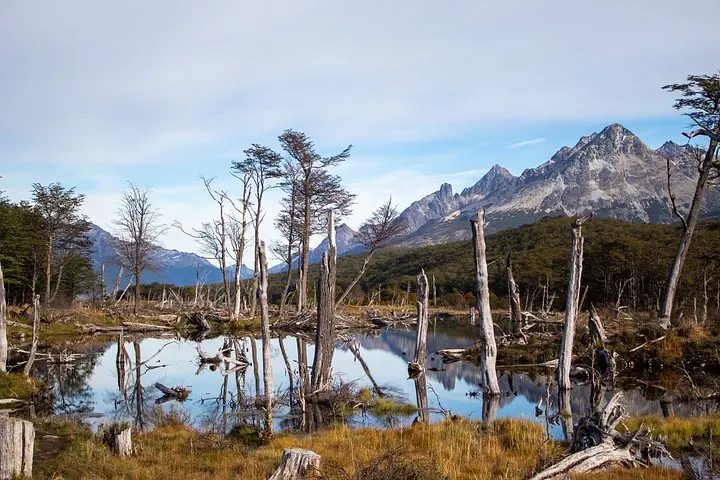
Laguna Esmeralda’s color comes from glacial flour suspended in meltwater, the same process that sculpts the Fuegian valleys you cross. This landscape is young in geological terms: sculpted by the last ice age and still being reworked by streams and the introduced North American beaver, whose dams have altered riparian zones across Tierra del Fuego. The trail itself reads like a natural history primer—peat bogs clinging to slopes, rivers that insist on rerouting themselves, and stands of lenga and ñire that change character with altitude.
Culturally, the route sits on territory long traversed by the indigenous Yamana and Selk’nam peoples, and later by settlers and European explorers who mapped channels and named peaks. Today, local guides frame the hike as both an outing and an interpretation: expect naturalists who point out birdlife, explain beaver impacts, and translate the valley’s slow-motion geology into something immediate.
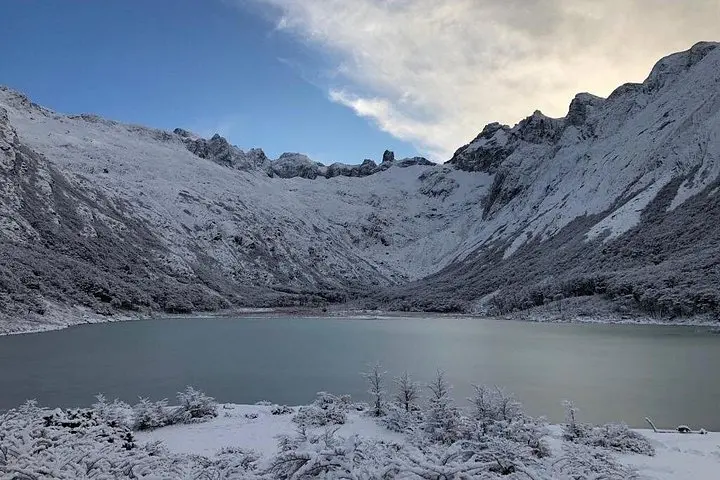
Practically, the walk is approachable but not trivial. The organized tour runs about 5–6 hours door-to-door from Ushuaia (includes transfers); the trail is roughly 8–10 km round-trip with an elevation gain near 200–300 m—boardwalks and muddy sections slow you down more than the grade. In summer the route is a soft mix of packed earth and peat; in shoulder seasons expect wet ground and the possibility of icy patches where crampons may be needed (guides bring them if required). Groups are capped small—about a dozen—so there’s time for stops, photos, and a simple boxed brunch on the lagoon’s shore.
To make the most of it: wear waterproof hiking boots, layer for wind and rapid temperature change, and bring water plus a windproof shell. Phones take great wide-angle shots at the lagoon, but a small telephoto helps isolate birds and beavers. If you’re sensitive to cold or have limited mobility, note the operator requests a moderate fitness level and is not recommended for people with serious cardiovascular or spinal conditions.
Laguna Esmeralda asks for patience: the mud grabs at your gait, the beaver ponds demand detours, and then, suddenly, the lagoon opens like a room cleared of trees—quiet, sharp, and improbably colored. It’s a hike that teaches you how this edge of the world was made, and gives you a clear reason to return.
The trail is roughly 8–10 km round-trip with about 200–300 m of elevation gain; the group spends about 4 hours on the trail within a 5–6 hour tour including transfers.
Yes—trekking poles are included and guides bring crampons if icy conditions require them.
Yes—children aged 7 and up can join, but the operator recommends a moderate level of fitness and discretion for younger or less-fit kids.
Bring a filled water bottle, sunscreen, sunglasses, a camera, and any personal medications; snacks beyond the boxed lunch are optional.
Yes—guides are naturalists who discuss local flora, birdlife, and the ecological impact of introduced beavers during the hike.
Full refunds are available if you cancel at least 24 hours before the scheduled departure time.
Explore Tierra del Fuego operates guided outdoor trips and adventures with an emphasis on safety, stewardship, and memorable experiences.
You step off the minivan into a wind that carries briny air from the Beagle Channel and a cold that tugs at the cuffs of your jacket. The trail peels away from the service road and immediately narrows into a ribbon of roots, mud and boardwalks that thread through southern beech forest. Every few strides a pocket of light opens through the canopy, throwing the next ridge into relief; at the far end of the valley the lagoon waits—an impossible green-blue that looks almost deliberate.
You step off the minivan into a wind that carries briny air from the Beagle Channel and a cold that tugs at the cuffs of your jacket. The trail peels away from the service road and immediately narrows into a ribbon of roots, mud and boardwalks that thread through southern beech forest. Every few strides a pocket of light opens through the canopy, throwing the next ridge into relief; at the far end of the valley the lagoon waits—an impossible green-blue that looks almost deliberate.
Laguna Esmeralda’s color comes from glacial flour suspended in meltwater, the same process that sculpts the Fuegian valleys you cross. This landscape is young in geological terms: sculpted by the last ice age and still being reworked by streams and the introduced North American beaver, whose dams have altered riparian zones across Tierra del Fuego. The trail itself reads like a natural history primer—peat bogs clinging to slopes, rivers that insist on rerouting themselves, and stands of lenga and ñire that change character with altitude.
Culturally, the route sits on territory long traversed by the indigenous Yamana and Selk’nam peoples, and later by settlers and European explorers who mapped channels and named peaks. Today, local guides frame the hike as both an outing and an interpretation: expect naturalists who point out birdlife, explain beaver impacts, and translate the valley’s slow-motion geology into something immediate.
Practically, the walk is approachable but not trivial. The organized tour runs about 5–6 hours door-to-door from Ushuaia (includes transfers); the trail is roughly 8–10 km round-trip with an elevation gain near 200–300 m—boardwalks and muddy sections slow you down more than the grade. In summer the route is a soft mix of packed earth and peat; in shoulder seasons expect wet ground and the possibility of icy patches where crampons may be needed (guides bring them if required). Groups are capped small—about a dozen—so there’s time for stops, photos, and a simple boxed brunch on the lagoon’s shore.
To make the most of it: wear waterproof hiking boots, layer for wind and rapid temperature change, and bring water plus a windproof shell. Phones take great wide-angle shots at the lagoon, but a small telephoto helps isolate birds and beavers. If you’re sensitive to cold or have limited mobility, note the operator requests a moderate fitness level and is not recommended for people with serious cardiovascular or spinal conditions.
Laguna Esmeralda asks for patience: the mud grabs at your gait, the beaver ponds demand detours, and then, suddenly, the lagoon opens like a room cleared of trees—quiet, sharp, and improbably colored. It’s a hike that teaches you how this edge of the world was made, and gives you a clear reason to return.