THE ADVENTURE COLLECTIVE® · Independent discovery and booking for outdoor travel
Take a guided walk across the Matanuska Glacier, where blue ice, crevasses, and glacial geology meet small-group interpretation and a post-hike tasting of Alaskan honey and wines. This full‑day trip blends hands-on glacier travel with local flavor and safety-first guiding.
Take a guided walk across the Matanuska Glacier, where blue ice, crevasses, and glacial geology meet small-group interpretation and a post-hike tasting of Alaskan honey and wines. This full‑day trip blends hands-on glacier travel with local flavor and safety-first guiding.
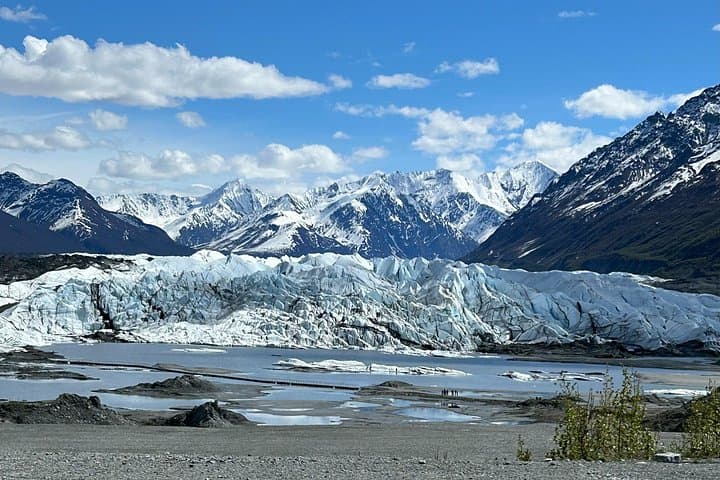
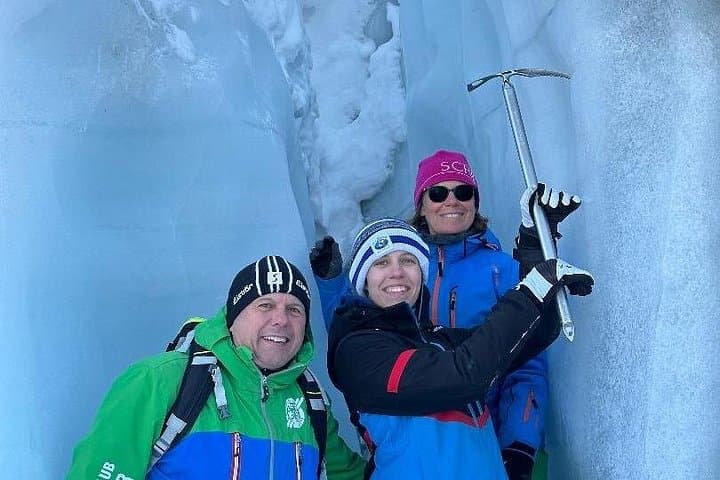
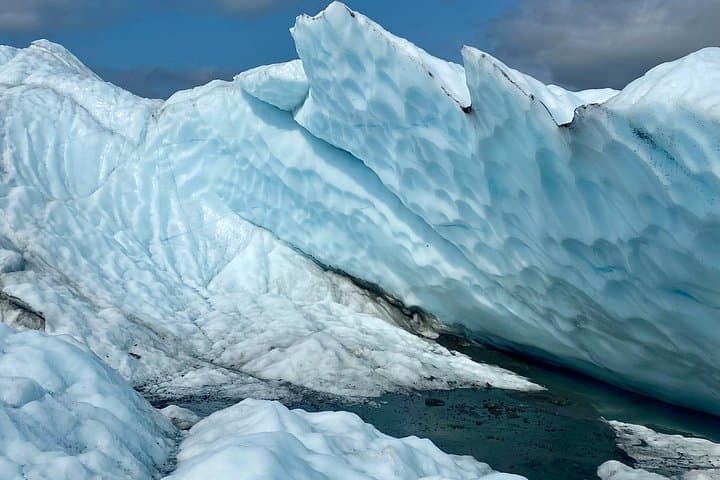
You step off the van onto a sweep of gravel beneath an open Alaskan sky. Wind moves across the glacier tongue like a living thing, lifting the stutter of ice calving in the distance. The Matanuska Glacier waits in layered blues—powder, indigo, and glass—its surface scored with crevasses that glitter like a broken map. Guides fit crampons over boots, hand out ice axes with short, practiced instructions, and the group steps into a world that still feels a little forbidden.
Verified experiences and guided adventures in the surrounding area.
Operated by White Raven Tours · Palmer, Alaska
You step off the van onto a sweep of gravel beneath an open Alaskan sky. Wind moves across the glacier tongue like a living thing, lifting the stutter of ice calving in the distance. The Matanuska Glacier waits in layered blues—powder, indigo, and glass—its surface scored with crevasses that glitter like a broken map. Guides fit crampons over boots, hand out ice axes with short, practiced instructions, and the group steps into a world that still feels a little forbidden.
This valley glacier is one of the largest accessible in Alaska, a remnant of the Pleistocene that today spills from the Chugach Mountains. Geologically, Matanuska is a river of ice carved and pushed by time; the Glenn Highway threads alongside it, revealing moraines and outwash plain deposits that show where the ice margins once lay. Palmer, the nearby agricultural town, tells a different story—one of Matanuska-Susitna settlers who tamed this corridor for farming and later tourism. The tasting at the end—local honey and small-batch Alaskan wines—links that human history to the land, a reminder that these icy places are also part of a living economy.
On the glacier the travel is tactile: brittle snow gives way to compact blue ice, crampons chatter, and the guides point out melt channels, sastrugi ridges, and thin-shelved crevasses. Expect to cover roughly 2–3 miles on the ice over 3–4 hours; the total outing runs about 8–9 hours including transit from Anchorage and stops in Palmer. Elevation change is modest but deceptive—microclimates on the ice make wind, reflection, and spray feel much colder than valley temperatures.
Practicalities matter. Guides provide crampons, snow pants, and safety briefings; still, footwear with ankle support and a stiff sole is essential. Hydration and layered insulation are non-negotiable—temperatures on the glacier can drop quickly and UV reflection off the ice intensifies sun exposure. The group size on this tour is intentionally small, improving access to quieter features and allowing guides to explain glaciology, crevasse mechanics, and the region’s geology.
Beyond the hike: scan the distant peaks for Dall sheep, and keep an eye on the glacier’s creaks—those sounds are a natural clock. The honey and wine tasting that follows is simple but purposeful: a chance to warm fingers, reset, and taste local craftsmanship while digesting the scale of the ice you’ve just walked.
This is a high-value day trip for anyone who wants an intimate, interpretive glacier experience with practical safety measures and a local culinary finish. It rewards curiosity—about ice and history—and requires only a moderate level of fitness and respect for the glacier’s rhythms.
Expect to spend about 3–4 hours on the glacier itself, covering roughly 2–3 miles depending on conditions and interpretive stops.
No — guides provide instruction, crampons, and basic ice tools; however, a moderate fitness level and comfort walking on uneven icy terrain are required.
Shared tours are limited to 14 travelers, with smaller groups for a more personalized experience.
Yes—crampons (over-shoe spikes) and snow pants are included; bring your own boots and base layers.
All ages can participate but infants must sit on an adult’s lap during transit; the operator recommends moderate fitness and supervision for young children on the ice.
The tour will be canceled for unsafe weather or ice conditions with a full refund if canceled at least 24 hours before departure.
White Raven Tours operates guided outdoor trips and adventures with an emphasis on safety, stewardship, and memorable experiences.
You step off the van onto a sweep of gravel beneath an open Alaskan sky. Wind moves across the glacier tongue like a living thing, lifting the stutter of ice calving in the distance. The Matanuska Glacier waits in layered blues—powder, indigo, and glass—its surface scored with crevasses that glitter like a broken map. Guides fit crampons over boots, hand out ice axes with short, practiced instructions, and the group steps into a world that still feels a little forbidden.
You step off the van onto a sweep of gravel beneath an open Alaskan sky. Wind moves across the glacier tongue like a living thing, lifting the stutter of ice calving in the distance. The Matanuska Glacier waits in layered blues—powder, indigo, and glass—its surface scored with crevasses that glitter like a broken map. Guides fit crampons over boots, hand out ice axes with short, practiced instructions, and the group steps into a world that still feels a little forbidden.
This valley glacier is one of the largest accessible in Alaska, a remnant of the Pleistocene that today spills from the Chugach Mountains. Geologically, Matanuska is a river of ice carved and pushed by time; the Glenn Highway threads alongside it, revealing moraines and outwash plain deposits that show where the ice margins once lay. Palmer, the nearby agricultural town, tells a different story—one of Matanuska-Susitna settlers who tamed this corridor for farming and later tourism. The tasting at the end—local honey and small-batch Alaskan wines—links that human history to the land, a reminder that these icy places are also part of a living economy.
On the glacier the travel is tactile: brittle snow gives way to compact blue ice, crampons chatter, and the guides point out melt channels, sastrugi ridges, and thin-shelved crevasses. Expect to cover roughly 2–3 miles on the ice over 3–4 hours; the total outing runs about 8–9 hours including transit from Anchorage and stops in Palmer. Elevation change is modest but deceptive—microclimates on the ice make wind, reflection, and spray feel much colder than valley temperatures.
Practicalities matter. Guides provide crampons, snow pants, and safety briefings; still, footwear with ankle support and a stiff sole is essential. Hydration and layered insulation are non-negotiable—temperatures on the glacier can drop quickly and UV reflection off the ice intensifies sun exposure. The group size on this tour is intentionally small, improving access to quieter features and allowing guides to explain glaciology, crevasse mechanics, and the region’s geology.
Beyond the hike: scan the distant peaks for Dall sheep, and keep an eye on the glacier’s creaks—those sounds are a natural clock. The honey and wine tasting that follows is simple but purposeful: a chance to warm fingers, reset, and taste local craftsmanship while digesting the scale of the ice you’ve just walked.
This is a high-value day trip for anyone who wants an intimate, interpretive glacier experience with practical safety measures and a local culinary finish. It rewards curiosity—about ice and history—and requires only a moderate level of fitness and respect for the glacier’s rhythms.
