THE ADVENTURE COLLECTIVE® · Independent discovery and booking for outdoor travel

Three days of highland hiking from Lalibela to Mount Abune Yoseph combine rock-hewn church history with afro‑montane wildlife. Expect steep ascents, community lodging, gelada sightings, and sweeping summit views above 4,000 m.
Three days of highland hiking from Lalibela to Mount Abune Yoseph combine rock-hewn church history with afro‑montane wildlife. Expect steep ascents, community lodging, gelada sightings, and sweeping summit views above 4,000 m.
A dawn hush settles over Lalibela as you step off paved streets into the highland air, a thin, bright cold that wakes every breath. The trek climbs out of town past stone houses and terraced fields, then narrows into mule tracks that cut through heath and stands of giant lobelia. By mid-day the slopes open to plateaus where gelada troops forage and wind dares your outer layer.
Verified experiences and guided adventures in the surrounding area.
Operated by Addis Ethiopia Tours · Lalibela, Amhara Region
A dawn hush settles over Lalibela as you step off paved streets into the highland air, a thin, bright cold that wakes every breath. The trek climbs out of town past stone houses and terraced fields, then narrows into mule tracks that cut through heath and stands of giant lobelia. By mid-day the slopes open to plateaus where gelada troops forage and wind dares your outer layer.
This route threads together deep cultural history and rugged geology. Lalibela’s 12th-century rock-hewn churches and the older Asheton Maryam monastery sit on basalt and volcanic plateaus carved by uplift and erosion. The Abune Yoseph massif rises above 4,000 m, an afro-montane zone with giant lobelia, heather, and pockets of ericaceous forest that support Ethiopia’s endemic species.
Expect three days of steady hiking with significant elevation change: initial climbs from roughly 2,600 m toward 3,800 m, then a summit push to about 4,200–4,300 m, and a descent back to Lalibela. Trails are uneven, occasionally steep, and often exposed to sun and wind; daily walking distances typically fall between 6–12 km with cumulative gain up to ~1,200 m on the hardest day. Community lodgings and cooked meals are part of the itinerary; bring layers, sun protection, and high-altitude respect.
Practical planning: allow a day to acclimatize in Lalibela, drink frequently, move deliberately on steep sections, and carry cash for small village purchases. The trip pairs cultural insight—breakfast with locals and injera baking—with highland wildlife viewing for a concise, physically demanding window into Ethiopia’s uplands.
The route is challenging mainly because of altitude and steep sections; expect sustained uphill efforts and daily elevation gains up to ~1,200 m—good fitness and careful pacing are essential.
Yes: community lodgings and meals listed in the itinerary (breakfast, lunch, dinner on specified days) are included; bring small cash for extras in villages.
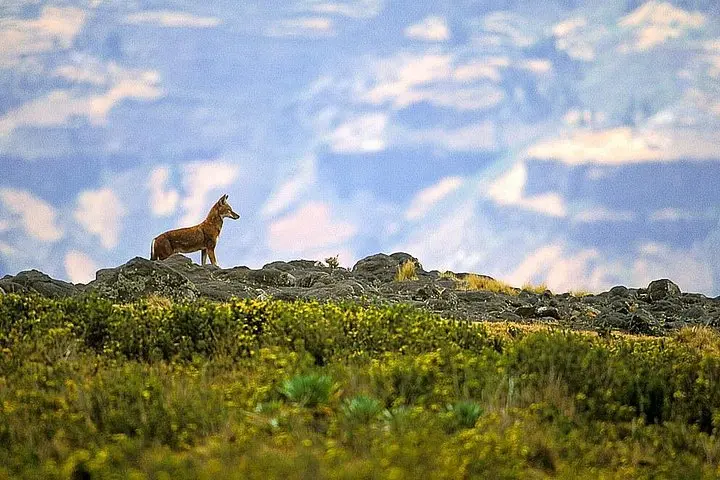
Common sightings include gelada baboons and a chance to see the endemic Ethiopian wolf in remote plateaus; birdwatching is strong in afro‑montane zones.
Dry months (roughly October–March) offer more stable walking conditions and clearer summit views, though mornings are cold year‑round and weather can change rapidly.
Addis Ethiopia Tours operates guided outdoor trips and adventures with an emphasis on safety, stewardship, and memorable experiences.


A dawn hush settles over Lalibela as you step off paved streets into the highland air, a thin, bright cold that wakes every breath. The trek climbs out of town past stone houses and terraced fields, then narrows into mule tracks that cut through heath and stands of giant lobelia. By mid-day the slopes open to plateaus where gelada troops forage and wind dares your outer layer.
A dawn hush settles over Lalibela as you step off paved streets into the highland air, a thin, bright cold that wakes every breath. The trek climbs out of town past stone houses and terraced fields, then narrows into mule tracks that cut through heath and stands of giant lobelia. By mid-day the slopes open to plateaus where gelada troops forage and wind dares your outer layer.
This route threads together deep cultural history and rugged geology. Lalibela’s 12th-century rock-hewn churches and the older Asheton Maryam monastery sit on basalt and volcanic plateaus carved by uplift and erosion. The Abune Yoseph massif rises above 4,000 m, an afro-montane zone with giant lobelia, heather, and pockets of ericaceous forest that support Ethiopia’s endemic species.
Expect three days of steady hiking with significant elevation change: initial climbs from roughly 2,600 m toward 3,800 m, then a summit push to about 4,200–4,300 m, and a descent back to Lalibela. Trails are uneven, occasionally steep, and often exposed to sun and wind; daily walking distances typically fall between 6–12 km with cumulative gain up to ~1,200 m on the hardest day. Community lodgings and cooked meals are part of the itinerary; bring layers, sun protection, and high-altitude respect.
Practical planning: allow a day to acclimatize in Lalibela, drink frequently, move deliberately on steep sections, and carry cash for small village purchases. The trip pairs cultural insight—breakfast with locals and injera baking—with highland wildlife viewing for a concise, physically demanding window into Ethiopia’s uplands.