THE ADVENTURE COLLECTIVE® · Independent discovery and booking for outdoor travel

Trade Tirana’s streets for a day of limestone ridgelines, a wooden platform at a prehistoric cave and sweeping views into Erzeni Canyon. This small-group hike mixes archaeology, geology and hands-on local color in a 6–8 hour outing.
Trade Tirana’s streets for a day of limestone ridgelines, a wooden platform at a prehistoric cave and sweeping views into Erzeni Canyon. This small-group hike mixes archaeology, geology and hands-on local color in a 6–8 hour outing.
You step out of a minivan as the city hum fades and the mountain air fills the cabin of your jacket. The trailhead for Pellumbas Cave opens into a corridor of beech and oak; rock faces lean over the path like watchful neighbors. The Erzeni river threads the canyon below, its voice rising and falling as if daring you to follow. Within an hour the forest gives way to limestone outcrops and a wooden platform that marks the cave entrance — a raw, vertical cut in the ridge where light and shadow trade places.
Verified experiences and guided adventures in the surrounding area.
Operated by Choose Balkans · Tirana, Tirana County
You step out of a minivan as the city hum fades and the mountain air fills the cabin of your jacket. The trailhead for Pellumbas Cave opens into a corridor of beech and oak; rock faces lean over the path like watchful neighbors. The Erzeni river threads the canyon below, its voice rising and falling as if daring you to follow. Within an hour the forest gives way to limestone outcrops and a wooden platform that marks the cave entrance — a raw, vertical cut in the ridge where light and shadow trade places.
The cave itself reads like a timeline. Archaeologists found signs of human occupation from the Middle Paleolithic and, before that, remains of Pleistocene fauna: evidence that this hollow once sheltered large mammals and hunters alike. During the 20th century the cave behaved differently — as refuge during wartime for local villagers. Geologically the canyon owes its shape to the Erzeni river carving through folded carbonate rock, exposing jagged strata and small karst passages that make the walk feel both ancient and immediate.
Local culture around Pellumbas is quietly rural: terraced plots, shepherds’ paths and small stone houses. Guides on the small-group tour point out traditional herbs used in local cooking and the seasonal rhythms that still govern life here. The trail has a practical side — narrow singletrack, loose scree sections and a steady climb — so the landscape keeps you honest as it rewards you with broad views over Tirana’s plain and the distant Adriatic on clear days.
Practical guidance: the full experience is 6–8 hours with round-trip hiking of roughly 5–7 km and an elevation gain up to about 600 meters to the cave viewpoint; expect about 1 hour each way on the main ascent. Terrain alternates packed dirt, rock steps and short scree fields; sections can be steep but are well-marked and include the wooden viewing platform at the cave mouth. Bring at least 1.5–2 liters of water, sturdy hiking shoes with good grip, sun protection and a light waterproof layer — weather in these hills can flip quickly. The tour includes hotel pickup in Tirana and entrance to the cave; a professional guide leads the group and keeps the pace accessible to most fitness levels.
Timing tip: start early to avoid midday heat and to catch the canyon light when the river seems to push the shadows down into the gorge. Respect the site — stay on paths, pack out trash, and move quietly; the place still serves as habitat for foxes and raptors. By the return drive you’ll have a clearer sense of why Tirana’s backyard feels, for a day, like another country entirely.
The main ascent takes about 1 hour one-way; the full tour runs about 6–8 hours including transport and time at the cave.
Yes — the route is guided and suitable for most fitness levels, but expect steep sections and uneven footing.
Yes — the tour includes entry tickets for the sites visited as listed in the itinerary.
Yes — hotel pickup in Tirana is available on request (usually arranged at least 12 hours before departure).
Wear sturdy hiking shoes, breathable layers, sun protection and bring a light waterproof jacket; avoid flip-flops or smooth-soled shoes.
Children can join but should be supervised on steep or narrow sections; discuss specifics with the operator when booking.
Choose Balkans operates guided outdoor trips and adventures with an emphasis on safety, stewardship, and memorable experiences.
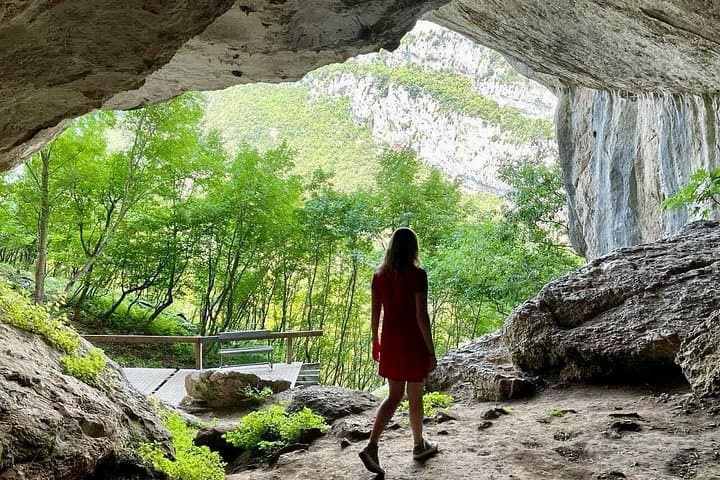
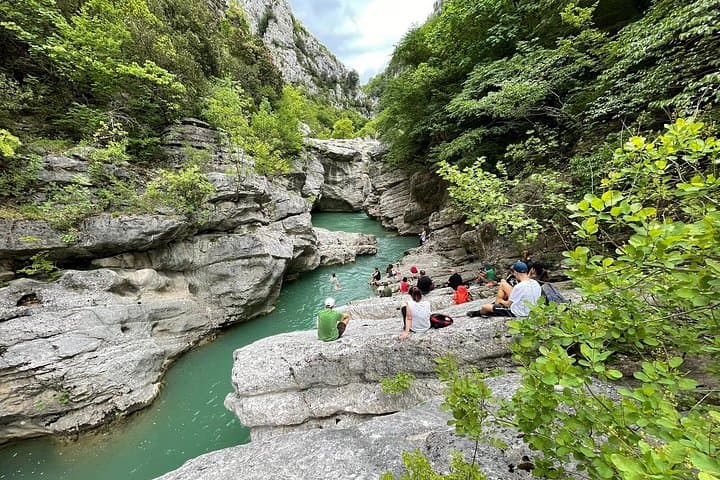
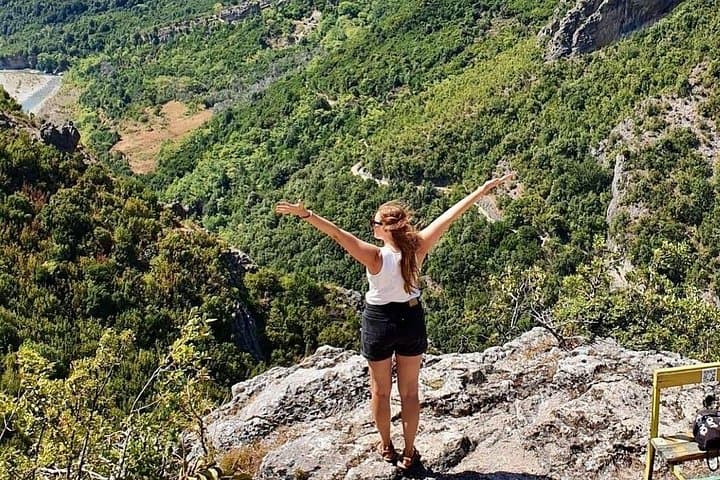
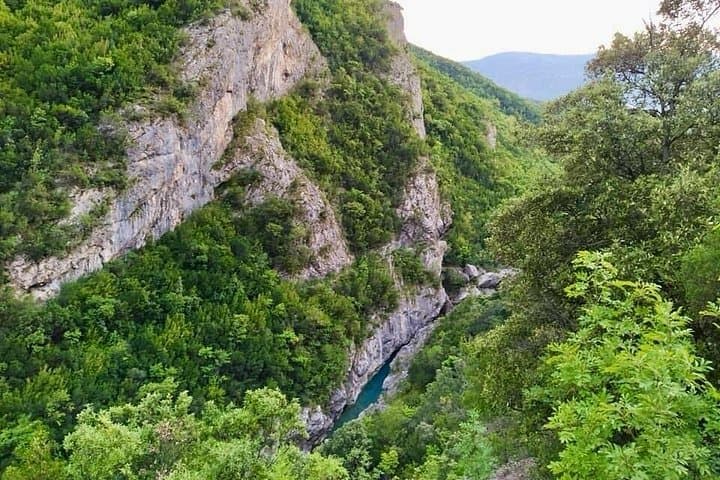
You step out of a minivan as the city hum fades and the mountain air fills the cabin of your jacket. The trailhead for Pellumbas Cave opens into a corridor of beech and oak; rock faces lean over the path like watchful neighbors. The Erzeni river threads the canyon below, its voice rising and falling as if daring you to follow. Within an hour the forest gives way to limestone outcrops and a wooden platform that marks the cave entrance — a raw, vertical cut in the ridge where light and shadow trade places.
You step out of a minivan as the city hum fades and the mountain air fills the cabin of your jacket. The trailhead for Pellumbas Cave opens into a corridor of beech and oak; rock faces lean over the path like watchful neighbors. The Erzeni river threads the canyon below, its voice rising and falling as if daring you to follow. Within an hour the forest gives way to limestone outcrops and a wooden platform that marks the cave entrance — a raw, vertical cut in the ridge where light and shadow trade places.
The cave itself reads like a timeline. Archaeologists found signs of human occupation from the Middle Paleolithic and, before that, remains of Pleistocene fauna: evidence that this hollow once sheltered large mammals and hunters alike. During the 20th century the cave behaved differently — as refuge during wartime for local villagers. Geologically the canyon owes its shape to the Erzeni river carving through folded carbonate rock, exposing jagged strata and small karst passages that make the walk feel both ancient and immediate.
Local culture around Pellumbas is quietly rural: terraced plots, shepherds’ paths and small stone houses. Guides on the small-group tour point out traditional herbs used in local cooking and the seasonal rhythms that still govern life here. The trail has a practical side — narrow singletrack, loose scree sections and a steady climb — so the landscape keeps you honest as it rewards you with broad views over Tirana’s plain and the distant Adriatic on clear days.
Practical guidance: the full experience is 6–8 hours with round-trip hiking of roughly 5–7 km and an elevation gain up to about 600 meters to the cave viewpoint; expect about 1 hour each way on the main ascent. Terrain alternates packed dirt, rock steps and short scree fields; sections can be steep but are well-marked and include the wooden viewing platform at the cave mouth. Bring at least 1.5–2 liters of water, sturdy hiking shoes with good grip, sun protection and a light waterproof layer — weather in these hills can flip quickly. The tour includes hotel pickup in Tirana and entrance to the cave; a professional guide leads the group and keeps the pace accessible to most fitness levels.
Timing tip: start early to avoid midday heat and to catch the canyon light when the river seems to push the shadows down into the gorge. Respect the site — stay on paths, pack out trash, and move quietly; the place still serves as habitat for foxes and raptors. By the return drive you’ll have a clearer sense of why Tirana’s backyard feels, for a day, like another country entirely.