THE ADVENTURE COLLECTIVE® · Independent discovery and booking for outdoor travel

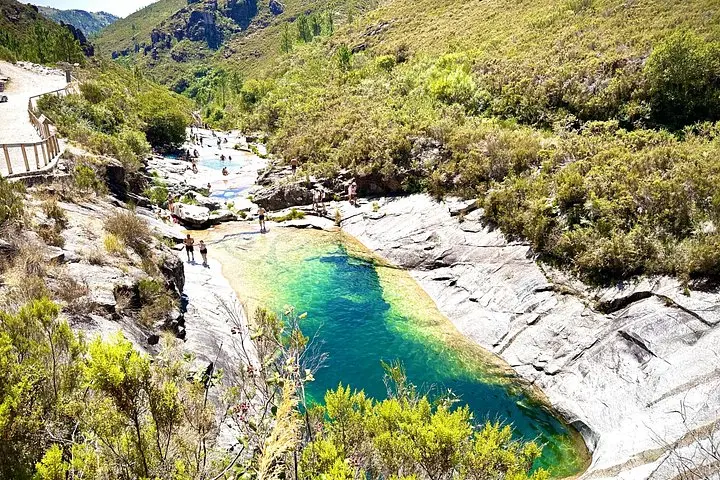
Spend a day hiking from Xertelo into Peneda-Gerês to reach the Poços Verdes do Sobroso—the Seven Lagoons—where turquoise pools, waterfalls and a riverside picnic make for a memorable full-day outing. The walk blends easy mountain trails, local history like the Fojo do Lobo, and an optional swim in summer.
Spend a day hiking from Xertelo into Peneda-Gerês to reach the Poços Verdes do Sobroso—the Seven Lagoons—where turquoise pools, waterfalls and a riverside picnic make for a memorable full-day outing. The walk blends easy mountain trails, local history like the Fojo do Lobo, and an optional swim in summer.
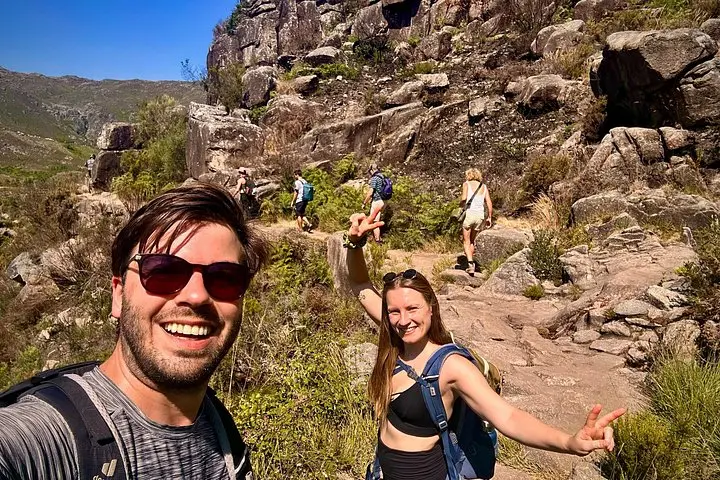
The day begins on a narrow mountain lane outside Xertelo, where mist lifts from slate roofs and the forest exhales a damp, resinous scent. You step off the van onto trails softened by moss; a guide checks boots and points toward the sound of falling water—your first hint that the Seven Lagoons are more than a photograph. The route climbs gently, sometimes skirting an old levada so precise it feels like a human-made river carved into stone. Sunlight filters through chestnut and oak, dappling the path while you pass ruined stone walls and the centuries-old Fojo do Lobo, a stone wolf trap that tells a quiet story about human-wildlife relations in this part of northern Portugal.
Verified experiences and guided adventures in the surrounding area.
Operated by Jolly Green Tours · Xertelo, Braga
The day begins on a narrow mountain lane outside Xertelo, where mist lifts from slate roofs and the forest exhales a damp, resinous scent. You step off the van onto trails softened by moss; a guide checks boots and points toward the sound of falling water—your first hint that the Seven Lagoons are more than a photograph. The route climbs gently, sometimes skirting an old levada so precise it feels like a human-made river carved into stone. Sunlight filters through chestnut and oak, dappling the path while you pass ruined stone walls and the centuries-old Fojo do Lobo, a stone wolf trap that tells a quiet story about human-wildlife relations in this part of northern Portugal.
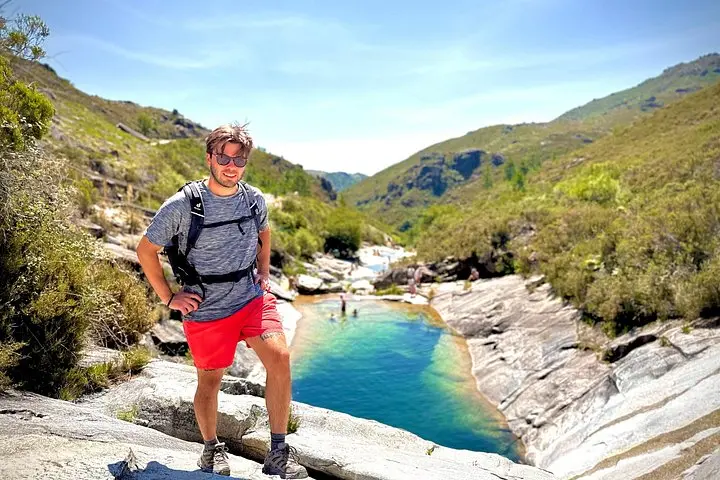
Geology here reads like a slow-motion drama: schist and granite folded by ancient tectonic stress, channels cut by glacial melt and torrents that now feed those turquoise pools. The Poços Verdes do Sobroso—Seven Lagoons—sit in a small amphitheater where cascades feed tiered basins. In summer the water goes electric-green; in shoulder seasons it reflects cloud banks like mirrors. The landscape has shaped local culture: shepherding terraces, slate-roofed hamlets, and irrigation channels that sustained subsistence farms for generations.
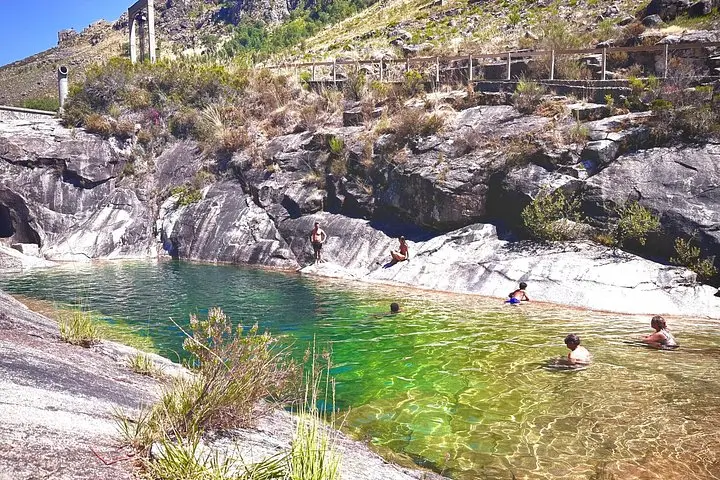
The guide threads natural history into the walk—where peregrine falcons nest, why holly and heather alternate across a slope, how levadas once carried water to cereal plots. There’s a practical rhythm to the day: steady sections of walking, a snack stop with pastel de nata and coffee, then the long approach to the pools where you can swim when conditions allow. The picnic—sandwiches, fruit and regional touches—lands like a reward on river rocks beside the last cascade.
Practicalities matter on a day like this. Trails are mostly well-defined but uneven; expect roots, stones and narrow stretches. Footwear with good grip matters more than alpine endurance—this is an all-day outing (about nine hours including transfers) but not technical. Weather turns quickly in Gerês; a lightweight rain shell and layered clothing keep you comfortable from mist to bright sun. Bring a small daypack, refillable water bottle and a dry bag for valuables if you plan to swim.
Culturally, listen for the language of the place: Portuguese with a northern lilt, and stories about wolves and shepherds passed from guide to guide. Environmentally, follow Leave No Trace—these lagoons feel remote because the people who come here treat them with care. By day’s end you return to Xertelo with the sediment of a long, quiet walk—sunburned nose, damp socks, a small handmade souvenir, and an understanding of why Gerês holds its wild edge so close.
The full experience including transfers is about nine hours; trails are mostly non-technical with some uneven and steep sections—suitable for most hikers with moderate fitness.
Swimming is permitted in warmer months when conditions are safe; guides will advise based on water flow and weather.
The tour provides a picnic (sandwich, fruit, snacks, juice) and morning pastel de nata—bring any special dietary items if you have allergies or preferences.
Facilities are limited; use restrooms in Xertelo before the walk and be prepared for natural breaks on the trail.
Service is intermittent in parts of Peneda-Gerês—expect limited coverage near the lagoons and carry offline maps if needed.
The tour is family-friendly but requires a full day of walking; discuss mobility limitations with the operator during booking to confirm suitability.
Jolly Green Tours operates guided outdoor trips and adventures with an emphasis on safety, stewardship, and memorable experiences.
The day begins on a narrow mountain lane outside Xertelo, where mist lifts from slate roofs and the forest exhales a damp, resinous scent. You step off the van onto trails softened by moss; a guide checks boots and points toward the sound of falling water—your first hint that the Seven Lagoons are more than a photograph. The route climbs gently, sometimes skirting an old levada so precise it feels like a human-made river carved into stone. Sunlight filters through chestnut and oak, dappling the path while you pass ruined stone walls and the centuries-old Fojo do Lobo, a stone wolf trap that tells a quiet story about human-wildlife relations in this part of northern Portugal.
The day begins on a narrow mountain lane outside Xertelo, where mist lifts from slate roofs and the forest exhales a damp, resinous scent. You step off the van onto trails softened by moss; a guide checks boots and points toward the sound of falling water—your first hint that the Seven Lagoons are more than a photograph. The route climbs gently, sometimes skirting an old levada so precise it feels like a human-made river carved into stone. Sunlight filters through chestnut and oak, dappling the path while you pass ruined stone walls and the centuries-old Fojo do Lobo, a stone wolf trap that tells a quiet story about human-wildlife relations in this part of northern Portugal.
Geology here reads like a slow-motion drama: schist and granite folded by ancient tectonic stress, channels cut by glacial melt and torrents that now feed those turquoise pools. The Poços Verdes do Sobroso—Seven Lagoons—sit in a small amphitheater where cascades feed tiered basins. In summer the water goes electric-green; in shoulder seasons it reflects cloud banks like mirrors. The landscape has shaped local culture: shepherding terraces, slate-roofed hamlets, and irrigation channels that sustained subsistence farms for generations.
The guide threads natural history into the walk—where peregrine falcons nest, why holly and heather alternate across a slope, how levadas once carried water to cereal plots. There’s a practical rhythm to the day: steady sections of walking, a snack stop with pastel de nata and coffee, then the long approach to the pools where you can swim when conditions allow. The picnic—sandwiches, fruit and regional touches—lands like a reward on river rocks beside the last cascade.
Practicalities matter on a day like this. Trails are mostly well-defined but uneven; expect roots, stones and narrow stretches. Footwear with good grip matters more than alpine endurance—this is an all-day outing (about nine hours including transfers) but not technical. Weather turns quickly in Gerês; a lightweight rain shell and layered clothing keep you comfortable from mist to bright sun. Bring a small daypack, refillable water bottle and a dry bag for valuables if you plan to swim.
Culturally, listen for the language of the place: Portuguese with a northern lilt, and stories about wolves and shepherds passed from guide to guide. Environmentally, follow Leave No Trace—these lagoons feel remote because the people who come here treat them with care. By day’s end you return to Xertelo with the sediment of a long, quiet walk—sunburned nose, damp socks, a small handmade souvenir, and an understanding of why Gerês holds its wild edge so close.