THE ADVENTURE COLLECTIVE® · Independent discovery and booking for outdoor travel

Trek from the Omalos plateau through Europe’s famed Samaria Gorge down to Agia Roumeli. This full-day guided excursion combines rugged limestone canyons, endemic wildlife and a ferry return from the Libyan Sea.
Trek from the Omalos plateau through Europe’s famed Samaria Gorge down to Agia Roumeli. This full-day guided excursion combines rugged limestone canyons, endemic wildlife and a ferry return from the Libyan Sea.
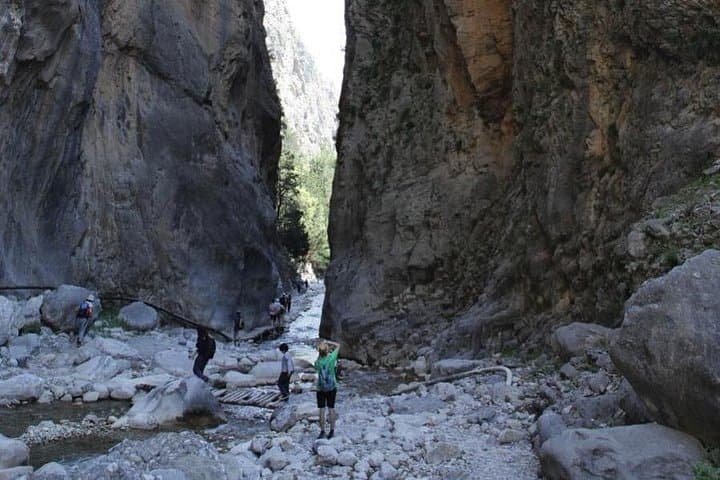
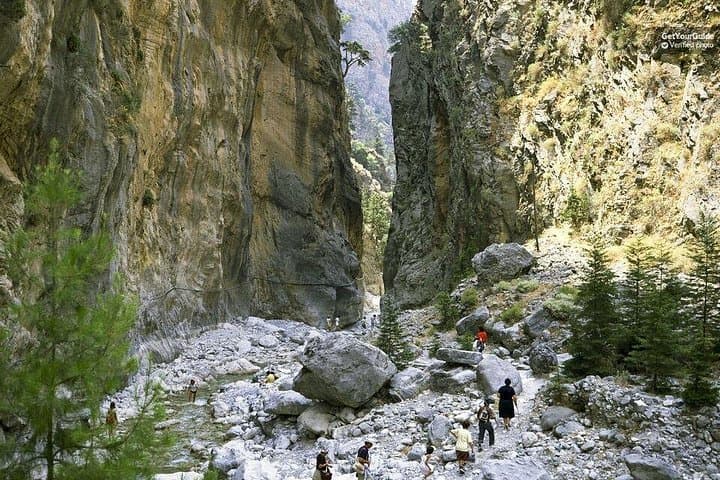
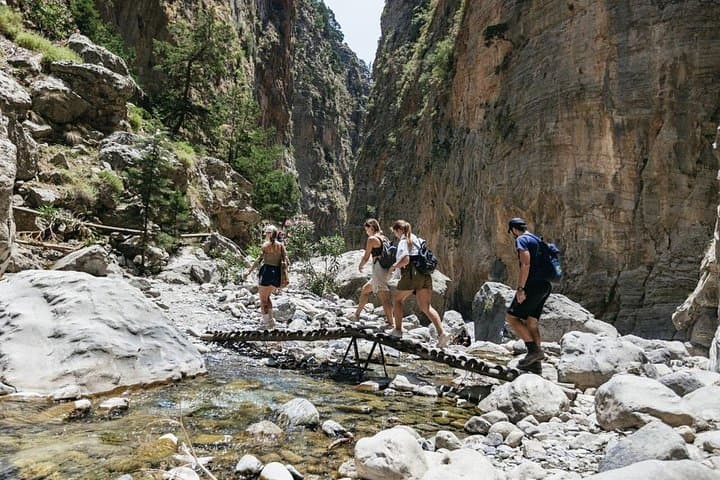
You step onto limestone slabs at Xyloskalo as dawn lifts off the White Mountains, the air cool and the gorge already humming with the day’s current. The trail immediately commits you—stones, switchbacks and the scent of pine—descending through a canyon that narrows to the Iron Gates where cliffs close to a few meters apart.
Verified experiences and guided adventures in the surrounding area.
Operated by PLATANOS TOURS · Chania, Crete
You step onto limestone slabs at Xyloskalo as dawn lifts off the White Mountains, the air cool and the gorge already humming with the day’s current. The trail immediately commits you—stones, switchbacks and the scent of pine—descending through a canyon that narrows to the Iron Gates where cliffs close to a few meters apart.
Samaria is one of Europe’s longest gorges, carved from Mesozoic limestone and scoured by millennia of water and wind. The route runs from the Omalos plateau down to the Libyan Sea at Agia Roumeli, passing freshwater springs, stands of ancient cypresses and the ruins of shepherd shelters that speak to Crete’s pastoral past.
Culturally the gorge has been a refuge—used by locals in wartime and protected today as a national park; the entrance fee helps maintain trails and limit visitor impact. Expect wildlife sightings: the stocky kri-kri goats on ledges and circling griffon vultures overhead.
Practically, the hike is long and physical: roughly 16 km of uneven rock, cumulative descent near 1,200 m and 5–6 hours on foot for most walkers. Guided groups typically include breakfast on Omalos, ferry transport from Agia Roumeli and a late-afternoon bus return to the pickup points in the Rethymno/Panormo area.
Bring sturdy shoes, layered clothing, 2–3 liters of water and cash for the small entrance and ferry fees paid to the guide. Start early to avoid mid-day heat, respect marked paths and leave no trace—this route rewards focus and fitness with dramatic geology and a swim-ready sea at the finish.
The walking portion is about 4–6 hours depending on pace; the full excursion including transfers, breaks and ferry is roughly 10–12 hours.
No — the entrance fee (€5) and the ferry fee (€13) are paid in cash to the guide upon arrival.
Not recommended for children under 8, pregnant travelers, or anyone with significant heart or spinal problems due to terrain and duration.
You have free time in Agia Roumeli for a swim or lunch, then board an afternoon ferry to Sfakia where the bus returns you to the original pickup area.
PLATANOS TOURS operates guided outdoor trips and adventures with an emphasis on safety, stewardship, and memorable experiences.

You step onto limestone slabs at Xyloskalo as dawn lifts off the White Mountains, the air cool and the gorge already humming with the day’s current. The trail immediately commits you—stones, switchbacks and the scent of pine—descending through a canyon that narrows to the Iron Gates where cliffs close to a few meters apart.
You step onto limestone slabs at Xyloskalo as dawn lifts off the White Mountains, the air cool and the gorge already humming with the day’s current. The trail immediately commits you—stones, switchbacks and the scent of pine—descending through a canyon that narrows to the Iron Gates where cliffs close to a few meters apart.
Samaria is one of Europe’s longest gorges, carved from Mesozoic limestone and scoured by millennia of water and wind. The route runs from the Omalos plateau down to the Libyan Sea at Agia Roumeli, passing freshwater springs, stands of ancient cypresses and the ruins of shepherd shelters that speak to Crete’s pastoral past.
Culturally the gorge has been a refuge—used by locals in wartime and protected today as a national park; the entrance fee helps maintain trails and limit visitor impact. Expect wildlife sightings: the stocky kri-kri goats on ledges and circling griffon vultures overhead.
Practically, the hike is long and physical: roughly 16 km of uneven rock, cumulative descent near 1,200 m and 5–6 hours on foot for most walkers. Guided groups typically include breakfast on Omalos, ferry transport from Agia Roumeli and a late-afternoon bus return to the pickup points in the Rethymno/Panormo area.
Bring sturdy shoes, layered clothing, 2–3 liters of water and cash for the small entrance and ferry fees paid to the guide. Start early to avoid mid-day heat, respect marked paths and leave no trace—this route rewards focus and fitness with dramatic geology and a swim-ready sea at the finish.