THE ADVENTURE COLLECTIVE® · Independent discovery and booking for outdoor travel

Walk the same stones Roman legions once marched along. This 17 km guided hike along the Appian Way blends hard history, volcanic paving stones and pastoral Roman countryside in a single day hike.
Walk the same stones Roman legions once marched along. This 17 km guided hike along the Appian Way blends hard history, volcanic paving stones and pastoral Roman countryside in a single day hike.
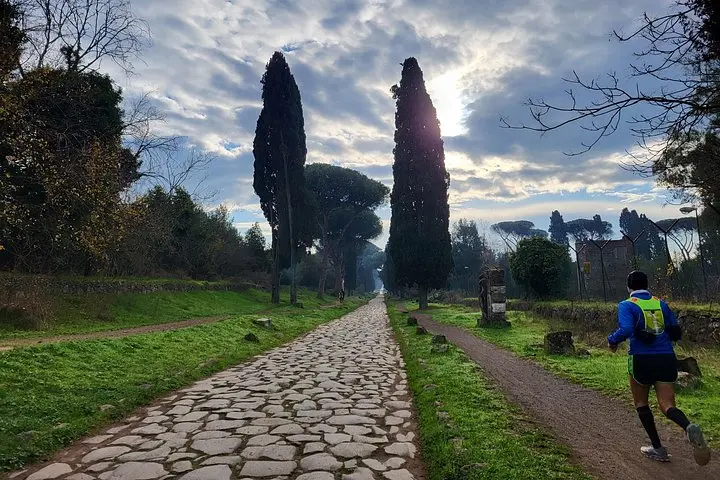
A cool Roman morning sets the scene: boots meet worn basalt, cicadas begin their distant percussion, and the Appian Way unfurls ahead like an old ledger of empire. You start near S. Maria delle Mole and follow the original paved road for roughly 17 kilometers toward Circus Maximus, passing tombs, broken milestones and scrubby fields that still remember Roman carts.
Verified experiences and guided adventures in the surrounding area.
Operated by Salvatore Benintende · Rome, Lazio
A cool Roman morning sets the scene: boots meet worn basalt, cicadas begin their distant percussion, and the Appian Way unfurls ahead like an old ledger of empire. You start near S. Maria delle Mole and follow the original paved road for roughly 17 kilometers toward Circus Maximus, passing tombs, broken milestones and scrubby fields that still remember Roman carts.
The Appian Way was begun in 312 BCE under Appius Claudius Caecus to link Rome to the south; its basalt paving and nearby tufa quarries explain the road’s hard, time-polished surface. Along the route you'll pass funerary monuments, medieval churches and the occasional villa ruin — layers of history laid side by side. The landscape alternates between tree-shaded stretches and open farmland; aqueduct arches punctuate the skyline and birds and lizards animate low walls.
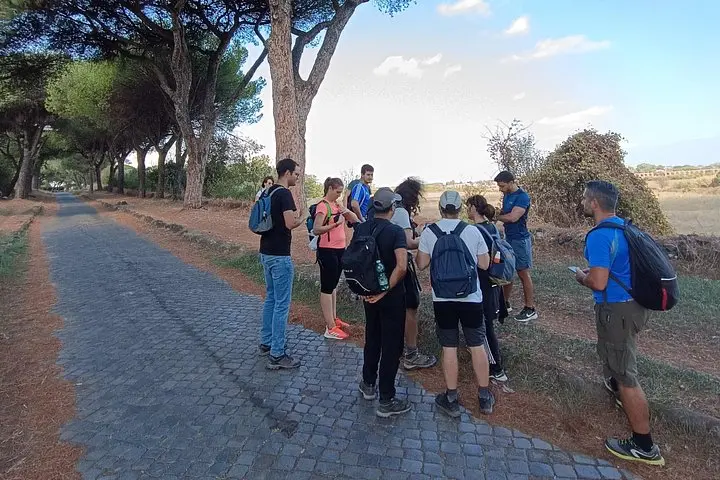
Practically: this is a moderate, mostly downhill-to-flat hike of 17 km that takes 5–6 hours with frequent stops for interpretation. Expect uneven cobbles, short rutted sections and patches of gravel; the route is 90% walking with guided cultural stops. Bring sturdy boots, at least 1.5 L of water, sun protection, and a compact first-aid kit. Public trains and buses connect S. Maria delle Mole and central Rome, and Circus Maximus is a logical endpoint for a return into the city.
Timing matters — start early in summer, aim for late morning or afternoon in cooler months. Stay with the guide to protect fragile ruins and keep the group rhythm steady; the Appian Way rewards patience with quiet stretches that feel alive with the past.
Meet near S. Maria delle Mole — regional trains from Termini reach nearby stations, and local buses connect to the Appian Way; confirm the exact meeting address with the operator.
Public toilets are scarce on the ancient stretches; bring snacks and plan to use facilities before leaving the meeting point or at village stops if available.
The route is moderate; children used to long walks can manage with breaks, while older adults should consider mobility and uneven surfaces before booking.
Entrance fees and food are not included; some points of interest may require separate admission—carry cash or card as needed.
Salvatore Benintende operates guided outdoor trips and adventures with an emphasis on safety, stewardship, and memorable experiences.
A cool Roman morning sets the scene: boots meet worn basalt, cicadas begin their distant percussion, and the Appian Way unfurls ahead like an old ledger of empire. You start near S. Maria delle Mole and follow the original paved road for roughly 17 kilometers toward Circus Maximus, passing tombs, broken milestones and scrubby fields that still remember Roman carts.
A cool Roman morning sets the scene: boots meet worn basalt, cicadas begin their distant percussion, and the Appian Way unfurls ahead like an old ledger of empire. You start near S. Maria delle Mole and follow the original paved road for roughly 17 kilometers toward Circus Maximus, passing tombs, broken milestones and scrubby fields that still remember Roman carts.
The Appian Way was begun in 312 BCE under Appius Claudius Caecus to link Rome to the south; its basalt paving and nearby tufa quarries explain the road’s hard, time-polished surface. Along the route you'll pass funerary monuments, medieval churches and the occasional villa ruin — layers of history laid side by side. The landscape alternates between tree-shaded stretches and open farmland; aqueduct arches punctuate the skyline and birds and lizards animate low walls.
Practically: this is a moderate, mostly downhill-to-flat hike of 17 km that takes 5–6 hours with frequent stops for interpretation. Expect uneven cobbles, short rutted sections and patches of gravel; the route is 90% walking with guided cultural stops. Bring sturdy boots, at least 1.5 L of water, sun protection, and a compact first-aid kit. Public trains and buses connect S. Maria delle Mole and central Rome, and Circus Maximus is a logical endpoint for a return into the city.
Timing matters — start early in summer, aim for late morning or afternoon in cooler months. Stay with the guide to protect fragile ruins and keep the group rhythm steady; the Appian Way rewards patience with quiet stretches that feel alive with the past.