THE ADVENTURE COLLECTIVE® · Independent discovery and booking for outdoor travel

Walk the crest above San Leo on a guided 4–5 hour ridge hike to the village of Tausano. Expect limestone ribs, sweeping Marecchia valley views and a visit to the 13th‑century Franciscan convent of S. Igne.
Walk the crest above San Leo on a guided 4–5 hour ridge hike to the village of Tausano. Expect limestone ribs, sweeping Marecchia valley views and a visit to the 13th‑century Franciscan convent of S. Igne.
A low stone road climbs out of San Leo and the fortress looms ahead as if holding the valley in its palm. Walkers follow a crest trail that runs along exposed rock ribs and wooded benches, with the Marecchia valley opening to the east and the roofs of the Republic of San Marino shrinking in the distance. The ridge narrows, wind pushing forward, and every turn offers a new angle on the layered cliffs below.
Verified experiences and guided adventures in the surrounding area.
Operated by History trekking · San Leo, Emilia-Romagna
A low stone road climbs out of San Leo and the fortress looms ahead as if holding the valley in its palm. Walkers follow a crest trail that runs along exposed rock ribs and wooded benches, with the Marecchia valley opening to the east and the roofs of the Republic of San Marino shrinking in the distance. The ridge narrows, wind pushing forward, and every turn offers a new angle on the layered cliffs below.
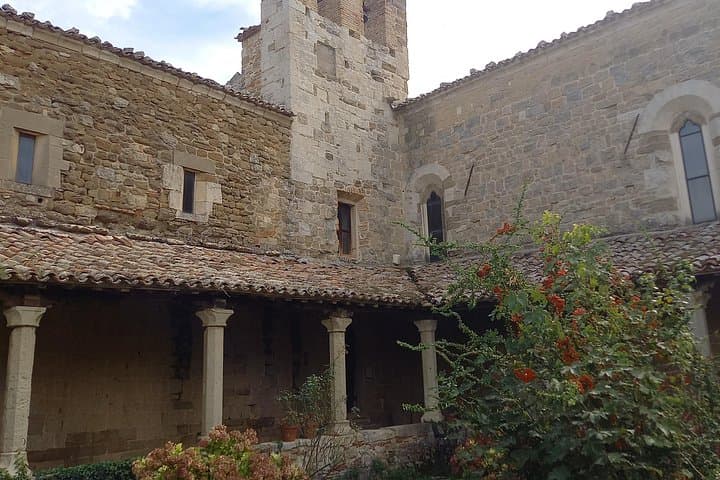
This route crosses rock formations carved over millions of years by river incision and gentle uplift—limestone and compact sandstone outcrops that support a surprising mix of shrubs and holm oak. Human history sits close to the trail: the thirteenth‑century Franciscan convent of S. Igne pauses the return leg, a quiet cloister tied to medieval pilgrimage and local pastoral life. Geology, culture and biodiversity converge here; small endemic plants find niches in crevices while birds of prey use the thermals rising from the valley.
Expect a guided loop of roughly 8–10 km with about 300–450 m total elevation gain and varied footing—rocky tracks, short scree steps and forest paths. The outing runs about 4–5 hours (guide stop at the convent included). Practical planning tips: start early to avoid afternoon sun, wear sturdy hiking shoes with ankle support, and bring 1–1.5 liters of water plus a light wind layer. Follow the guide’s route to protect fragile soils and cultural sites, and carry out any trash. The hike is approachable for regular walkers and rewards steady pace with sweeping views and a close encounter with the geological spine of this Romagna ridge.
The guided route is approximately 8–10 km with around 300–450 m of cumulative elevation gain and takes about 4–5 hours including the convent stop.
The hike is described as suitable for most fitness levels, but children and beginners should be prepared for uneven footing and short rocky sections; guided pace can be adjusted.
Facilities are limited on the ridge; the main stop with facilities is near San Leo and the convent visit offers a rest—bring snacks and use toilets before departure.
Yes, clear days offer views across the Marecchia valley toward the Republic of San Marino; visibility varies with weather and season.
History trekking operates guided outdoor trips and adventures with an emphasis on safety, stewardship, and memorable experiences.
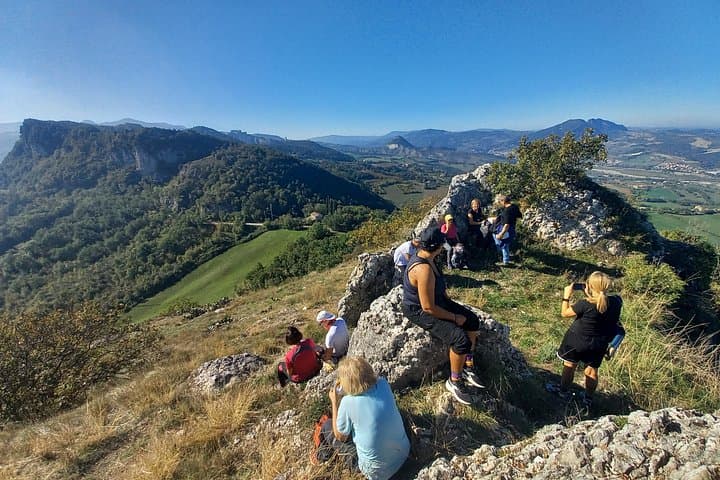
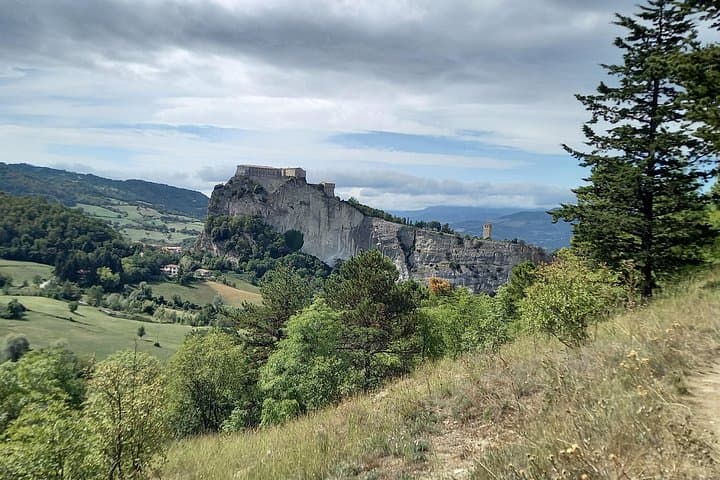
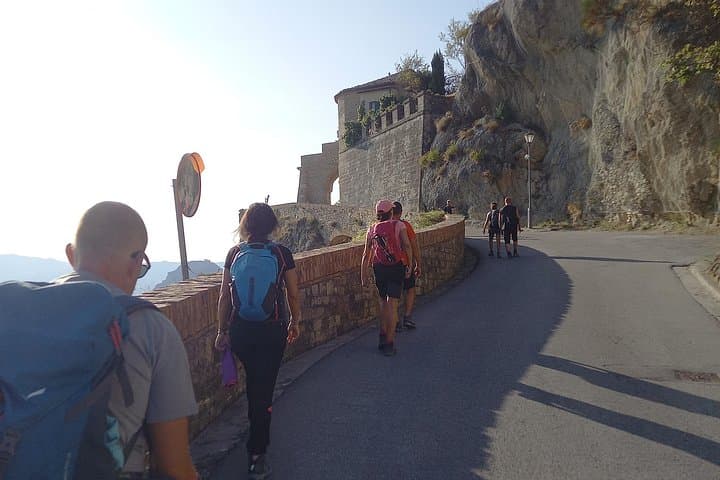
A low stone road climbs out of San Leo and the fortress looms ahead as if holding the valley in its palm. Walkers follow a crest trail that runs along exposed rock ribs and wooded benches, with the Marecchia valley opening to the east and the roofs of the Republic of San Marino shrinking in the distance. The ridge narrows, wind pushing forward, and every turn offers a new angle on the layered cliffs below.
A low stone road climbs out of San Leo and the fortress looms ahead as if holding the valley in its palm. Walkers follow a crest trail that runs along exposed rock ribs and wooded benches, with the Marecchia valley opening to the east and the roofs of the Republic of San Marino shrinking in the distance. The ridge narrows, wind pushing forward, and every turn offers a new angle on the layered cliffs below.
This route crosses rock formations carved over millions of years by river incision and gentle uplift—limestone and compact sandstone outcrops that support a surprising mix of shrubs and holm oak. Human history sits close to the trail: the thirteenth‑century Franciscan convent of S. Igne pauses the return leg, a quiet cloister tied to medieval pilgrimage and local pastoral life. Geology, culture and biodiversity converge here; small endemic plants find niches in crevices while birds of prey use the thermals rising from the valley.
Expect a guided loop of roughly 8–10 km with about 300–450 m total elevation gain and varied footing—rocky tracks, short scree steps and forest paths. The outing runs about 4–5 hours (guide stop at the convent included). Practical planning tips: start early to avoid afternoon sun, wear sturdy hiking shoes with ankle support, and bring 1–1.5 liters of water plus a light wind layer. Follow the guide’s route to protect fragile soils and cultural sites, and carry out any trash. The hike is approachable for regular walkers and rewards steady pace with sweeping views and a close encounter with the geological spine of this Romagna ridge.