THE ADVENTURE COLLECTIVE® · Independent discovery and booking for outdoor travel

A challenging day hike from Foce di Montemonaco climbs through glacial cirques to Lake Pilato, a high mountain tarn famous for its shape, legend, and rare aquatic life. Expect rocky trails, steep gain, and panoramic views across the Sibillini range.
A challenging day hike from Foce di Montemonaco climbs through glacial cirques to Lake Pilato, a high mountain tarn famous for its shape, legend, and rare aquatic life. Expect rocky trails, steep gain, and panoramic views across the Sibillini range.
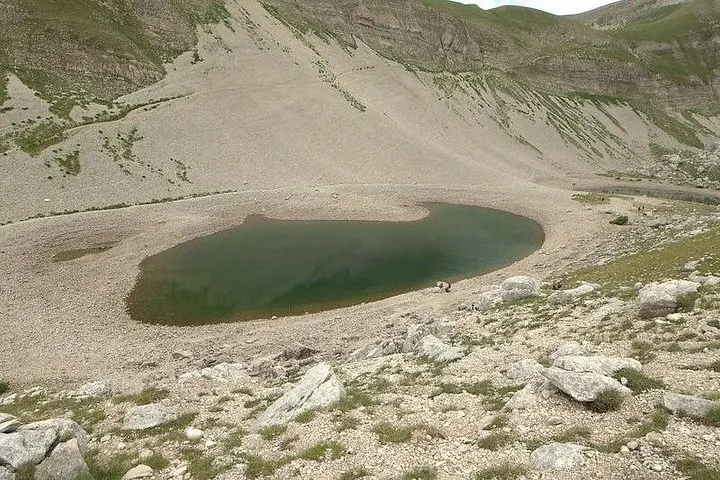
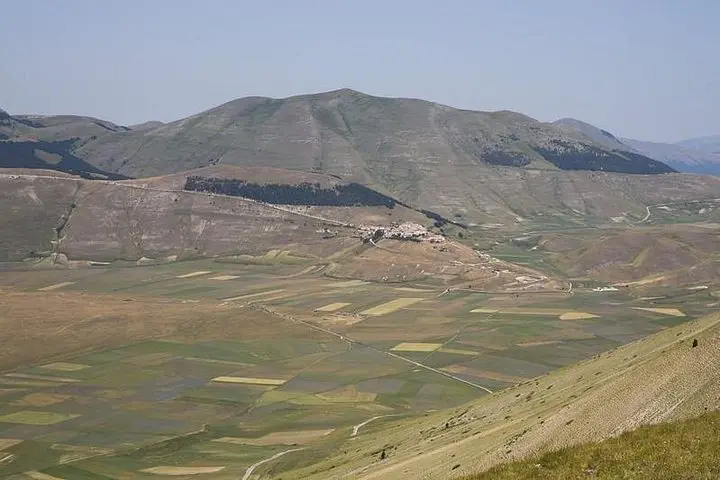
Fog lifts off the ridge and the stone underfoot cools as hikers push from Foce di Montemonaco toward Lake Pilato. The trail tilts, then opens: a high valley carved by ice, walls of gray limestone and scree framing a small, dark lake that sits like an old story at the bottom.
Verified experiences and guided adventures in the surrounding area.
Operated by Il Ponticello Trekking Viaggi & Natura · Montemonaco, Marche
Fog lifts off the ridge and the stone underfoot cools as hikers push from Foce di Montemonaco toward Lake Pilato. The trail tilts, then opens: a high valley carved by ice, walls of gray limestone and scree framing a small, dark lake that sits like an old story at the bottom.
Geology here reads like a record of cold epochs—the valley shows classic glacial cirques and moraines left by glaciers that once filled these bowls. Culture and myth meet geology: the lake’s name evokes the ancient legend of Pontius Pilate and local lore that has been passed among shepherds and mountain villages for centuries. Biologically, Lake Pilato is notable for the tiny endemic crustacean Chirocephalus marchesonii, a relic of alpine water bodies.
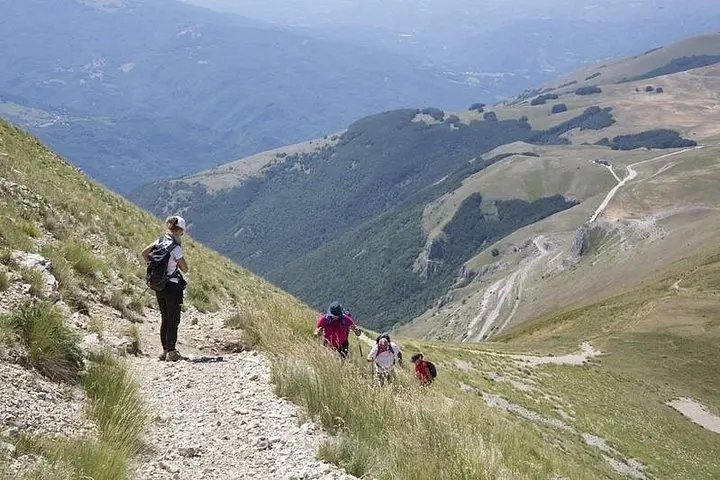
Expect a sustained climb: roughly 10 km round trip with about 1,000 m of elevation gain on mixed rocky paths and alpine meadows. Trail conditions can shift quickly—loose scree on steep pitches, grassy benches, and narrow exposed sections where balance matters. The summit ridgelines and the Pizzo del Diavolo keep watch; birds of prey circle thermals above.
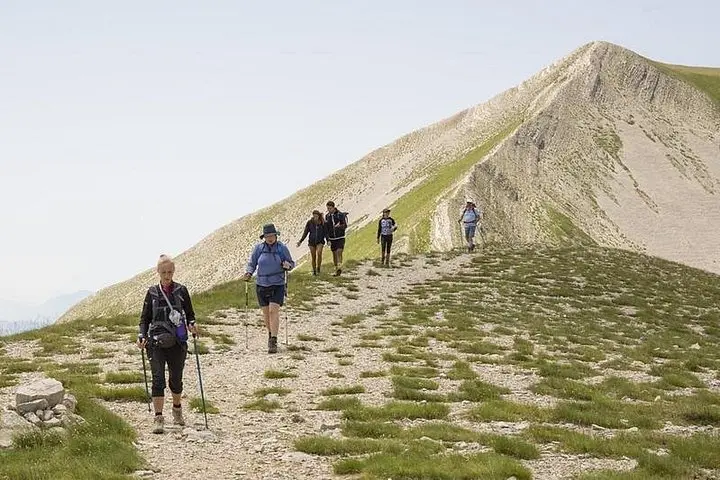
Practical guidance: start early for firm ground and clearer views, carry at least 2 L of water, and layer for wind and sun. Good boots with ankle support and trekking poles make steep ascents and descents easier. The route is best undertaken with a guide if you’re unfamiliar with high mountain terrain in the Sibillini massif.
This is a demanding day in wild, high-country Italy—rewarded by stark geology, sharp panoramas, and a lake that still holds a small, living piece of the past.
The route is a sustained mountain hike: about 10 km and 1,000 m elevation gain, rated challenging—good fitness and steady footing are required.
A guide is recommended if you lack experience in high-country routes, as conditions, navigation, and mountain weather can be unforgiving.
Late spring through early autumn offers the most reliable trail conditions; snow can linger into late spring at higher elevations.
Yes—Lake Pilato hosts the endemic Chirocephalus marchesonii and fragile alpine flora; remain on trail and avoid disturbing water bodies.
Il Ponticello Trekking Viaggi & Natura operates guided outdoor trips and adventures with an emphasis on safety, stewardship, and memorable experiences.
Fog lifts off the ridge and the stone underfoot cools as hikers push from Foce di Montemonaco toward Lake Pilato. The trail tilts, then opens: a high valley carved by ice, walls of gray limestone and scree framing a small, dark lake that sits like an old story at the bottom.
Fog lifts off the ridge and the stone underfoot cools as hikers push from Foce di Montemonaco toward Lake Pilato. The trail tilts, then opens: a high valley carved by ice, walls of gray limestone and scree framing a small, dark lake that sits like an old story at the bottom.
Geology here reads like a record of cold epochs—the valley shows classic glacial cirques and moraines left by glaciers that once filled these bowls. Culture and myth meet geology: the lake’s name evokes the ancient legend of Pontius Pilate and local lore that has been passed among shepherds and mountain villages for centuries. Biologically, Lake Pilato is notable for the tiny endemic crustacean Chirocephalus marchesonii, a relic of alpine water bodies.
Expect a sustained climb: roughly 10 km round trip with about 1,000 m of elevation gain on mixed rocky paths and alpine meadows. Trail conditions can shift quickly—loose scree on steep pitches, grassy benches, and narrow exposed sections where balance matters. The summit ridgelines and the Pizzo del Diavolo keep watch; birds of prey circle thermals above.
Practical guidance: start early for firm ground and clearer views, carry at least 2 L of water, and layer for wind and sun. Good boots with ankle support and trekking poles make steep ascents and descents easier. The route is best undertaken with a guide if you’re unfamiliar with high mountain terrain in the Sibillini massif.
This is a demanding day in wild, high-country Italy—rewarded by stark geology, sharp panoramas, and a lake that still holds a small, living piece of the past.